
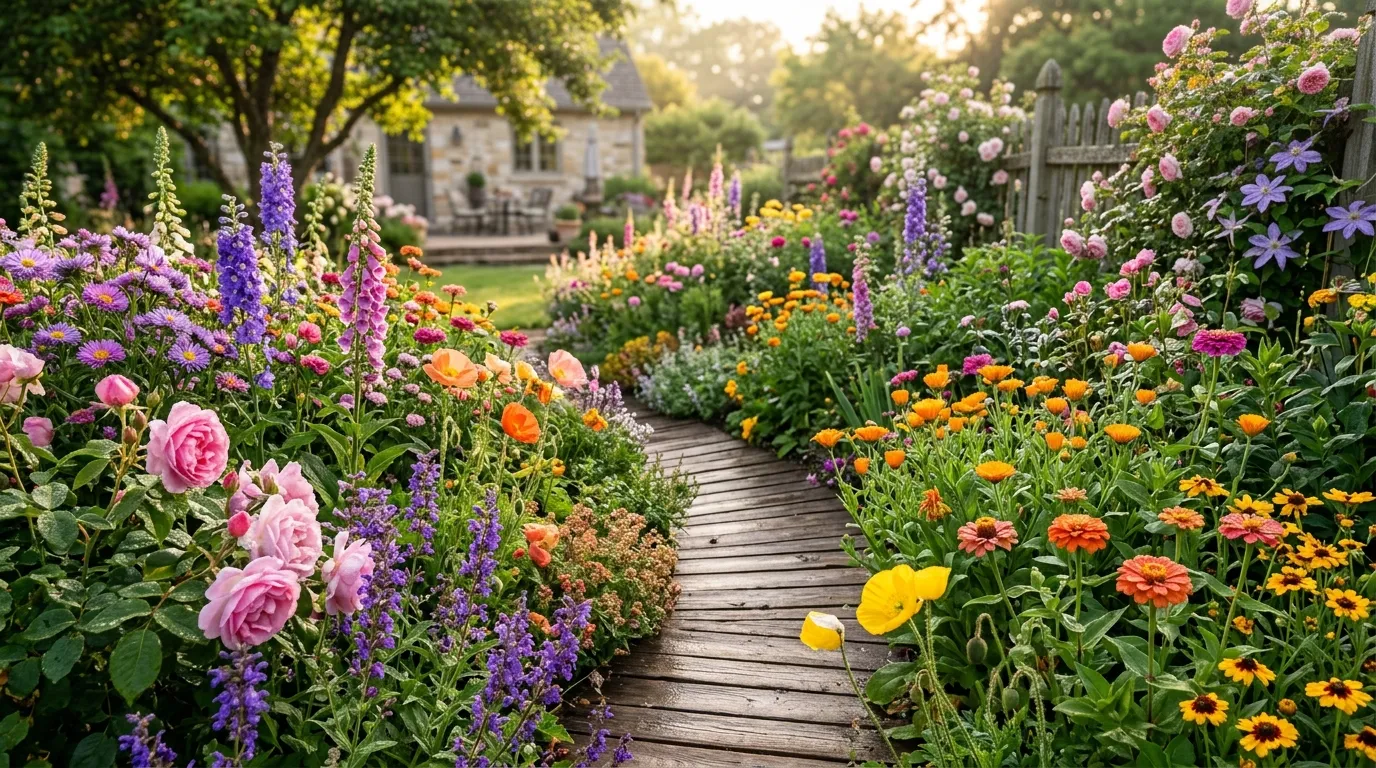
A colorful flower garden turns any yard into a place you actually want to spend time in. Whether you have a sprawling backyard or a tiny balcony, there’s a way to fill your space with color without spending a fortune or hiring a landscaper. This list walks through 26 practical, budget-friendly ideas for planting, arranging, and styling flowers so your yard feels alive from spring through fall. Grab your gloves, and let’s get your hands dirty.
1. Plant a Rainbow Border Along Your Fence
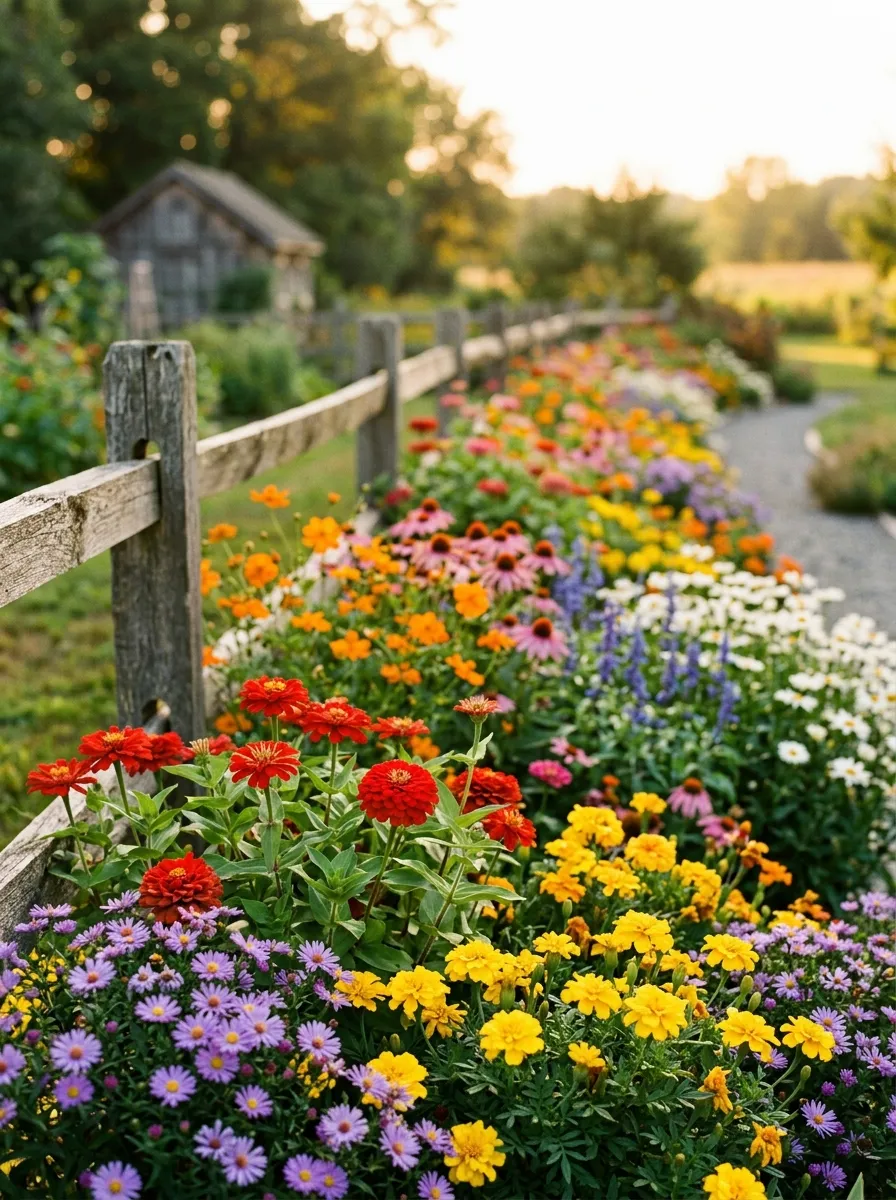
A fence line is wasted space if it’s bare. Turn it into a rainbow border by planting flowers in color blocks along the base. Start with hardy annuals like zinnias, marigolds, and cosmos. They’re cheap, grow fast, and bloom all summer. Buy seed packets instead of starter plants to save money-a $3 packet can fill six feet of fence. Space taller flowers toward the back and shorter ones up front so nothing gets hidden. Water deeply twice a week instead of a little every day. This trains roots to grow deep, which makes plants tougher during hot spells. If your soil is rocky or poor, mix in a bag of compost before planting. You don’t need raised beds for this. A simple trench dug along the fence line works fine. Add mulch on top to keep weeds down and cut back on watering chores. Within a few weeks, you’ll have a wall of color that softens a plain fence and gives your whole yard a finished look, all without a big price tag.
2. Build a Cottage-Style Flower Bed
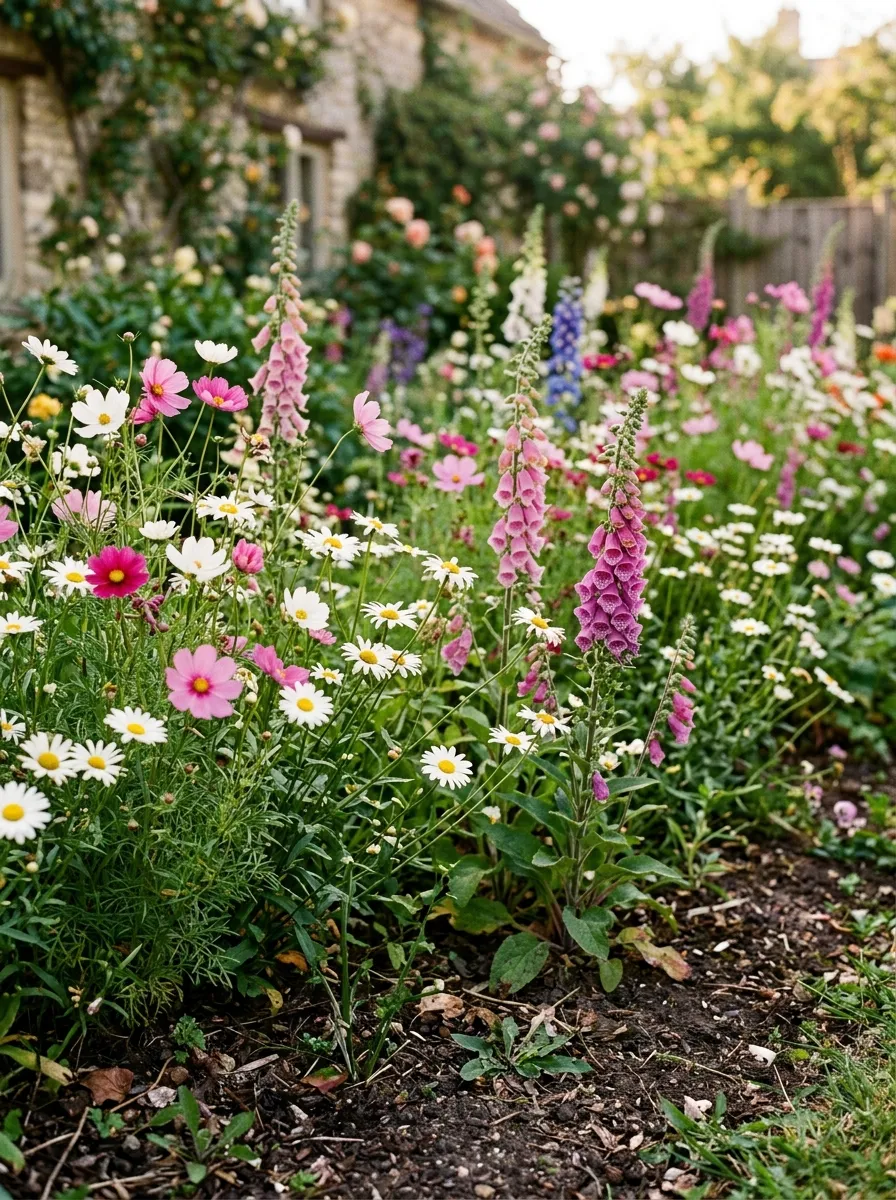
Cottage gardens look wild on purpose. Flowers grow close together, spilling over each other in a relaxed mix of heights and colors. To get this look, skip the neat rows. Instead, scatter seeds or plants in loose clusters. Mix tall flowers like foxgloves with shorter ones like sweet alyssum. The goal is layers, not lines. This style hides bare soil fast, which means fewer weeds to pull later. Use whatever you already have—leftover seed packets, divided perennials from a neighbor, or clearance plants from a garden center. Cottage gardens forgive mismatched plants because the whole point is variety. Add a small path with stepping stones so you can reach the middle without trampling anything. Skip expensive edging; a simple line of bricks or even a bent garden hose to mark the shape works just as well. Water new plantings often for the first two weeks, then taper off once roots settle in. This bed rewards you with color for months and gets fuller and prettier every year as plants reseed themselves.
3. Add a Pop of Color With Container Gardens
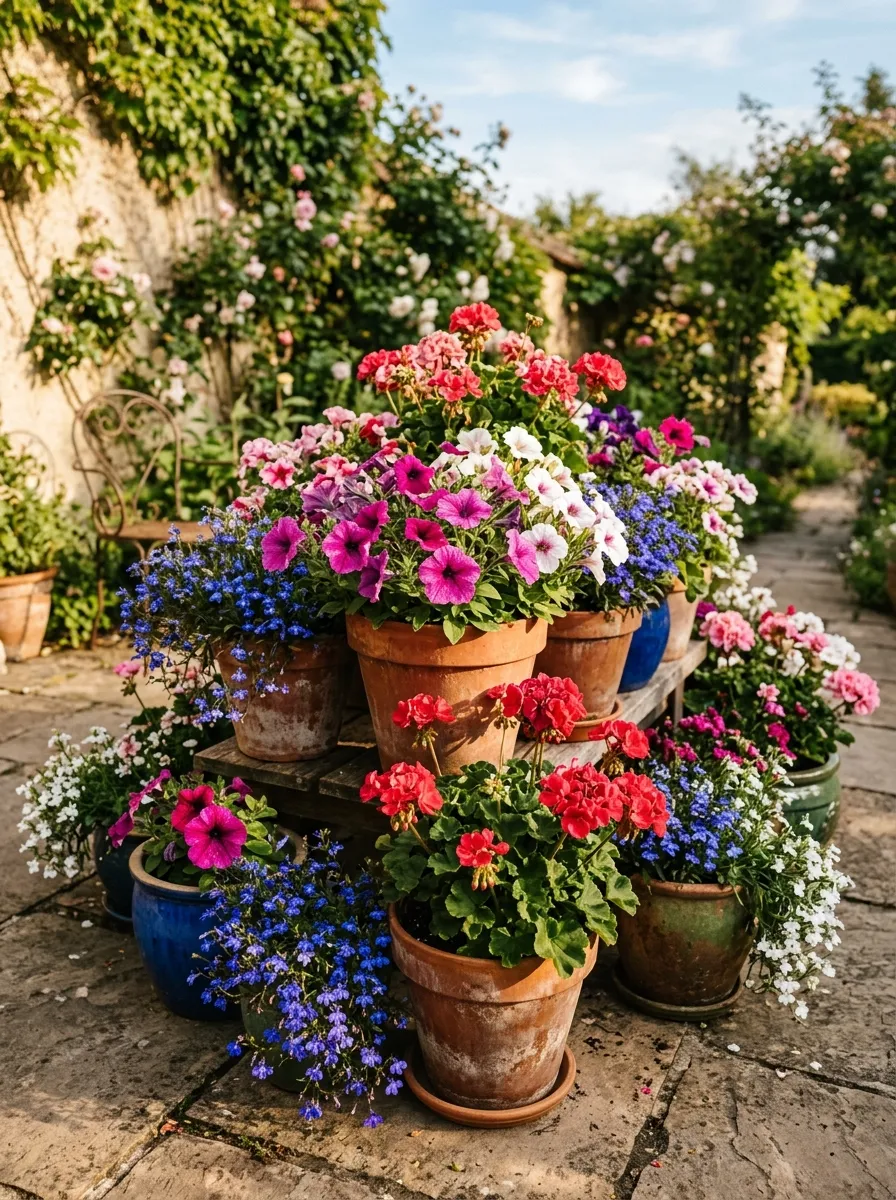
No yard? No problem. Container gardens bring color anywhere there’s sunlight—a patio, porch steps, or driveway edge. Grab a few pots of different sizes for visual interest. Thrift stores and yard sales often sell used planters for a dollar or two. Fill them with a mix of “thriller, filler, spiller” plants: one tall plant in the center, bushy plants around it, and something trailing over the edge like ivy or trailing petunias. This combo looks styled with almost no effort. Use a lightweight potting mix, not garden soil, since it drains better and won’t compact in a container. Group pots in odd numbers—three or five—for a more natural, pulled-together look. Move containers around during the season to chase sunlight or to freshen up a dull corner. When flowers fade, just swap them out instead of redoing an entire bed. This makes containers a low-commitment way to test colors and combinations before planting them permanently in the ground. Water containers more often than in-ground beds since pots dry out fast in warm weather.
If you’re working with a rooftop, the same container gardening approach can help you make the most of limited space-explore these rooftop garden ideas for creative ways to add greenery, flowers, and functional planting areas above ground level.
4. Create a Wildflower Meadow Patch
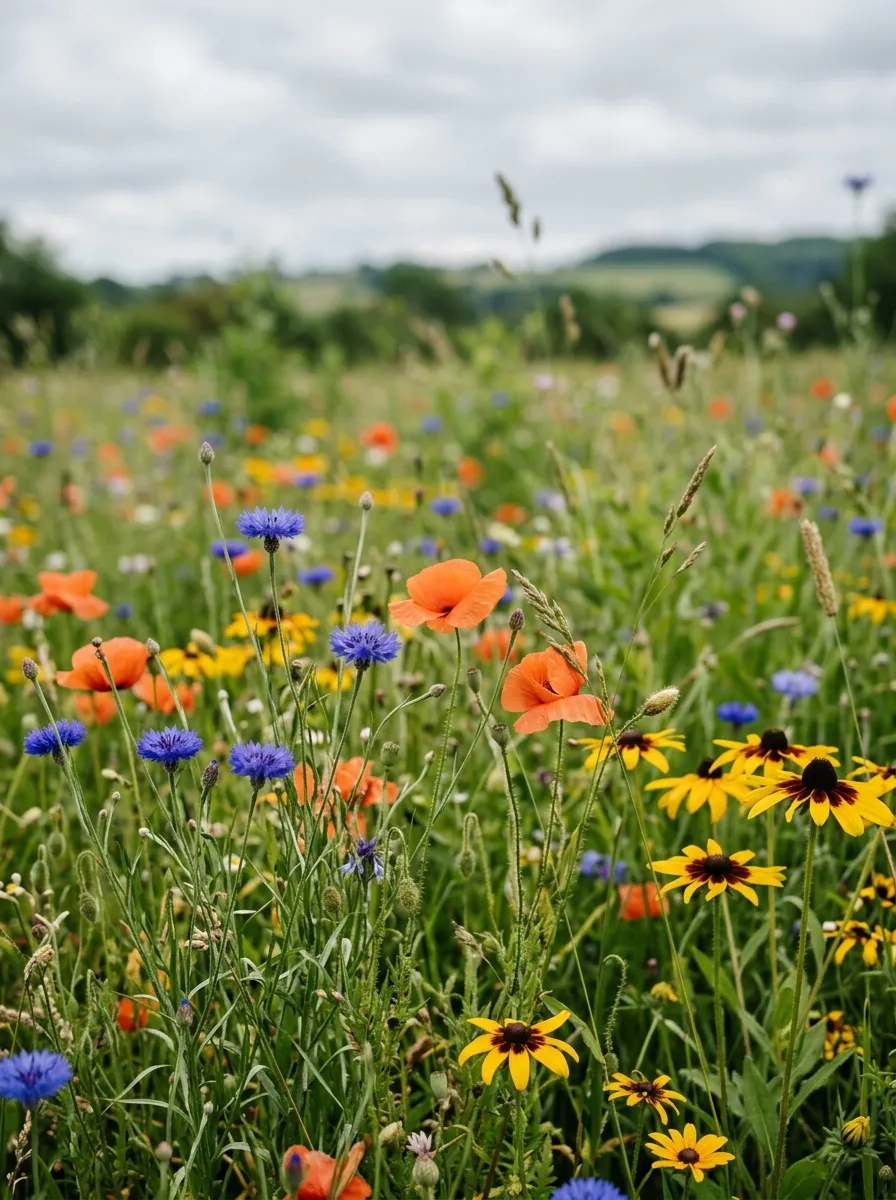
A wildflower patch gives you color with almost no ongoing work. Pick a sunny spot, even a scruffy corner you don’t know what to do with. Rake the soil lightly, scatter a wildflower seed mix, and press the seeds in with your foot or a board. No need to bury them deep. Water gently until seedlings appear, then let nature take over. Wildflower seed mixes are inexpensive and often cover hundreds of square feet from a single packet. This is a smart move for problem areas—slopes, patches where grass won’t grow, or spots near a mailbox. Bees and butterflies show up fast, which adds movement and life to the space. Mow the patch once at the end of the season to help it reseed for next year. Skip fertilizer here; wildflowers actually do better in average or poor soil. This project fits tight budgets and busy schedules since there’s no weeding, no shaping, and no fuss. It’s one of the simplest ways to turn unused space into something colorful and full of life.
5. Line Your Walkway With Low-Growing Blooms
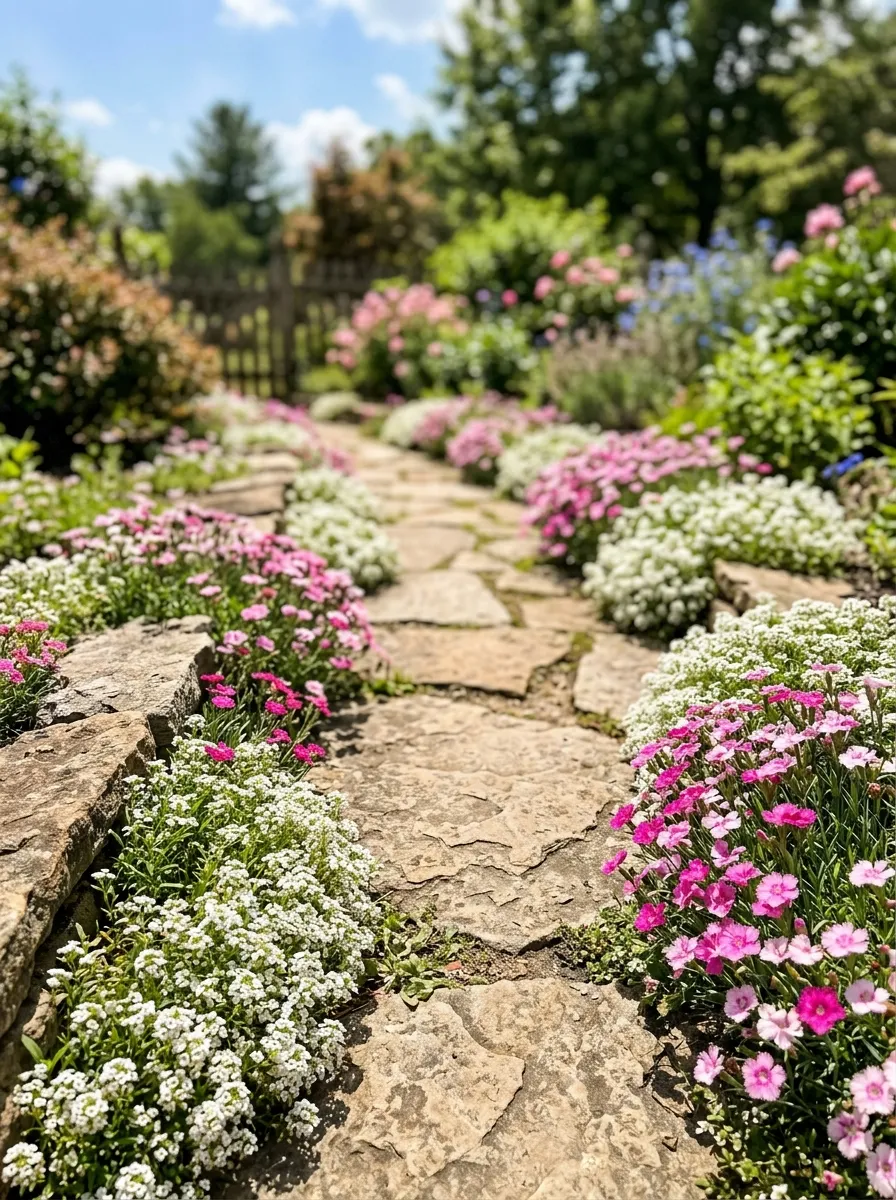
A walkway feels more welcoming when flowers frame it instead of plain grass or mulch. Choose low, mounding flowers like alyssum, dianthus, or creeping phlox. These stay under a foot tall, so they won’t block the path or need constant trimming. Plant them in a thin strip along both sides, spacing plants close enough that they’ll fill in and touch within a few weeks. Cheap annual flats from a garden center often cover a long path for under $20. If you want a permanent option, divide perennial groundcovers from a friend’s yard instead of buying new. Add a thin layer of mulch between plants while they’re young to keep the look tidy and cut down on weeding. This idea works for any walkway style—brick, gravel, or concrete—and instantly makes the entrance to your home feel cared for. Keep the color palette simple, sticking to two or three shades, so the path looks intentional rather than cluttered. Trim spent blooms occasionally to keep new flowers coming through the season.
6. Hang Flowering Baskets by the Front Door
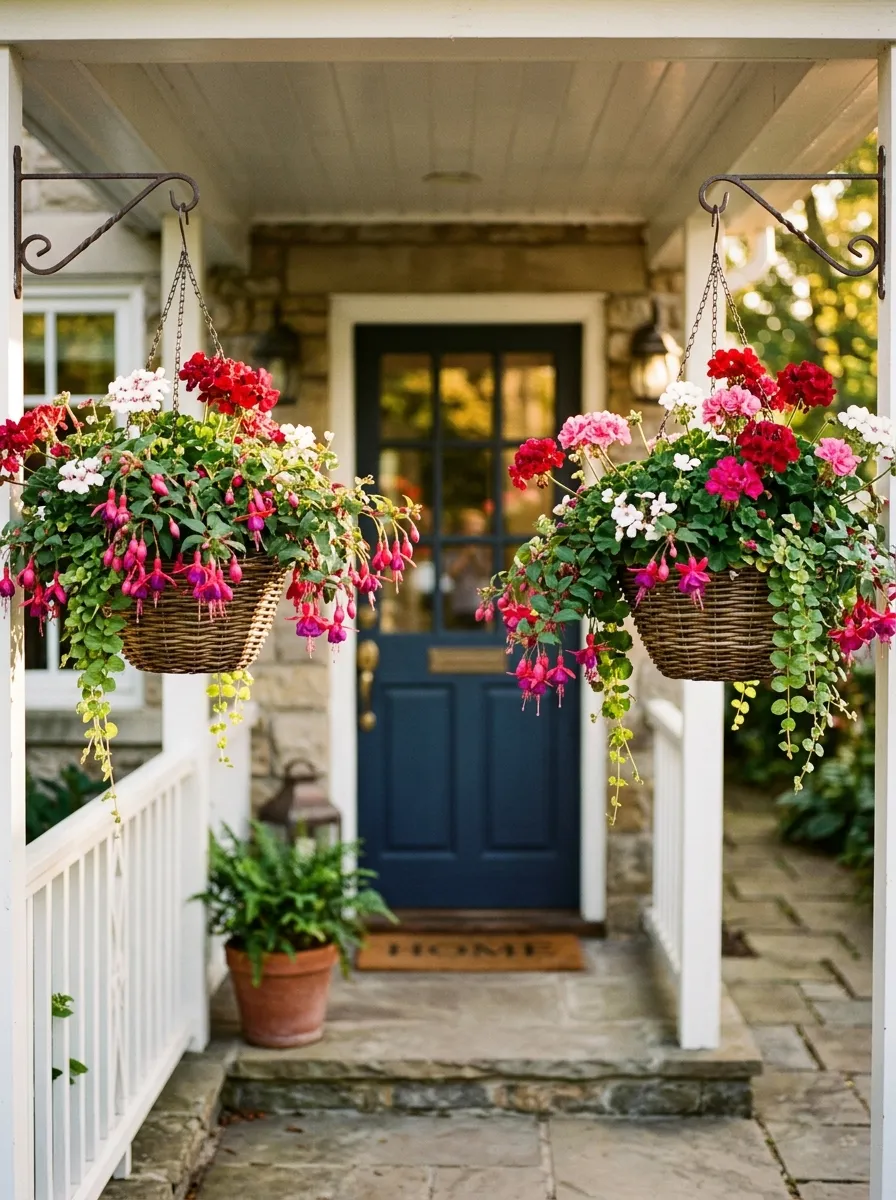
Hanging baskets add color at eye level, right where guests notice it first. Pick a sturdy hook or bracket rated for the basket’s weight once it’s watered and full-grown. Fuchsia, ivy geranium, and trailing petunias are classic choices because they cascade and fill out fast. Buy small starter plants instead of a fully grown basket—you’ll pay a fraction of the price and they catch up within a month. Use a lightweight hanging basket mix so the soil doesn’t get too heavy. Water baskets almost daily in summer since they dry out quicker than ground plants. A simple trick: drop a few ice cubes on top in the morning for slow, steady moisture without overwatering. Feed with a diluted liquid fertilizer every couple of weeks to keep blooms coming. Rotate the basket a quarter turn each week so it grows evenly instead of leaning toward the light. This small, affordable upgrade makes a front entry feel finished and gives your home real curb appeal without touching a shovel.
7. Plant a Cutting Garden for Fresh Bouquets
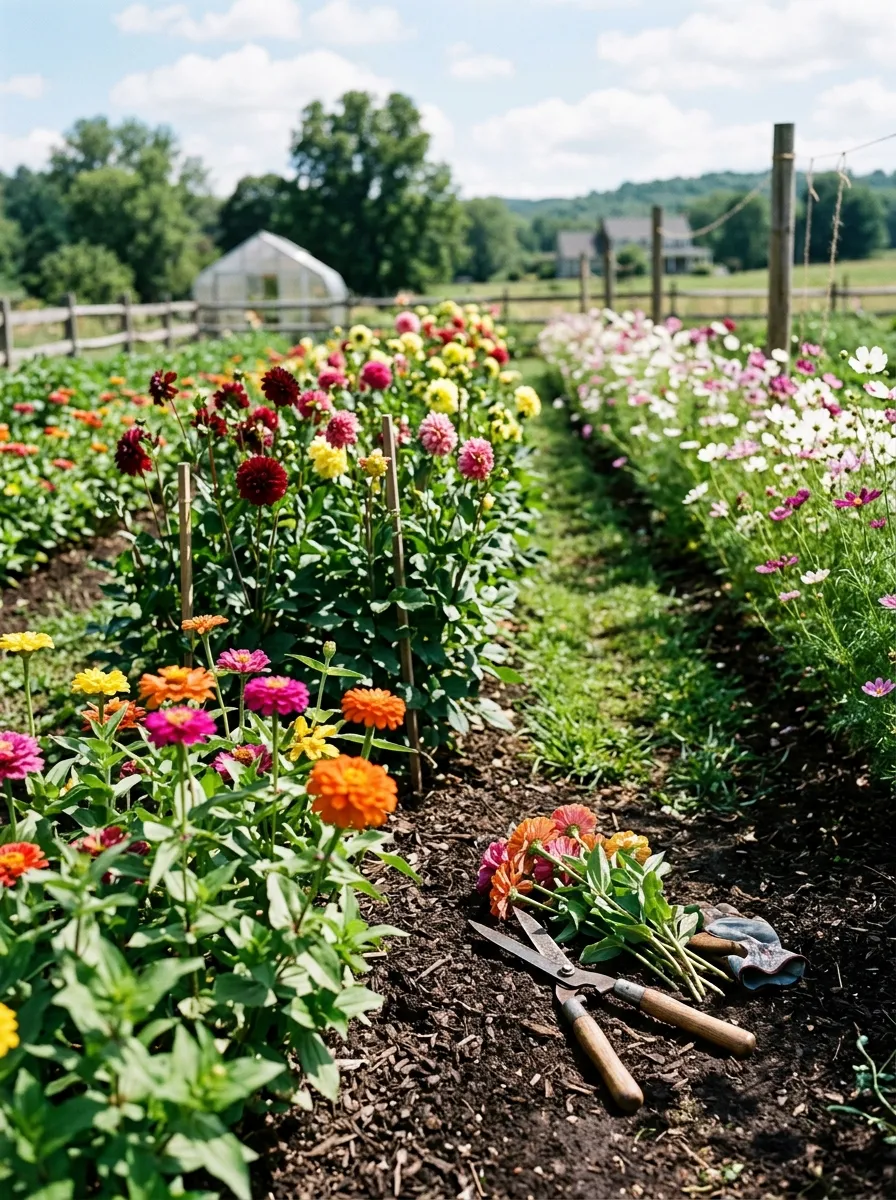
A cutting garden gives you fresh flowers for your table without buying them at a store. Set aside a small, sunny bed just for growing flowers you plan to cut. Zinnias, cosmos, sunflowers, and dahlias are reliable picks because the more you cut them, the more they bloom. Plant in rows instead of clusters so it’s easy to walk through and snip stems. Seeds are the cheapest way to start—many packets cost under $3 and produce dozens of stems over a season. Space plants a little closer than usual since you’ll be harvesting often, which keeps growth compact. Cut flowers in the early morning when stems are full of water, and place them in a bucket right away. Snip just above a leaf node to encourage the plant to branch out and produce more blooms. This bed pays for itself fast, since fresh flowers add up quickly at a store. It also gives you an excuse to enjoy your garden up close, one bouquet at a time.
8. Mix Textures With Ornamental Grasses and Flowers
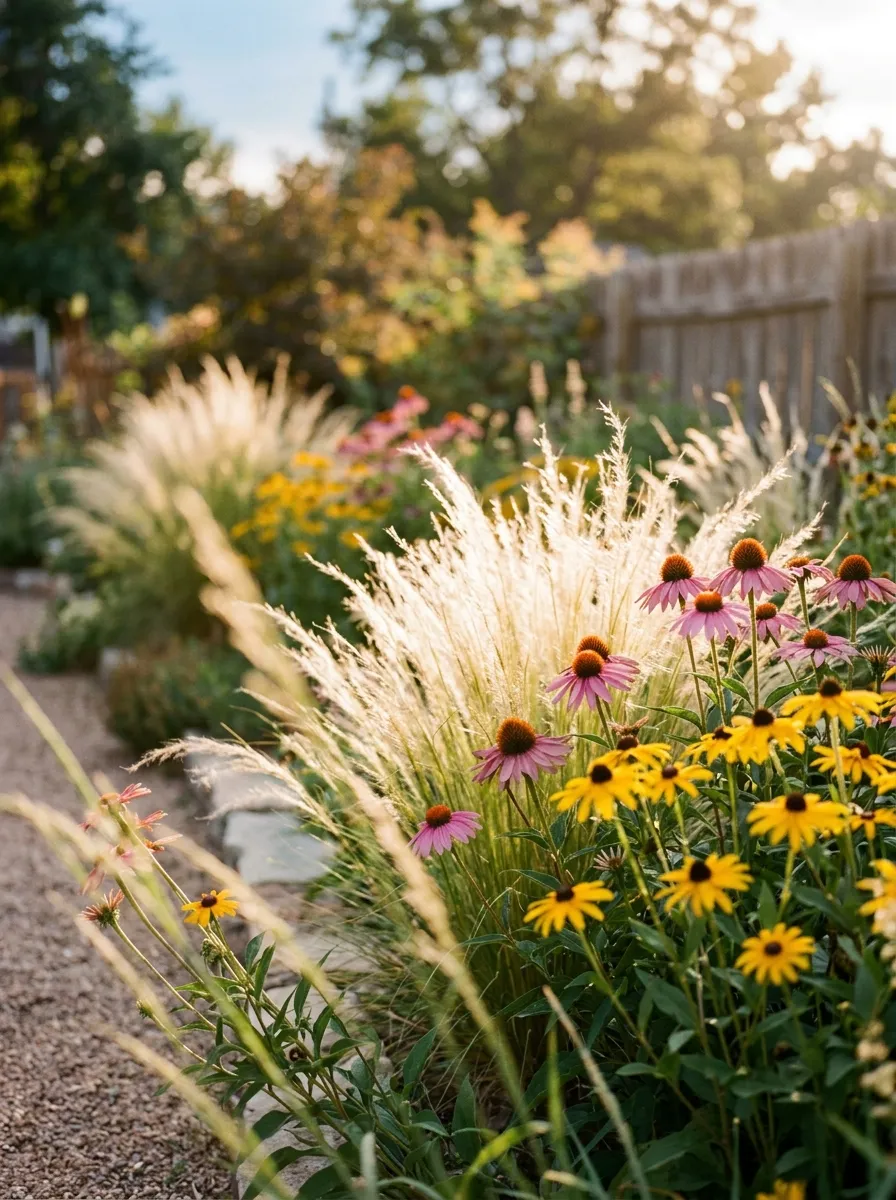
Flowers alone can look flat. Adding ornamental grasses gives a bed movement and texture, which makes the colors pop even more. Plant grasses like fountain grass or feather reed grass behind or between flowering plants such as coneflowers, black-eyed Susans, or asters. The grass sways in the wind and catches light differently throughout the day, adding interest even when nothing is in bloom. Grasses are usually low-maintenance and drought-tolerant once established, so they cut down on watering. Buy small grass plugs instead of mature plants—they’re a fraction of the cost and grow quickly. Space them so they have room to fill out over one or two seasons. This combination also helps hide the awkward gap after early spring flowers fade and before summer blooms take over. Cut grasses back once a year in late winter to keep them tidy. Pairing grasses with flowers is a simple way to make a bed feel layered and full without adding more flower varieties or extra cost.
9. Turn a Slope Into a Terraced Flower Display
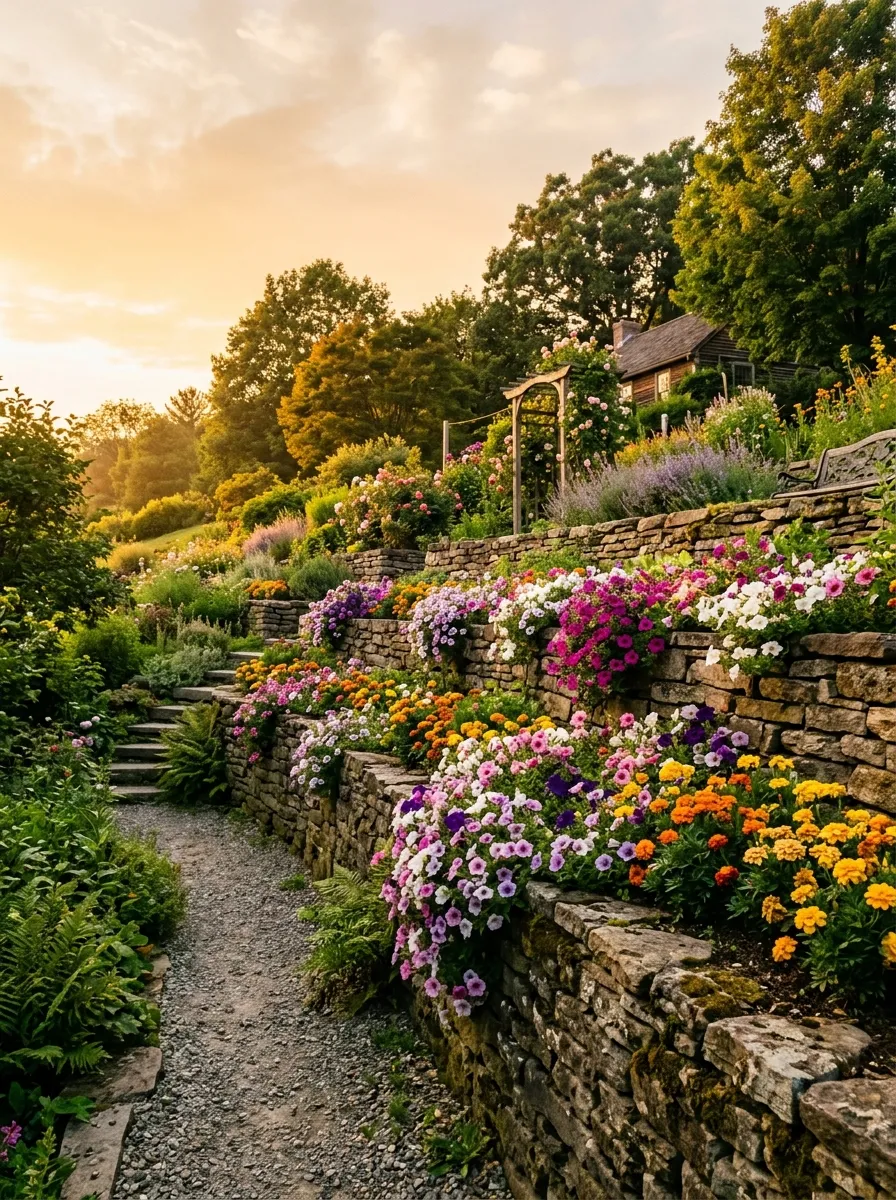
A sloped yard is tricky to mow but perfect for flowers. Build simple terraces using stacked stones, landscape timbers, or even cinder blocks you already have. Each level becomes its own small bed, which stops soil from washing away during heavy rain. Fill each terrace with color, mixing trailing flowers like petunias along the edges so they spill over the stone lines. This softens the hard edges and blends the levels together visually. Start with one or two terraces if the budget is tight, then add more sections next season. Reclaimed bricks or broken concrete pieces from a demolition site work as free terrace walls if you’re willing to haul them. Plant drought-tolerant flowers on upper terraces since they dry out faster, and save moisture-loving plants for the bottom levels. This idea solves a real yard problem—erosion and awkward mowing—while adding a real design feature. It also creates natural viewing points from different angles, so the color show changes depending on where you’re standing.
10. Design a Moon Garden for Evening Color
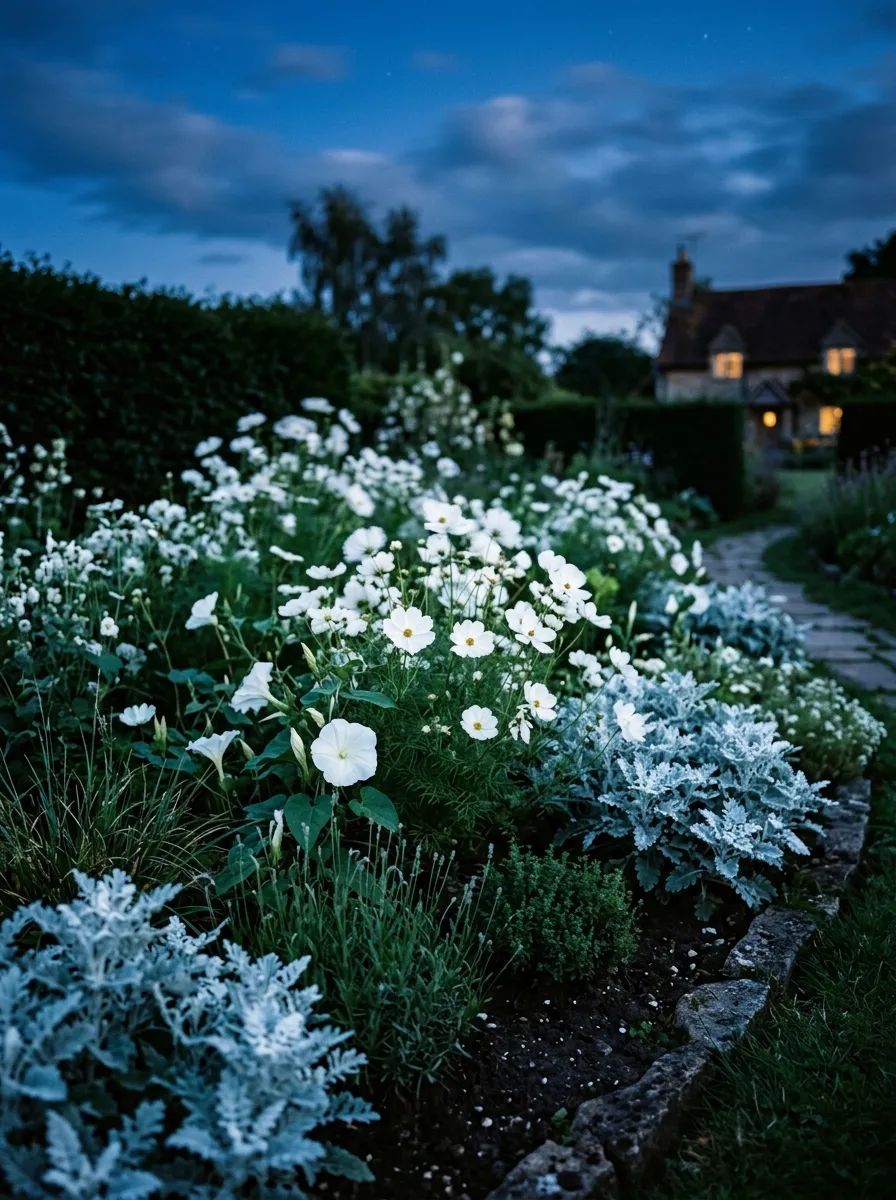
A moon garden is planted for evening, not daytime. Choose flowers with white or pale petals, since they reflect moonlight and seem to glow after sunset. Moonflowers, white cosmos, and dusty miller are easy, inexpensive choices that thrive in most yards. Plant this bed somewhere you actually sit in the evening, like near a patio or a bench, so you get to enjoy the effect. Add a few fragrant plants like nicotine or evening stock, since many pale flowers release scent at night to attract moths. This turns the garden into an experience, not just a visual. Keep the palette narrow—whites, silvers, and pale yellows—so the glow effect isn’t broken up by darker colors. Seeds for moon garden flowers are widely available and cheap, often under $3 a packet. Skip solar lights here; the whole point is letting the flowers do the glowing. This is a low-cost way to get more use out of your yard after work, when daytime gardens usually go unseen and unappreciated.
11. Layer Bulbs for Months of Blooms
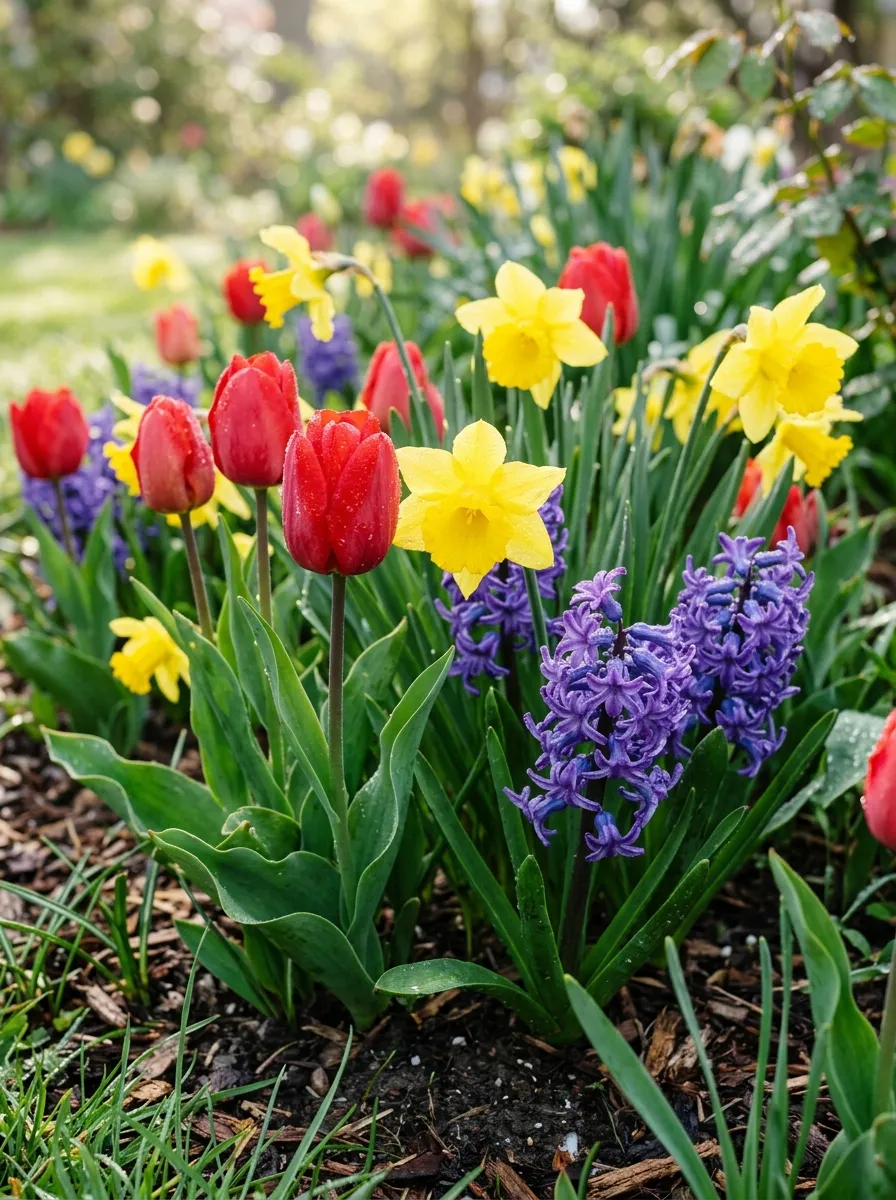
Bulb layering means planting different bulbs at different depths in the same spot, so as one type finishes blooming, another takes over. Plant tulips deepest, daffodils in the middle, and crocuses near the surface. This trick, sometimes called “bulb lasagna,” stretches color from late winter through late spring in a single small bed. Buy bulbs in bulk bags during fall sales—prices drop fast once the planting season winds down. A $10 bag can cover a good-sized bed. Dig one wide hole instead of separate holes for each bulb type, which saves time and effort. Cover each layer with soil before adding the next type. Water once after planting, then let nature do the rest until spring. This method works in containers too, which is great for small patios. Bulbs come back year after year without replanting, so this is a one-time investment that keeps paying off. It’s one of the easiest ways to guarantee color early in the season, right when the rest of the yard still looks bare.
12. Grow a Vertical Flower Wall
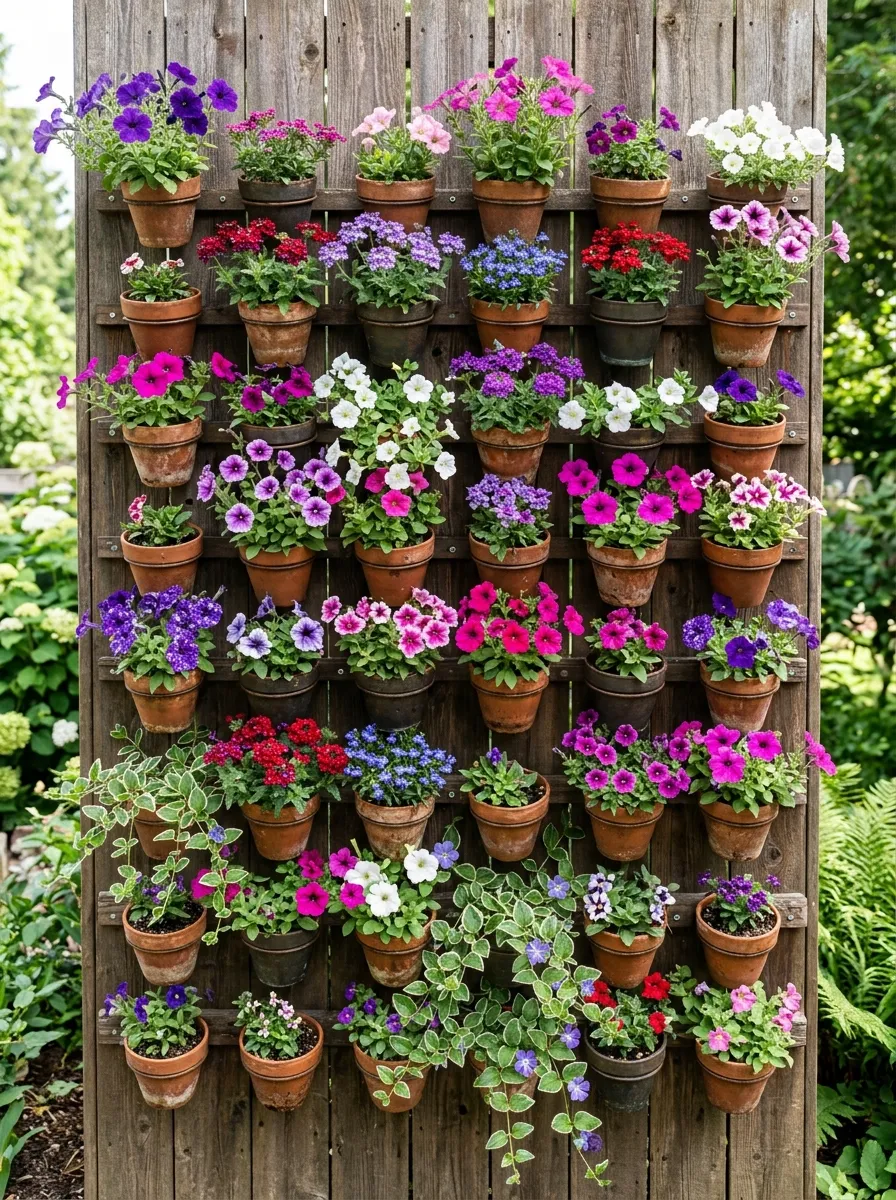
Short on ground space? Go up instead. A vertical flower wall uses a fence, trellis, or a simple pallet to hold small pots or planting pockets. Old wooden pallets are often free from hardware stores or moving companies. Stand the pallet up, staple landscape fabric to the back, and fill the gaps with soil and small flowering plants like petunias or vinca. Lean the finished pallet against a fence or wall in a sunny spot. This setup turns a blank wall into a bold splash of color and works great for renters who can’t dig into the ground. Water vertical gardens more often since gravity pulls moisture down fast, leaving upper plants dry. A drip line or even a slow trickle from a hose timer keeps things even. Choose compact, trailing varieties so the wall fills in without plants tangling into a mess. This idea is one of the most budget-friendly on this list since most of the materials can be scavenged or repurposed from things already lying around.
13. Plant a Butterfly and Bee Garden
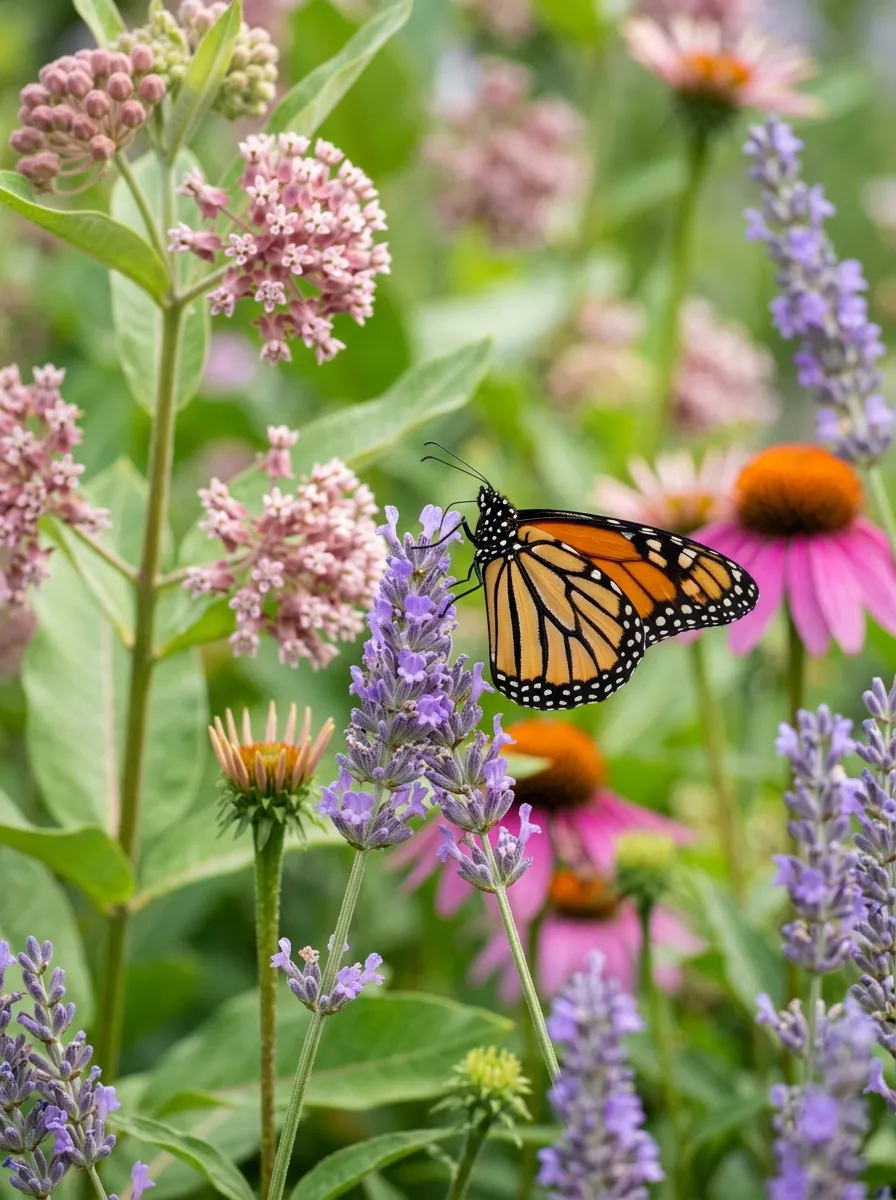
Color looks even better with movement. A pollinator bed draws butterflies and bees, which adds life to your yard while helping the local ecosystem. Plant flowers like milkweed, lavender, coneflower, and bee balm. These are hardy, often perennial, and come back year after year without much care. Skip pesticides in this bed entirely, since they harm the very visitors you’re trying to attract. Group the same flower type in clusters of three or more instead of single plants scattered around—pollinators find clustered blooms easier to spot. Native plants are usually cheapest since they’re suited to your local climate and need less water and fuss. Many local plant sales or extension offices give away native seedlings for free or close to it. Add a shallow dish of water with a few stones for bees to land on while drinking. This bed doubles as a lesson for kids, letting them watch butterflies up close. Over a season or two, this becomes one of the liveliest, most rewarding spots in the whole yard.
14. Use Repurposed Containers for a Quirky Look
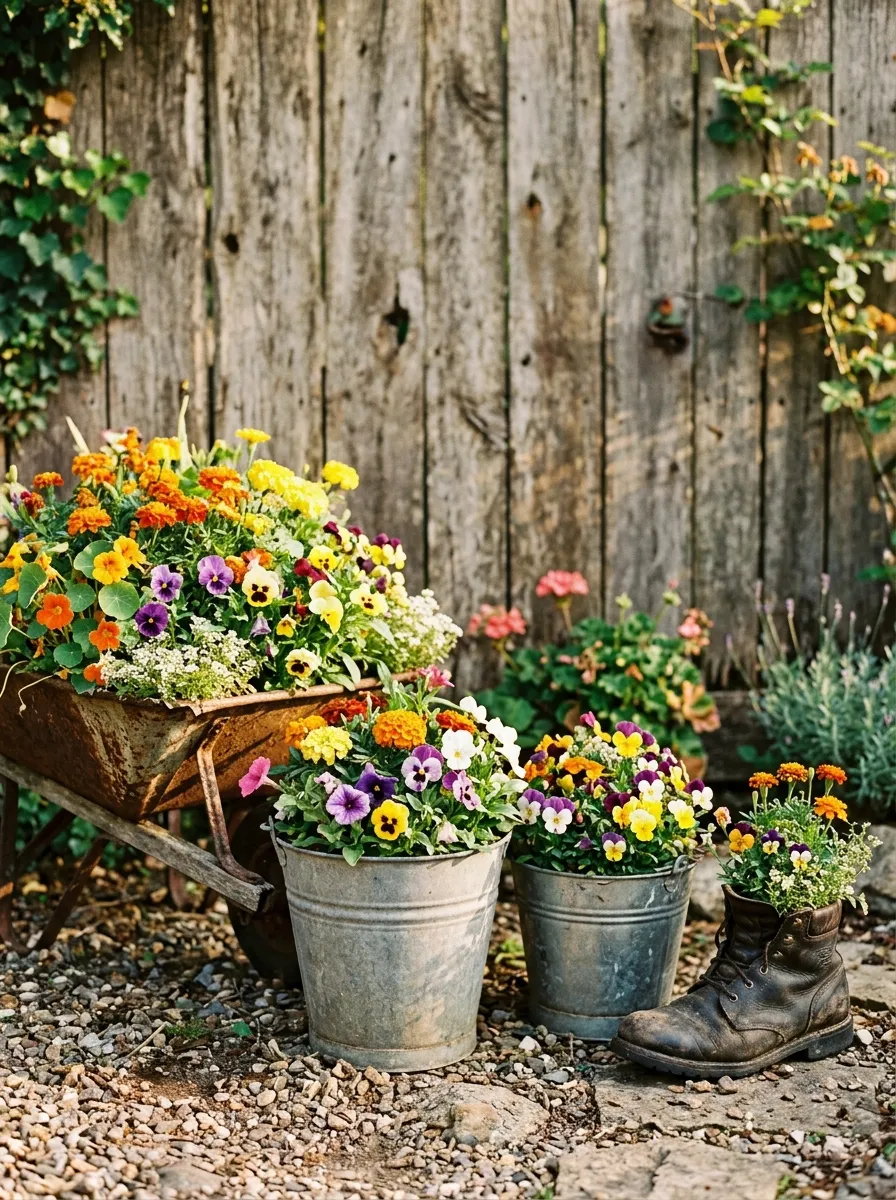
Skip the garden store planters and look around your garage instead. Old wheelbarrows, buckets, boots, and even chipped teapots make charming, free flower containers. Drill a few drainage holes in the bottom of anything that doesn’t already have them. Fill with potting soil and plant colorful, low-maintenance flowers like marigolds, pansies, or petunias. This idea costs almost nothing since you’re reusing items that would otherwise sit unused or get thrown out. Group a few repurposed containers together near a porch or garden edge for a playful, collected look. Rusty metal, chipped paint, and worn wood add character that a store-bought pot can’t match. Rotate containers seasonally, swapping spring pansies for summer zinnias once the weather warms. This approach also works well for kids’ projects, since old containers are easy to paint or decorate before planting. It’s a fun, low-stakes way to add personality and color to a yard without spending a dime on new planters.
15. Create a Color-Themed Flower Bed
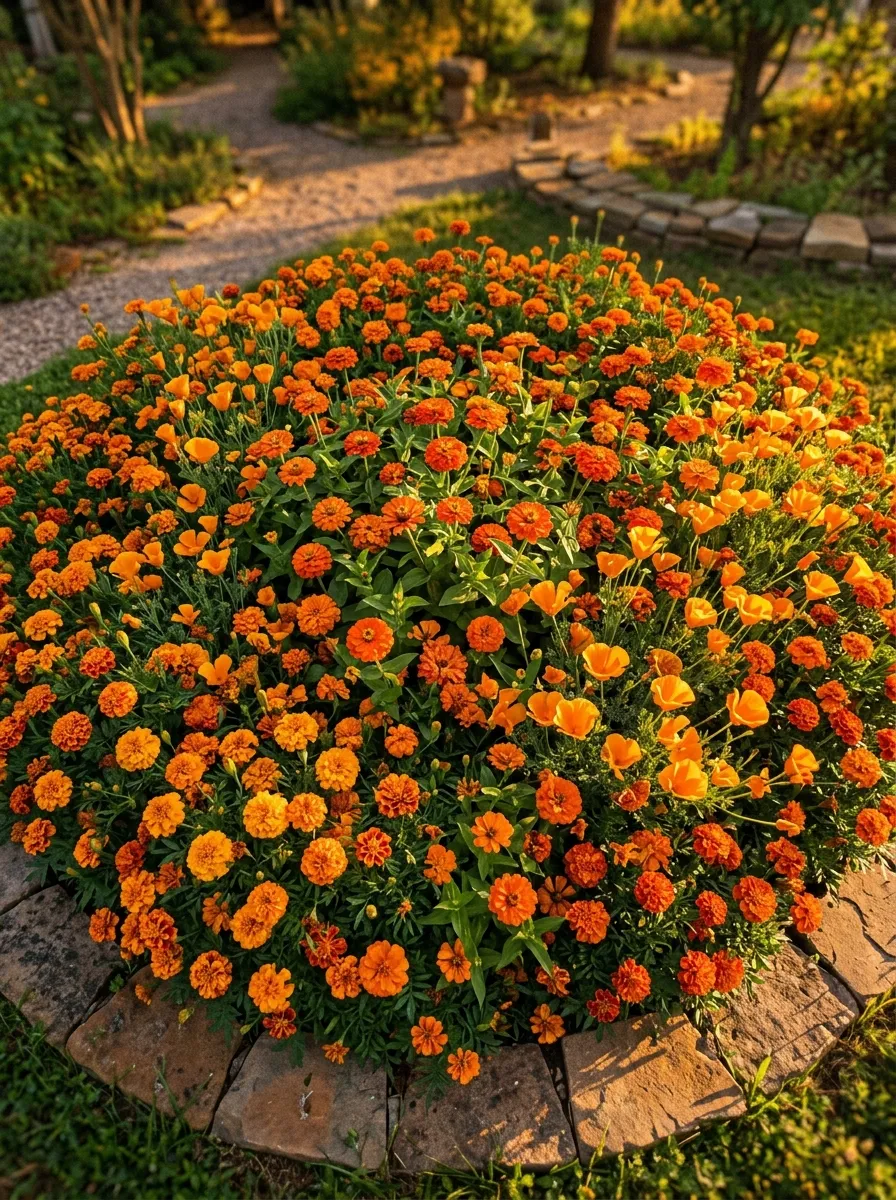
A monochrome bed sounds bold, but it’s one of the easiest to plan and shop for. Pick one color-say, orange or purple-and fill a bed with flowers only in that shade. Mixing different flower types within the same color keeps it interesting: marigolds, zinnias, and California poppies all come in warm orange tones but have very different shapes and heights. This approach makes shopping simple since you’re not trying to match a complicated palette. It also photographs beautifully, which is a nice bonus if you like sharing garden pictures. Start with seeds for the cheapest option, since most of these flowers grow fast from seed and don’t need a head start indoors. Group taller flowers at the back and shorter ones up front so every plant gets its share of sunlight. This bed works especially well near a mailbox, along a short fence, or in a small raised bed where a mixed palette might look busy. A single strong color makes a small space feel more intentional and put-together.
16. Add Climbing Vines for Vertical Color
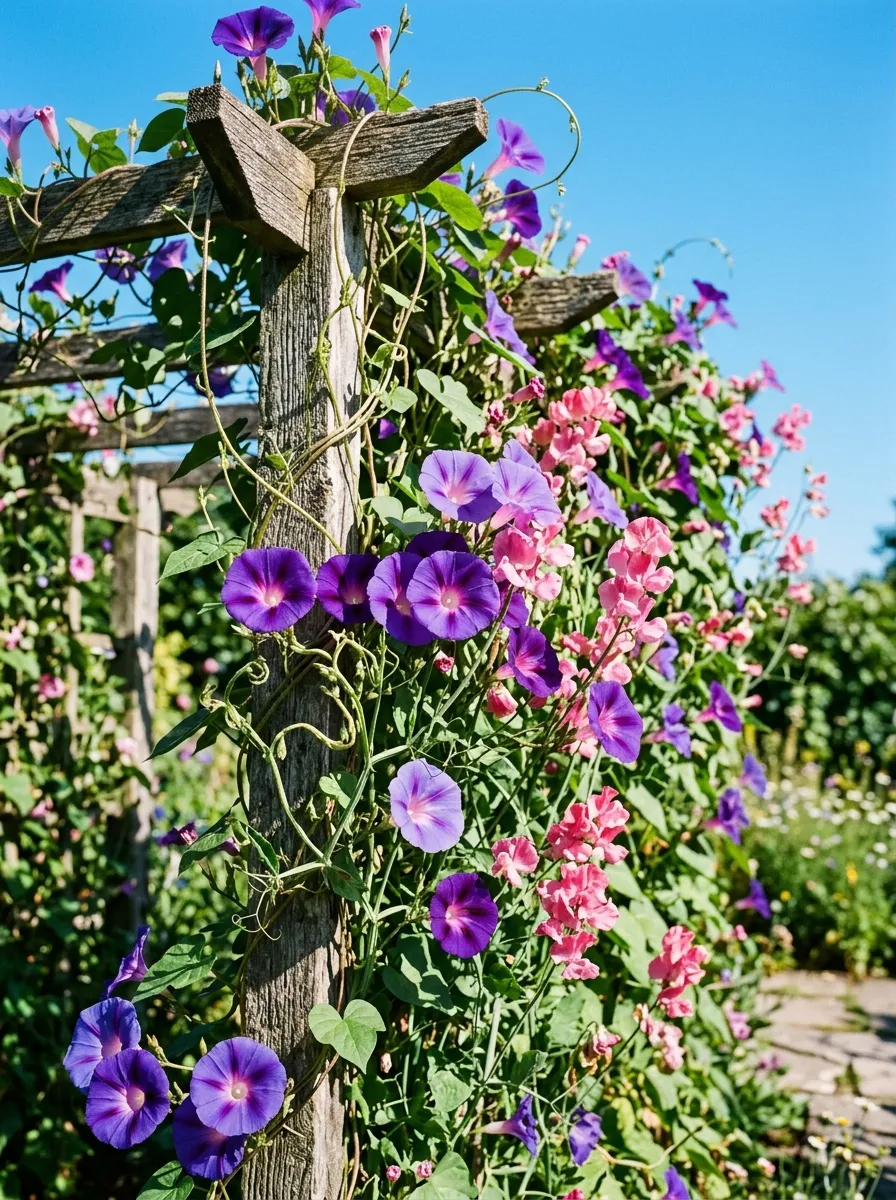
Vines fill vertical space that flower beds can’t reach. Morning glory, sweet pea, and black-eyed Susan vine are all fast-growing, cheap-to-start options that climb a trellis, fence, or mailbox post within a single season. Seeds for climbing flowers are some of the least expensive in any garden aisle, often under $2 a packet. Soak seeds overnight before planting to help them sprout faster. Set up a simple trellis using garden twine strung between two nails, or repurpose an old ladder leaned against a wall. Vines need something to grip, so make sure whatever structure you use has enough texture or gaps for tendrils to wrap around. Plant at the base and let the vine do the climbing—no training required for most varieties. This is a smart trick for hiding an ugly fence, ventilation unit, or bare wall. Within a few weeks, what used to be an eyesore becomes a wall of blooms. Water regularly while the vine establishes itself, then cut back once it’s climbing well on its own.
17. Plant an Herb and Flower Combo Bed
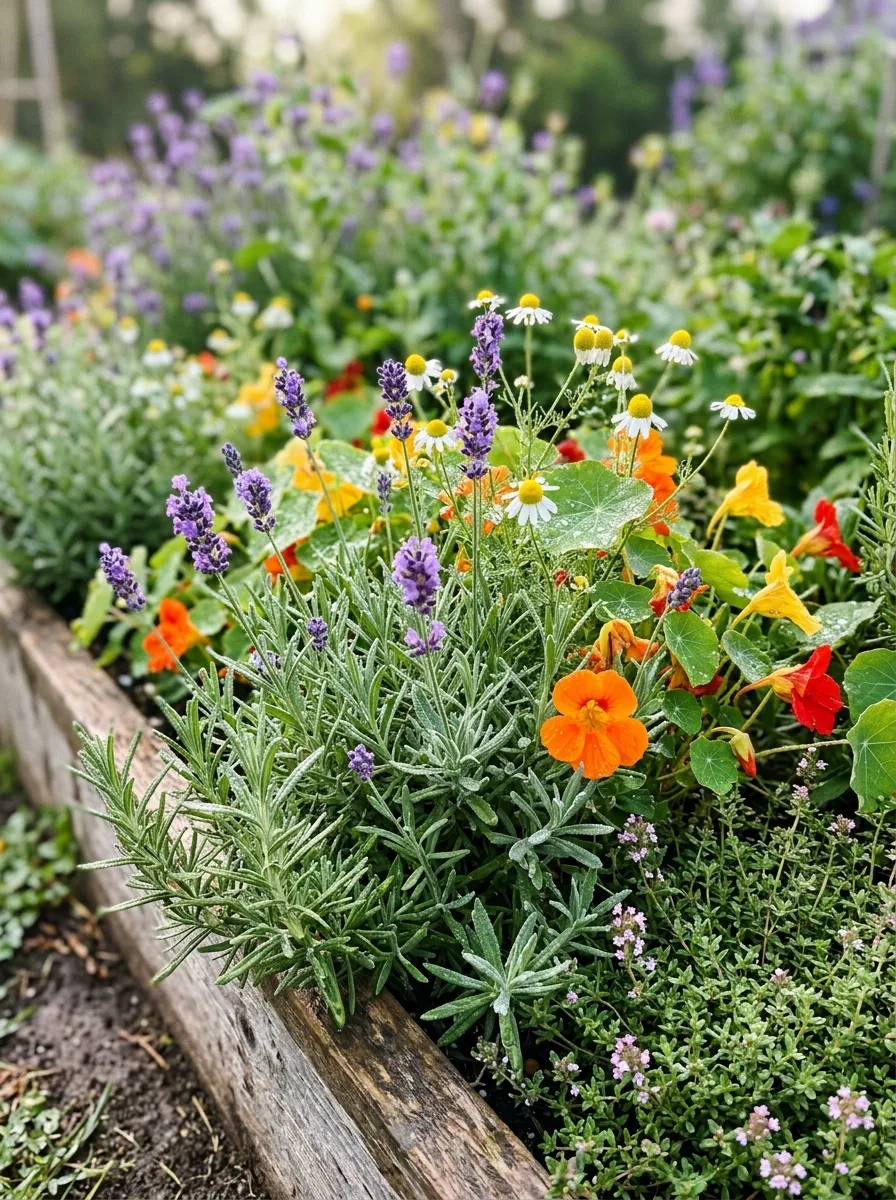
Flowers and herbs actually make great neighbors. Lavender, chamomile, and nasturtium all bloom with color while also being useful in the kitchen. Plant them together in one bed instead of separating flowers from herbs, which saves space in a small yard. Many herb flowers, like chive blossoms or borage, are edible and add a pop of purple or blue to salads. This bed pulls double duty: it looks good and gives you something to use in cooking. Herbs are often sold cheap as small starts, and many, like rosemary or thyme, grow into large, bushy plants that only need one purchase to fill a big space over time. Nasturtiums are especially budget-friendly since their large seeds are easy to plant directly in soil and sprout within a week. Keep this bed near the kitchen door if possible, so it’s easy to snip herbs while cooking. Water herbs a little less than flowers, since many prefer drier soil, and group plants with similar watering needs together to keep care simple.
18. Frame Your Mailbox With a Mini Garden
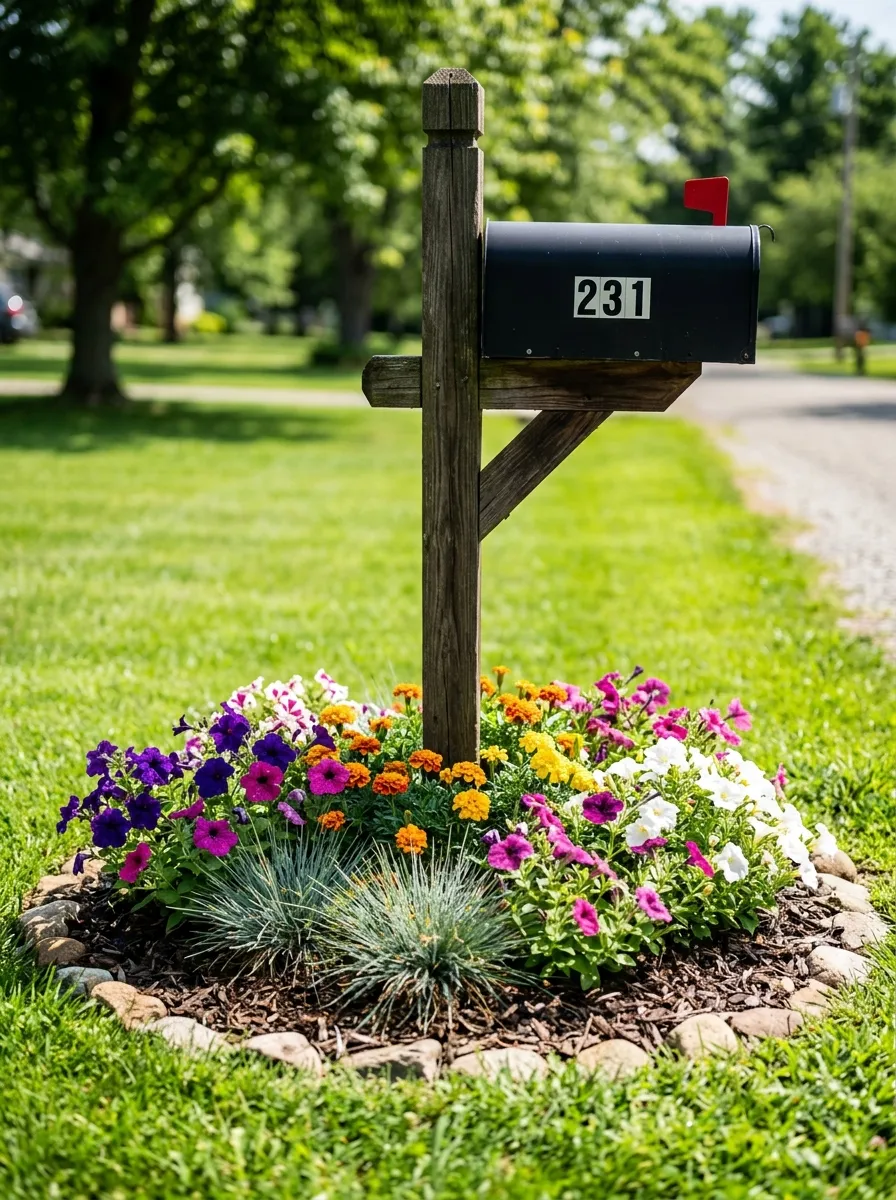
A bare mailbox post is an easy, overlooked spot for color. Dig a small circle or half-moon bed around the base, about two feet wide. Fill it with a mix of low, colorful flowers like petunias, marigolds, or dwarf zinnias. This spot gets seen every day by you, your neighbors, and the mail carrier, so it’s worth the small effort. Since the area is compact, this project costs very little—often under $15 for enough flowers to fill it. Add a thin edge of mulch or small stones to keep grass from creeping back in. Choose flowers that bloom continuously through summer so you’re not replanting the whole bed mid-season. If your mailbox post is wood, consider adding a small climbing vine at the base to soften the post itself. This tiny bed is one of the fastest projects on this list, often finished in under an hour, but it makes a real difference in how the front of your property looks from the street.
19. Plant a Themed Fairy Tale Garden for Kids
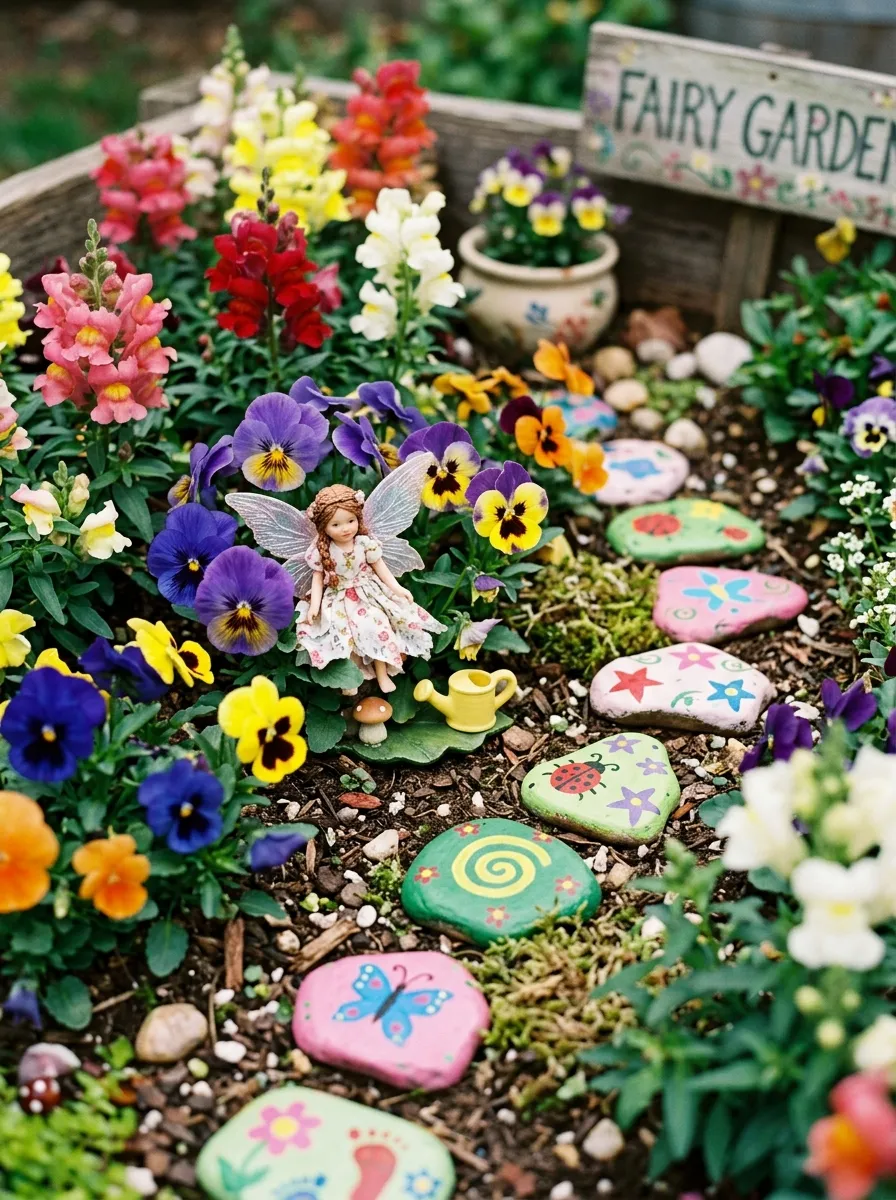
Get kids involved by planting a small, playful garden just for them. Choose flowers with fun shapes and names, like snapdragons that “snap” when squeezed, or pansies with faces. Add painted rocks, small figurines, or a mini birdhouse to make the space feel like a tiny magical world. This project doesn’t need much space-a two-foot corner works fine. Let kids pick out a few seed packets themselves and help plant them; this builds excitement and gives them ownership over the space. Snapdragons and pansies are both inexpensive and easy to grow from seed or small starts. Add a small watering can just their size so they can help with care. This bed becomes a great teaching tool, showing kids how a tiny seed turns into a real flower over a few weeks. It also gets them outside and away from screens, which is a nice side benefit. Keep the whole area low-maintenance so kids can be hands-on without worrying about ruining anything expensive. For even more inspiration, explore these fairy garden ideas for kids to create a whimsical little outdoor space filled with imagination, playful details, and kid-friendly plants.
Conclusion
A colorful yard doesn’t require a big budget or a landscaping crew. Small, simple choices—scattering wildflower seeds, repurposing an old cart, layering bulbs, or lining a walkway with low blooms—add up to a space that feels alive and cared for. Start with one or two ideas from this list that fit your space and schedule, then build from there season by season. Grab some seeds, pick a sunny spot, and get planting. Your yard is ready for its color.
1 thought on “19 Gorgeous Flower Garden Ideas That Fill Your Yard With Color”