
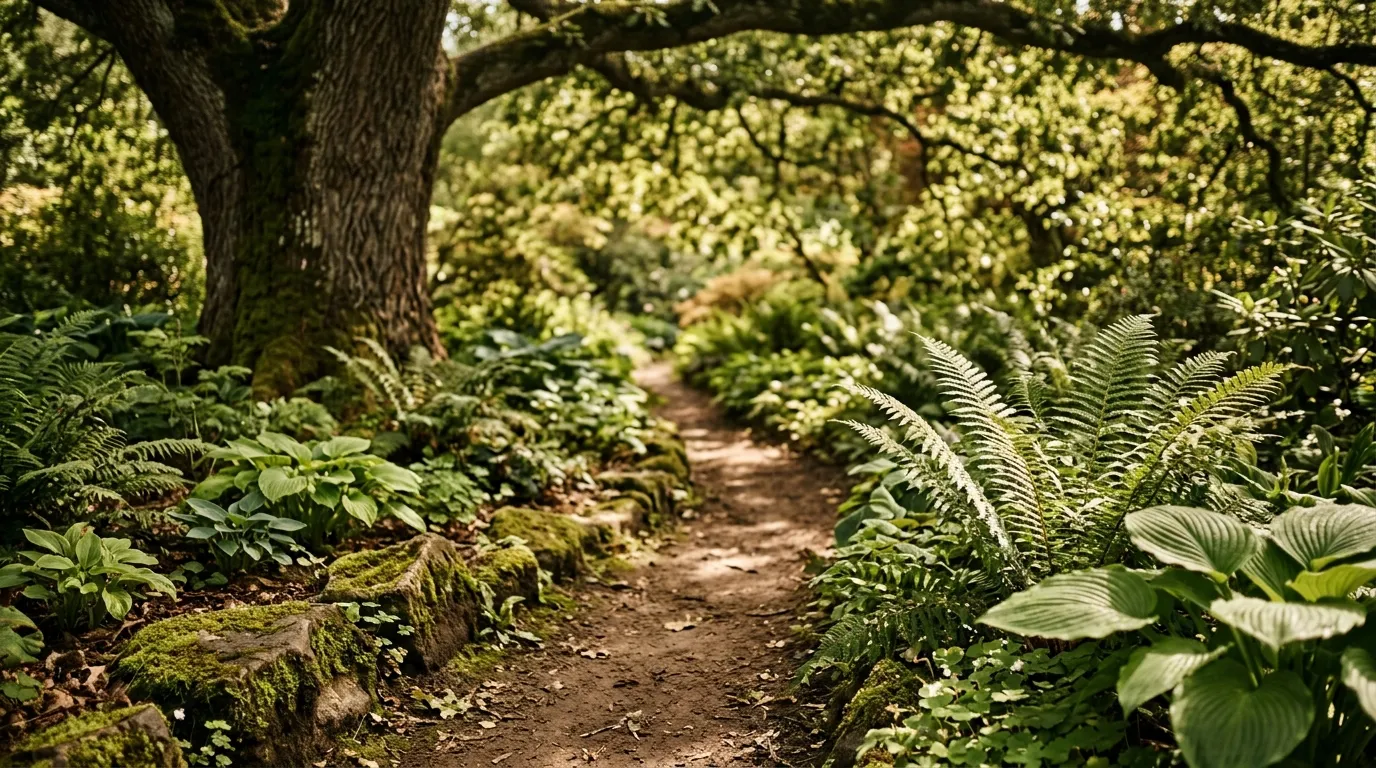
That bare patch of dirt under your favorite tree does not have to stay empty. Shade can feel like a limit, but it is really an opportunity to grow plants that thrive where sun-lovers struggle. With the right mix of groundcover, stepping stones, and shade-tolerant flowers, the space beneath any tree can turn into one of the prettiest corners of your yard. Choosing the right blooms can make an even bigger difference, so explore our guide to beautiful flower names and varieties for inspiration when selecting colorful, shade-friendly options. Below are 22 practical, affordable ideas for filling that shady patch with texture, color, and life, no matter how much light actually reaches the ground.
1. Hosta Ground Cover Bed
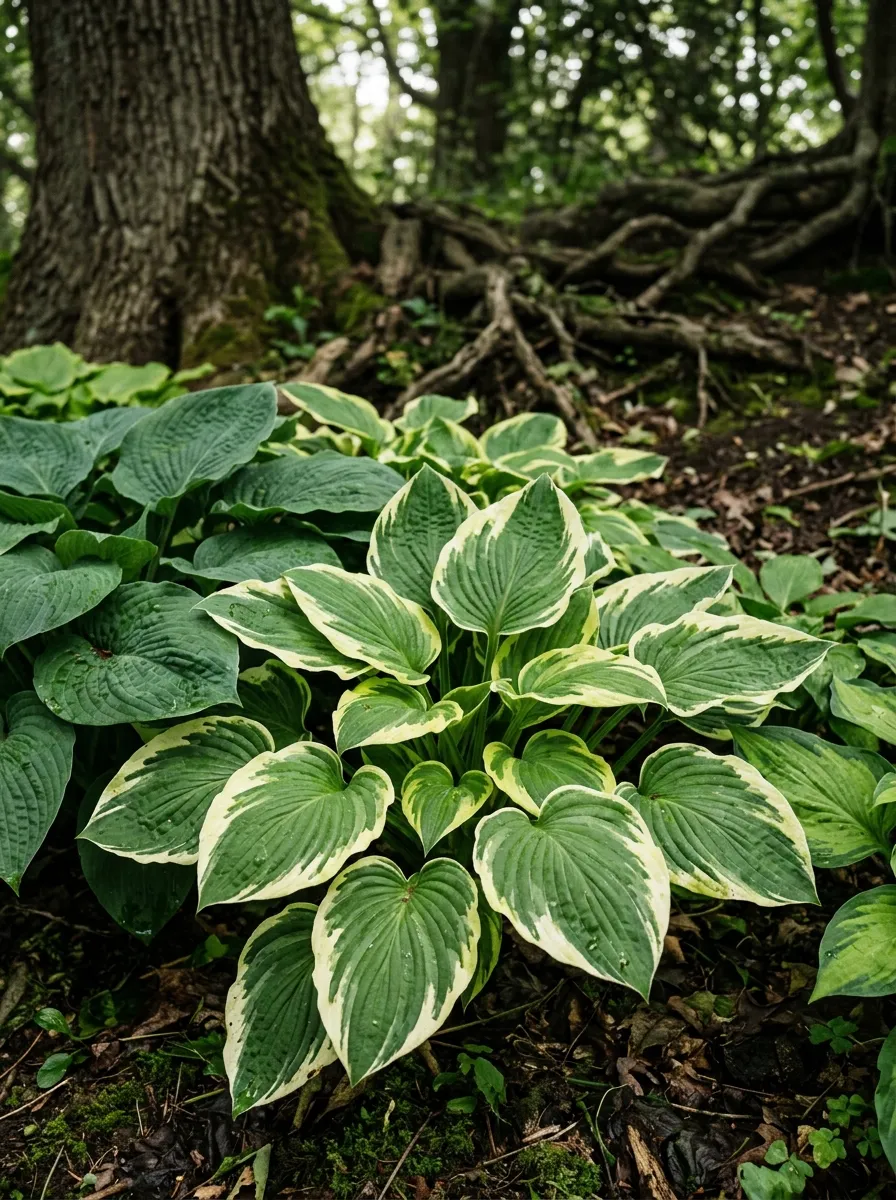
Hostas are one of the easiest plants for shady spots because they barely need any direct sun to grow well. Plant them in clusters of three or more for a fuller look right from the start. Space them about a foot apart since they spread wider as they mature. Water deeply once a week rather than lightly every day, which encourages stronger roots. Divide older clumps every few years and replant the extras for free coverage elsewhere. Mix leaf colors and sizes, from deep green to blue-gray or variegated white, for visual variety. Hostas also help suppress weeds once established, cutting down on maintenance work. Watch for slugs, which love the leaves, and handpick them off in the evening if needed. A thin layer of crushed eggshells around the base can help keep slugs away without chemicals. Because hostas are widely sold and easy to divide from a neighbor’s garden, this is one of the cheapest ways to fill a shady bed with lush, full greenery.
2. Moss Carpet Pathway
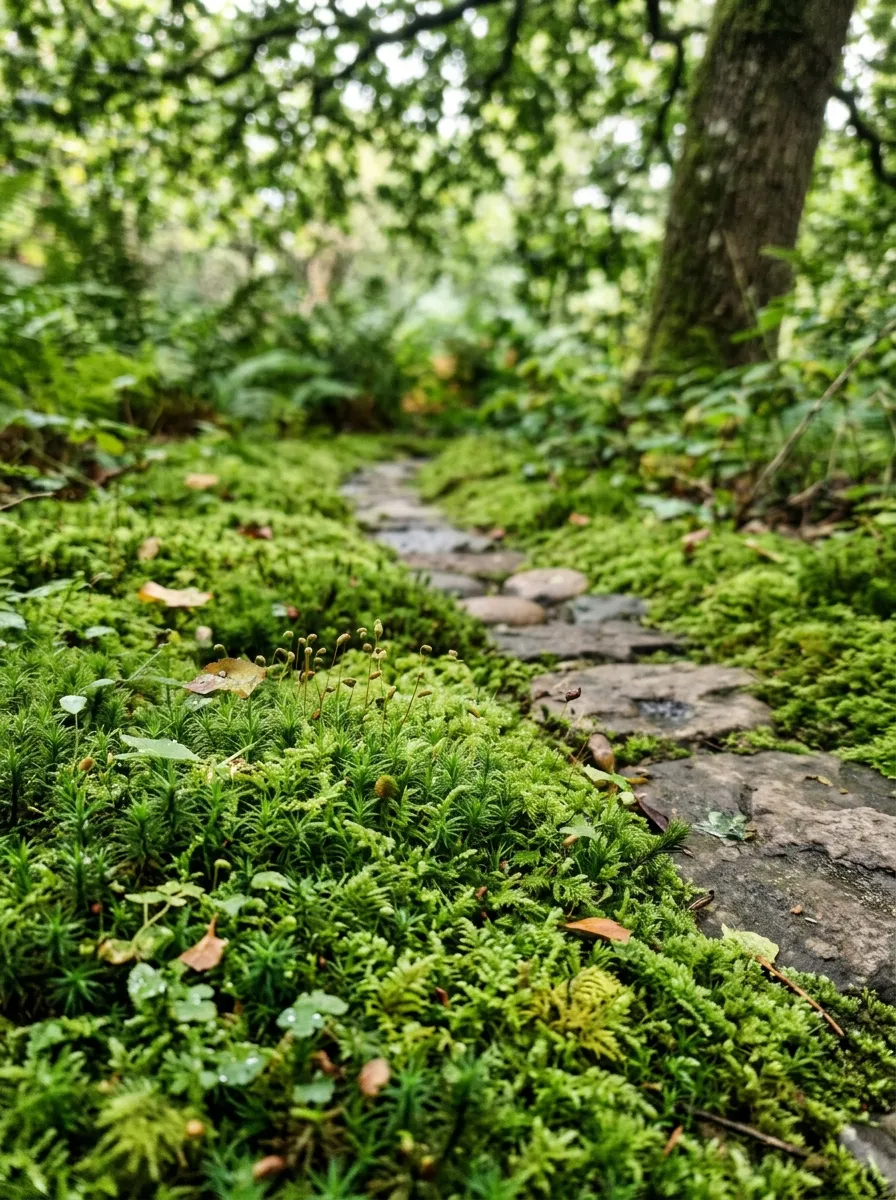
Moss thrives exactly where grass struggles, making it perfect for the deep shade under a tree canopy. Instead of fighting to grow grass, let moss take over naturally or help it along by removing weeds and debris from the soil. Press small moss patches into damp soil, spacing them a few inches apart so they can spread and fill gaps over time. Mist the area regularly during dry spells since moss absorbs water through its surface. Add flat stepping stones through the moss to create a soft, quiet path underfoot. This combination feels cool and inviting, especially in summer heat. Moss requires no mowing, fertilizing, or regular watering once established, making it one of the lowest maintenance ground covers available. You can often collect moss responsibly from shaded areas of your own property or buy small starter patches cheaply online. Within a season or two, a full moss carpet can transform a patchy, bare area into a smooth, green surface that looks intentional and cared for.
3. Fern Grove Corner
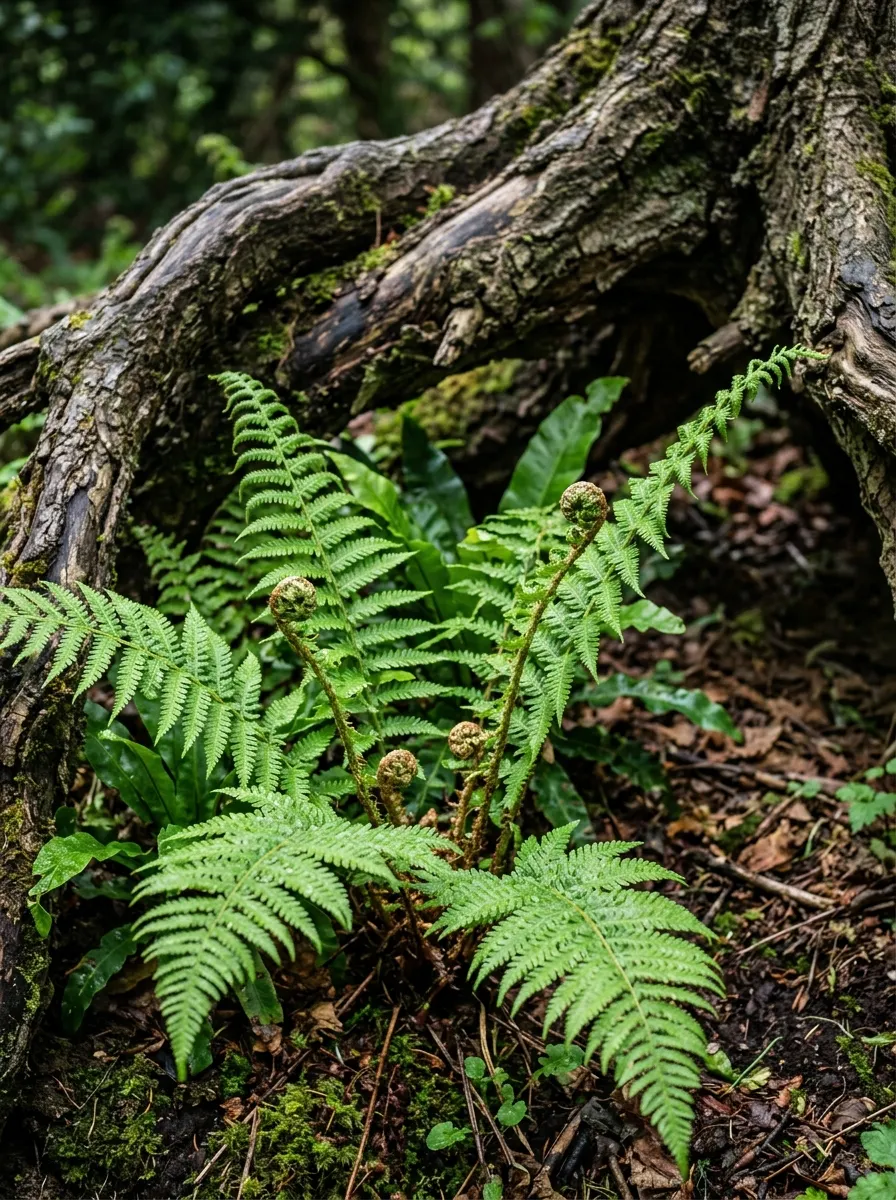
Ferns bring a soft, layered texture to shady corners that few other plants can match. Choose varieties like autumn fern, Japanese painted fern, or Christmas fern, all of which handle low light and root competition from trees fairly well. Group several ferns together at varying heights for a natural, woodland feel. Plant them in soil enriched with compost, since tree roots often pull nutrients away from surrounding plants. Water regularly during the first growing season while roots establish, then reduce watering as the plants mature. Mulch around the base with fallen leaves or bark to hold moisture and mimic a natural forest floor. Ferns spread slowly on their own, so patience pays off as the grove fills in over a few years. Divide established clumps in spring to create new plants for free rather than buying more. This grove works especially well tucked against a tree trunk or along a shaded fence line where little else wants to grow.
4. Stepping Stone Path Through Shade
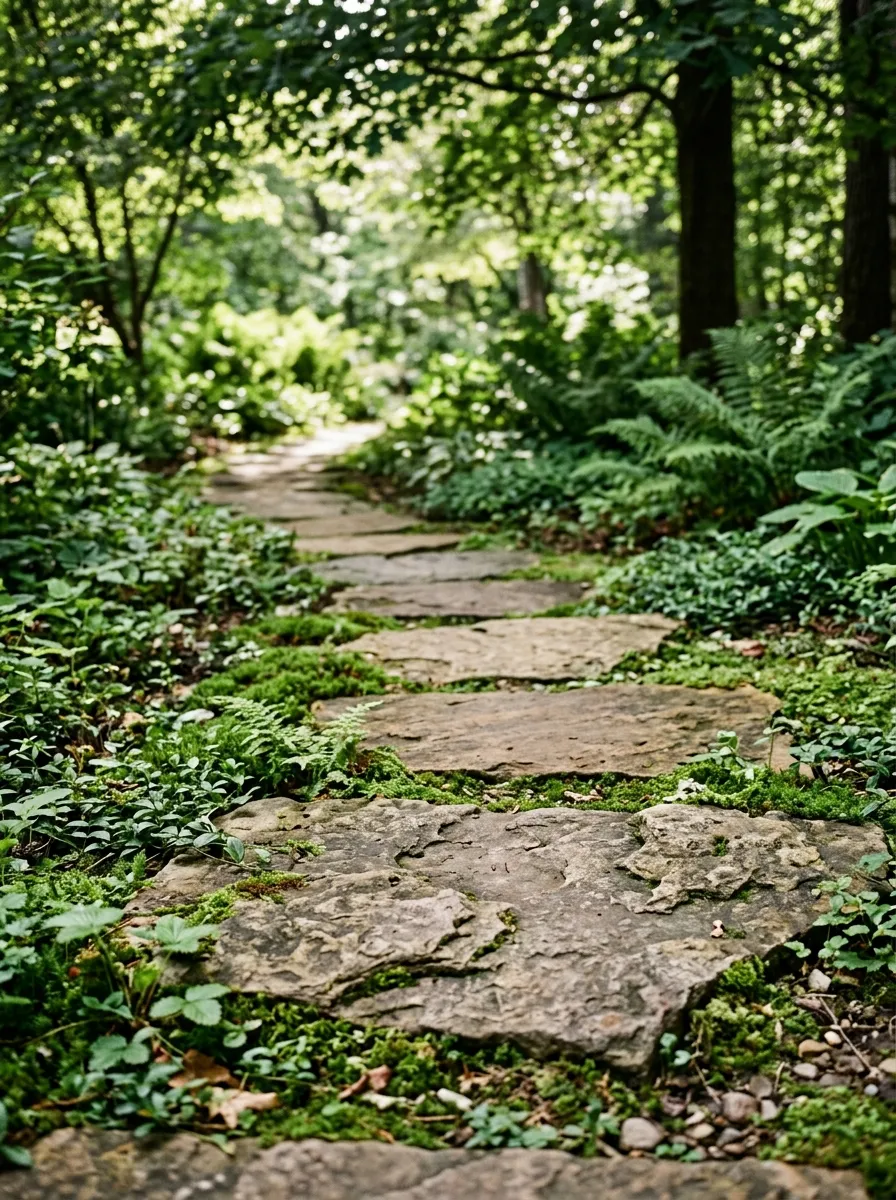
A stepping stone path gives structure to an otherwise soft, plant-filled shade garden. Use flat, irregular stones spaced comfortably apart for natural walking strides. Lay them directly into the soil, pressing down firmly so they sit stable and level. Fill the gaps between stones with low groundcover like moss, creeping thyme, or mondo grass for a soft, finished look. This path guides visitors through the garden without requiring them to walk on bare dirt or delicate plants. Reclaimed pavers or broken concrete pieces work just as well as purchased stone, keeping costs low. Arrange the path in a gentle curve rather than a straight line for a more natural feel under the tree canopy. Check stones periodically for shifting, especially after heavy rain, and reset them as needed. This simple addition makes the shaded area feel more like a designed garden room rather than an overlooked patch of yard, while still keeping the natural, relaxed character that shade gardens do best.
5. Shade-Loving Flower Border
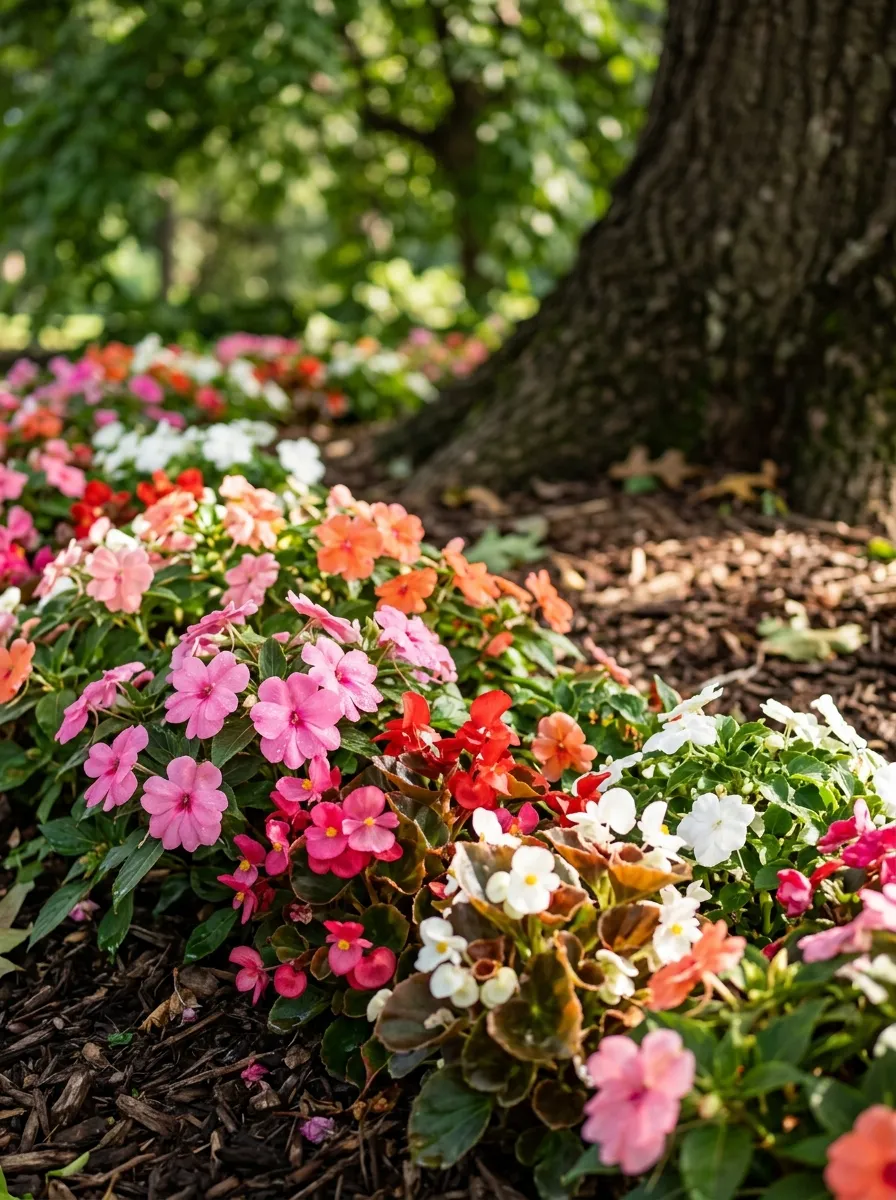
Not every flower needs full sun, and a shade border proves it. Impatiens, begonias, and astilbe all bloom well in low light and add color to an otherwise green-dominated space. Plant them in a curved line along the edge of the shaded area where they get a bit more filtered light. Space plants according to their mature size, usually six to twelve inches apart, so they fill in without overcrowding. Water regularly since shade soil can still dry out faster than expected near tree roots. Deadhead spent blooms to encourage more flowers throughout the season. Mix bloom colors for contrast against the surrounding greenery, or stick to one color family for a calmer look. These flowers are widely available and inexpensive, especially when bought as small starter plants rather than mature ones. A flower border under a tree adds a welcome burst of color to a space that might otherwise feel dim or overlooked, without requiring the tree to be trimmed back for more light.
6. Mulch Bed with Woodland Feel
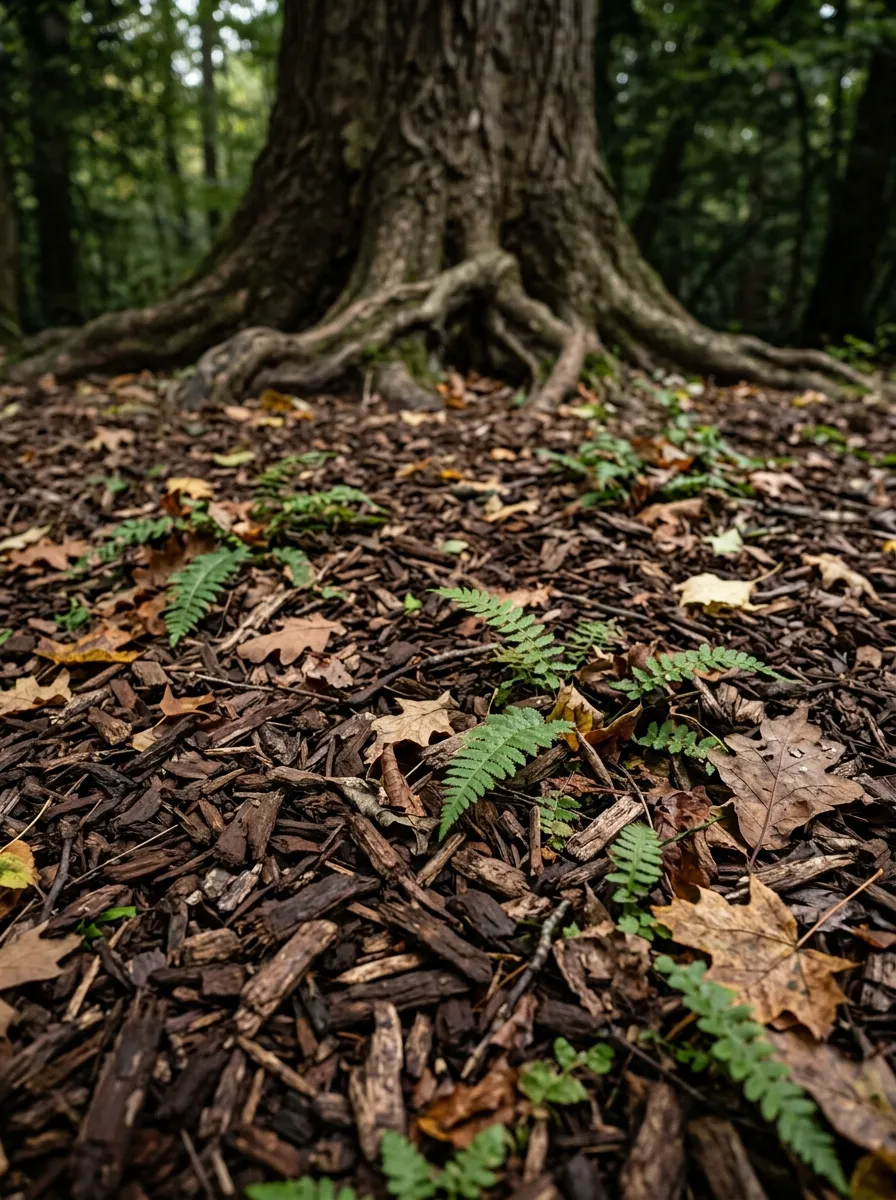
Sometimes the simplest fix for bare ground under a tree is a good layer of mulch. Spread two to three inches of wood mulch evenly across the soil, keeping it a few inches away from the trunk to avoid rot. This single step suppresses weeds, holds moisture, and gives the area an intentional, tidy appearance almost overnight. Choose a natural brown or dark mulch color to match a woodland feel rather than bright dyed options. Add a few scattered ferns, hostas, or small shade plants directly into the mulch for texture. Rake the mulch occasionally to keep it looking fresh and prevent compaction. Replenish the layer once a year as it breaks down and enriches the soil naturally. This is one of the cheapest ways to improve the look of bare dirt under a tree, especially if you already have access to free mulch from a local tree service or municipal program. It also protects tree roots from lawn mower damage and soil compaction.
7. Hosta and Fern Combination Bed
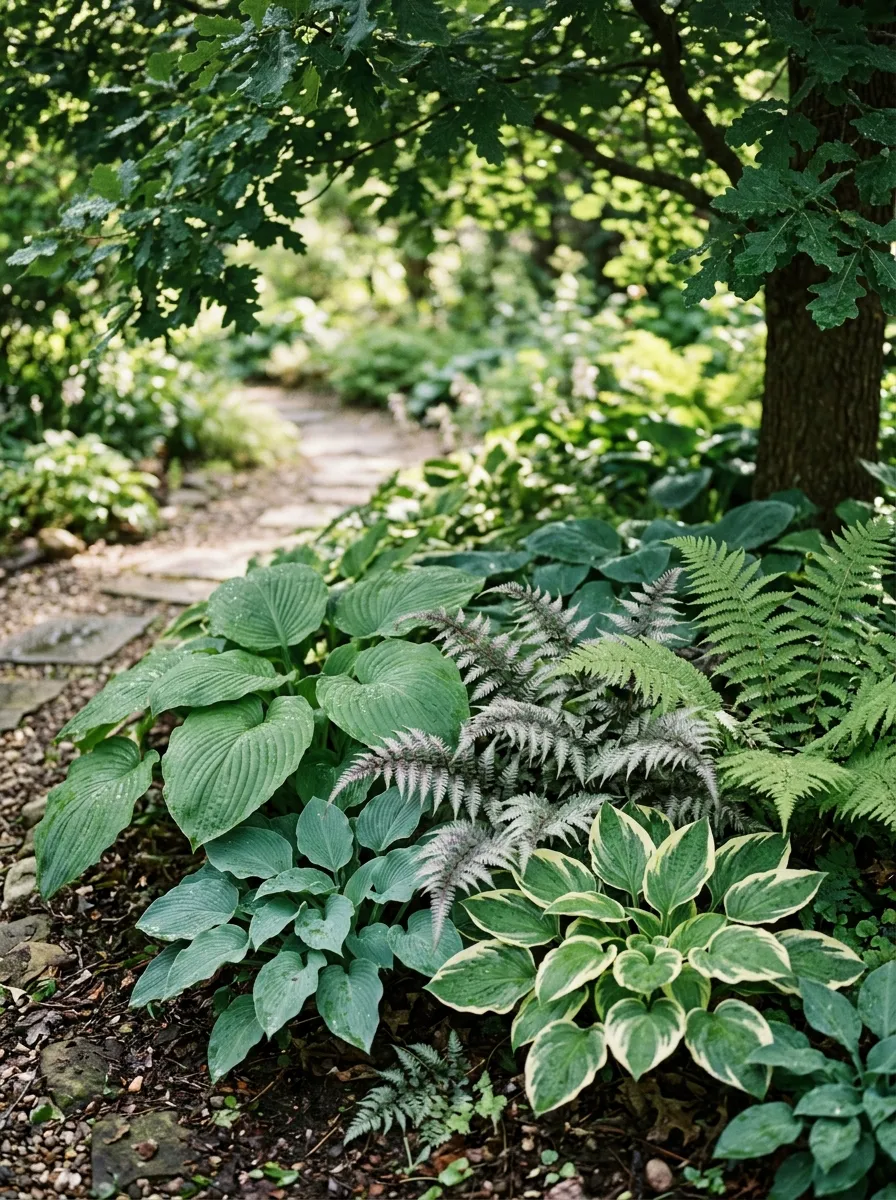
Pairing hostas with ferns creates a layered look that feels full without being complicated. Plant broad-leafed hostas in the foreground and taller, feathery ferns behind them for contrast in shape and texture. Both plants share similar water and light needs, making care simple since you are not juggling different requirements in one bed. Space them generously at first, since both will spread and fill in over a couple of seasons. Add a thin layer of mulch around the base to retain moisture and keep weeds down while plants establish. This combination works especially well along a shaded fence line or beneath a large tree canopy where little else grows easily. Divide and replant sections every few years to keep the bed from becoming overcrowded, and use the extra divisions to expand the bed or start a new one elsewhere in the yard. This pairing gives a lush, established look relatively quickly and costs little since both plants are easy to propagate from existing stock.
8. Rock Garden Under Tree Roots
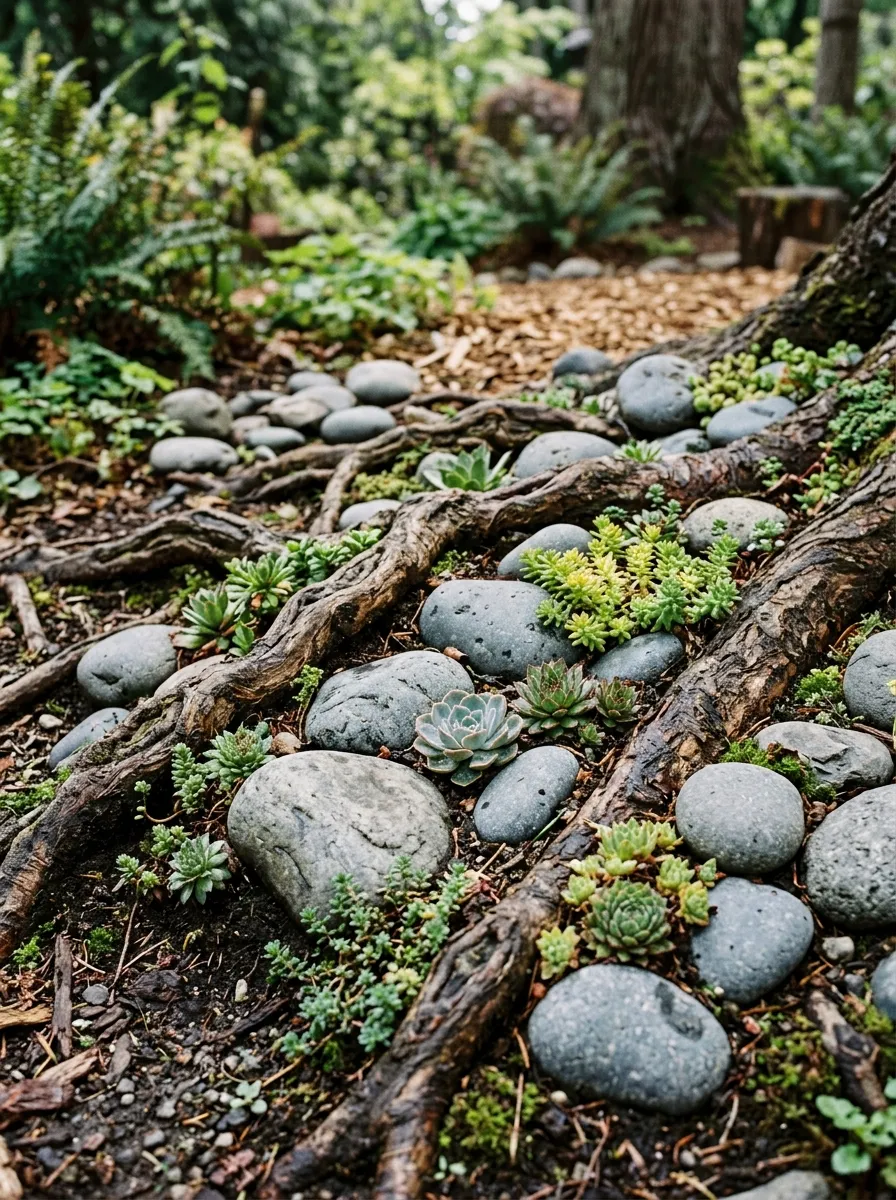
Exposed tree roots can make planting difficult, but rocks solve that problem without disturbing the tree. Arrange smooth stones or gravel around and between visible roots instead of digging into them. This protects the tree’s root system while still giving the area a finished, intentional look. Tuck small shade-tolerant succulents or low groundcover into pockets of soil between the rocks where digging is possible. Choose rocks in varying sizes for visual interest, mixing larger stones with smaller gravel for texture. This approach works well in areas where grass has died out due to shallow roots stealing water and nutrients. Rocks also require no watering or maintenance once placed, making this one of the lowest upkeep options on this list. Local landscaping suppliers often sell rock by the ton at a lower cost than buying bagged stone, especially for larger areas. This idea turns a tricky root-covered patch into a textured feature rather than a problem to work around.
9. Coral Bells for Color Without Sun
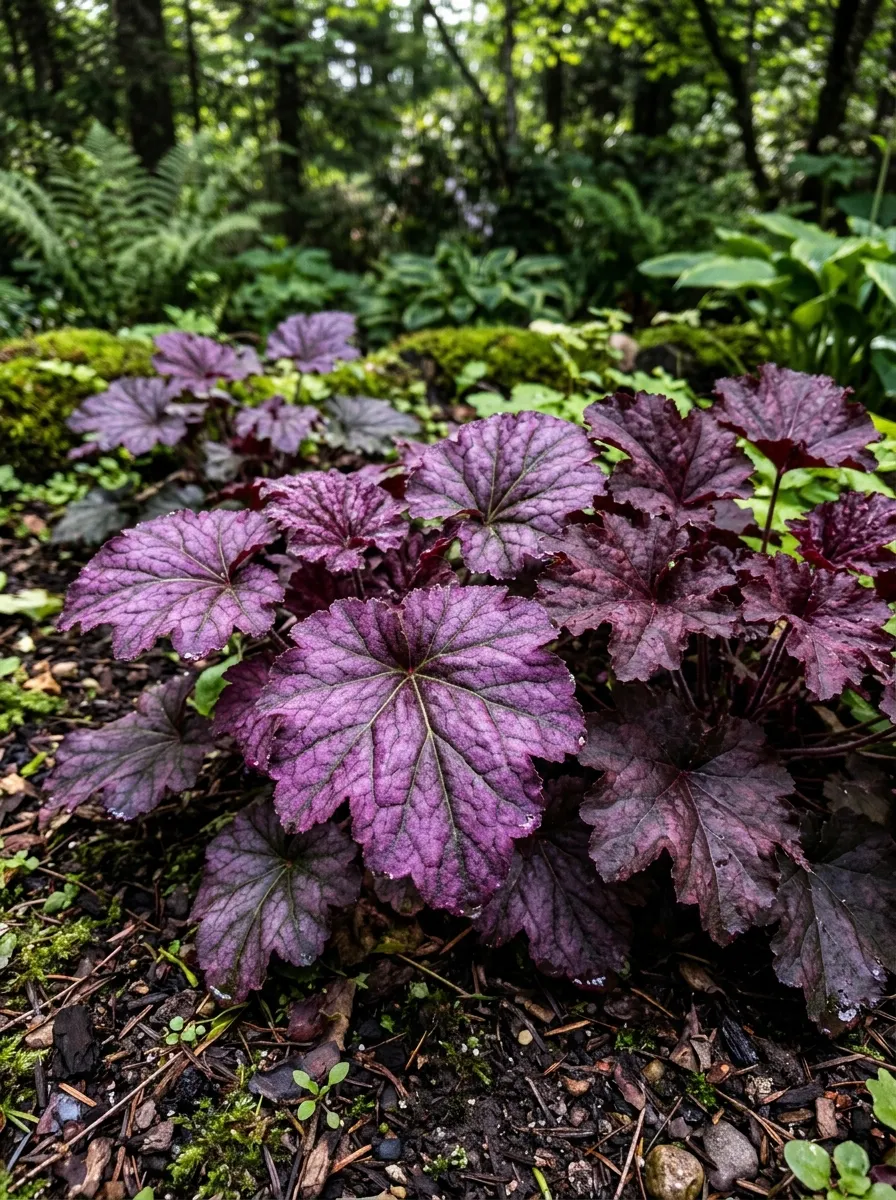
Coral bells, also called heuchera, bring color to shade without needing a single flower to bloom. Their leaves come in shades of purple, burgundy, lime green, and silver, adding visual interest year-round. Plant them in small groups along the edge of a shaded bed where their color can stand out against greener neighbors. They tolerate a range of soil types but do best with good drainage, so avoid low spots where water collects. Water regularly during the first season, then reduce once established. Trim off old or damaged leaves in early spring to encourage fresh new growth. Coral bells also attract hummingbirds when they send up small flower spikes in early summer. This plant is widely available at nurseries and often affordable, especially when bought as small plugs rather than full-grown pots. Because the leaf color does the visual work, coral bells solve the common problem of shade gardens looking too uniformly green, adding contrast without needing more sunlight than the space naturally gets.
10. Birdbath Focal Point
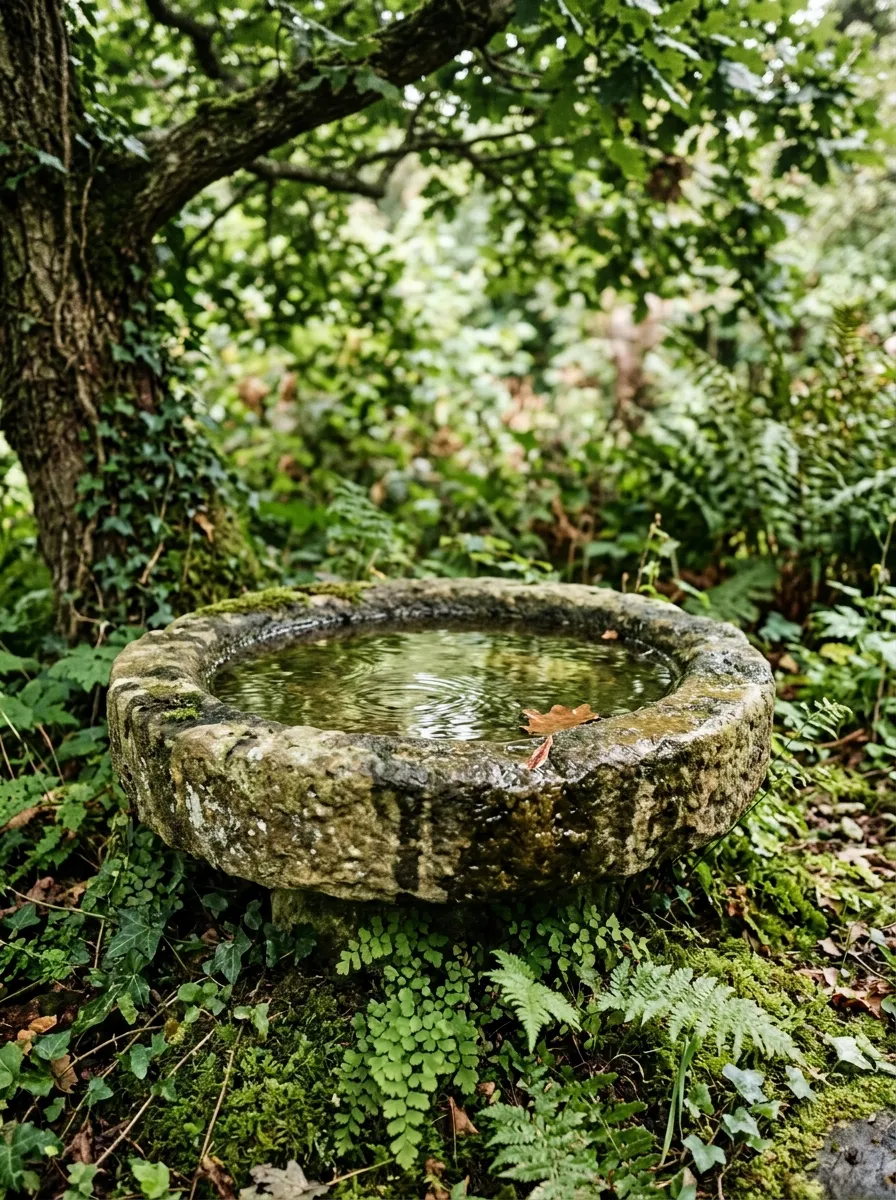
A birdbath gives a shaded area a natural focal point while inviting wildlife into the space. Place a simple concrete or ceramic birdbath on a slightly raised, stable spot beneath the tree canopy. Surround the base with low plants like moss or ferns to soften the edges and help it blend into the setting. Clean the water every few days to keep it fresh and prevent mosquito breeding, especially in warmer months. Position the birdbath where it is visible from a window or seating area so you can enjoy watching visitors. Shade actually helps here, since it keeps the water cooler and slows evaporation compared to a sunny spot. Secondhand birdbaths are often available cheaply at yard sales or thrift stores, making this an affordable addition. Over time, birds may become regular visitors, adding movement and sound to a part of the yard that might otherwise feel quiet and still. This small feature does a lot to make a shady corner feel alive.
11. Woodland Wildflower Patch
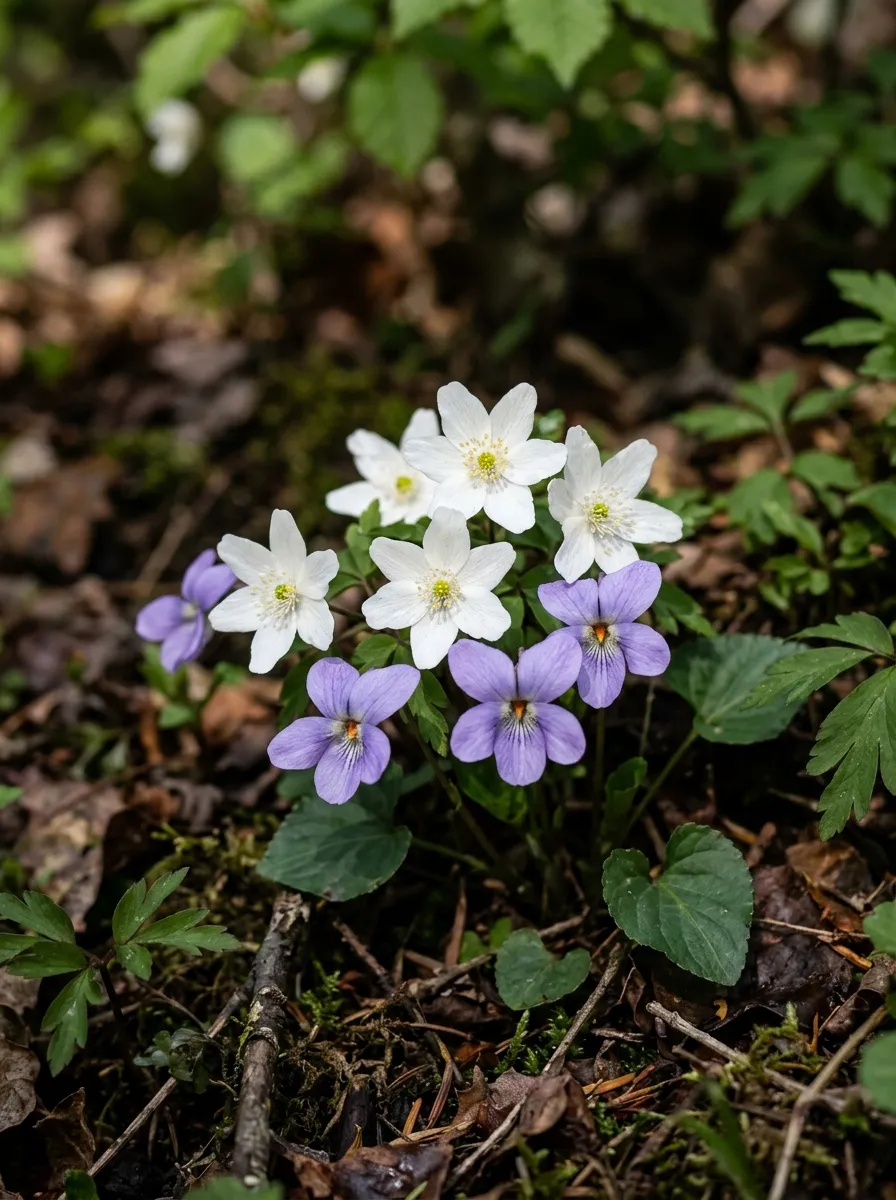
Native woodland wildflowers are built for exactly this kind of environment, since they naturally grow under forest canopies. Look for wild violets, trillium, or bleeding heart at native plant sales or specialty nurseries. These flowers often bloom in early spring before trees fully leaf out, taking advantage of extra light before the canopy thickens. Plant them in small clusters rather than single specimens for a fuller, more natural look. Once established, many woodland wildflowers spread on their own, filling in gaps over a few seasons without extra effort. Avoid heavy fertilizer, since these plants are adapted to naturally lean forest soil. Leave fallen leaves in place over winter, since they protect the plants and break down into natural nutrients by spring. Buying native plants often costs less than ornamental varieties and supports local pollinators better too. This patch gives a shaded area a seasonal rhythm, with blooms appearing and fading in a natural cycle rather than staying static all year long.
12. Shaded Bench Reading Spot
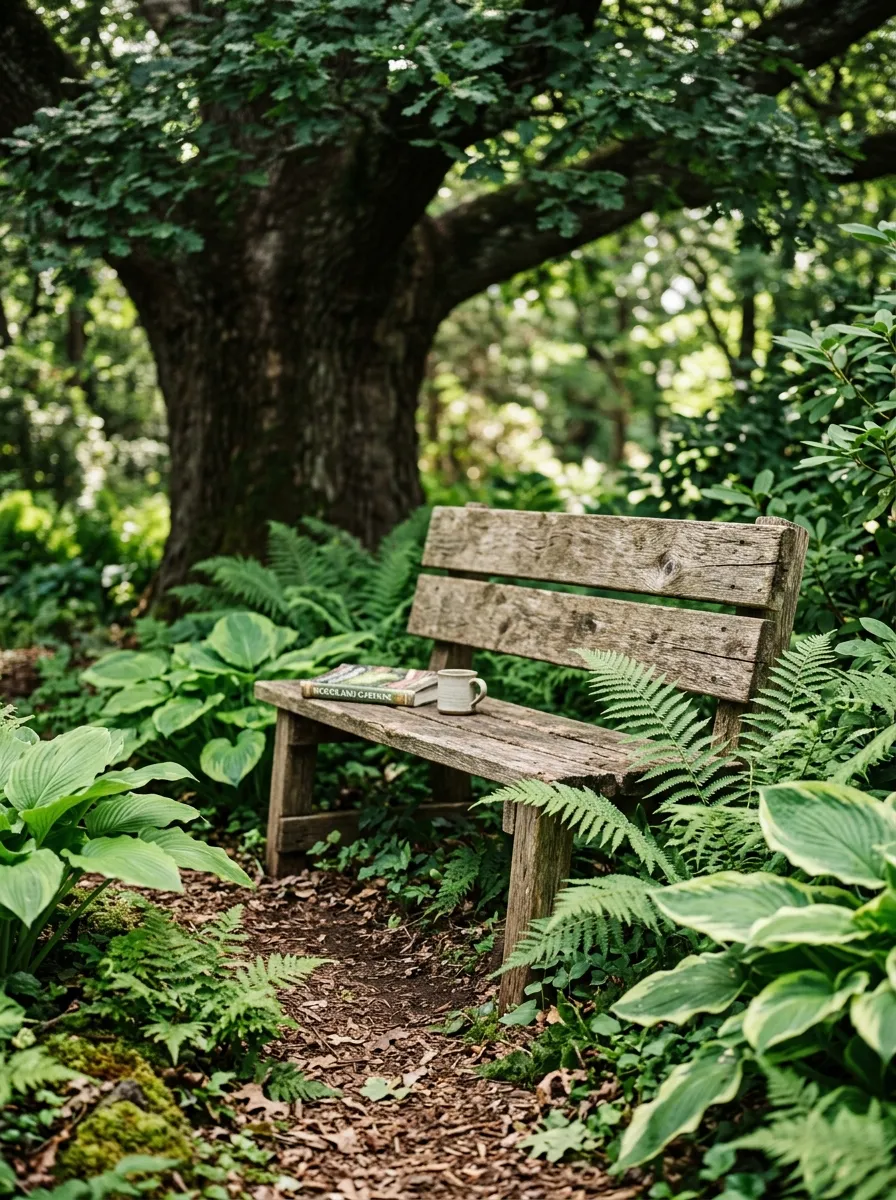
A bench under a tree turns a shaded patch into a place to actually sit and enjoy the garden rather than just look at it. A simple wooden or metal garden bench works well and can often be found secondhand at a fraction of retail price. Position it facing into the garden bed rather than away from it, so the view includes your plants. Surround the bench with low plants like hostas or ferns to soften the edges and create a sense of enclosure. Add a small side table or flat stone nearby to hold a drink or book. Sand and reseal a wooden bench if it shows wear, extending its life for another few seasons. This spot works especially well in late afternoon when direct sun elsewhere in the yard becomes too intense. A shaded bench encourages you to spend more time outside, turning a previously unused corner into one of the most visited parts of your yard.
For more inspiration on creating comfortable spots to relax outdoors, explore these garden seating ideas for creative ways to add benches, chairs, and cozy seating areas that complement your garden design.
13. Hydrangea Shade Border
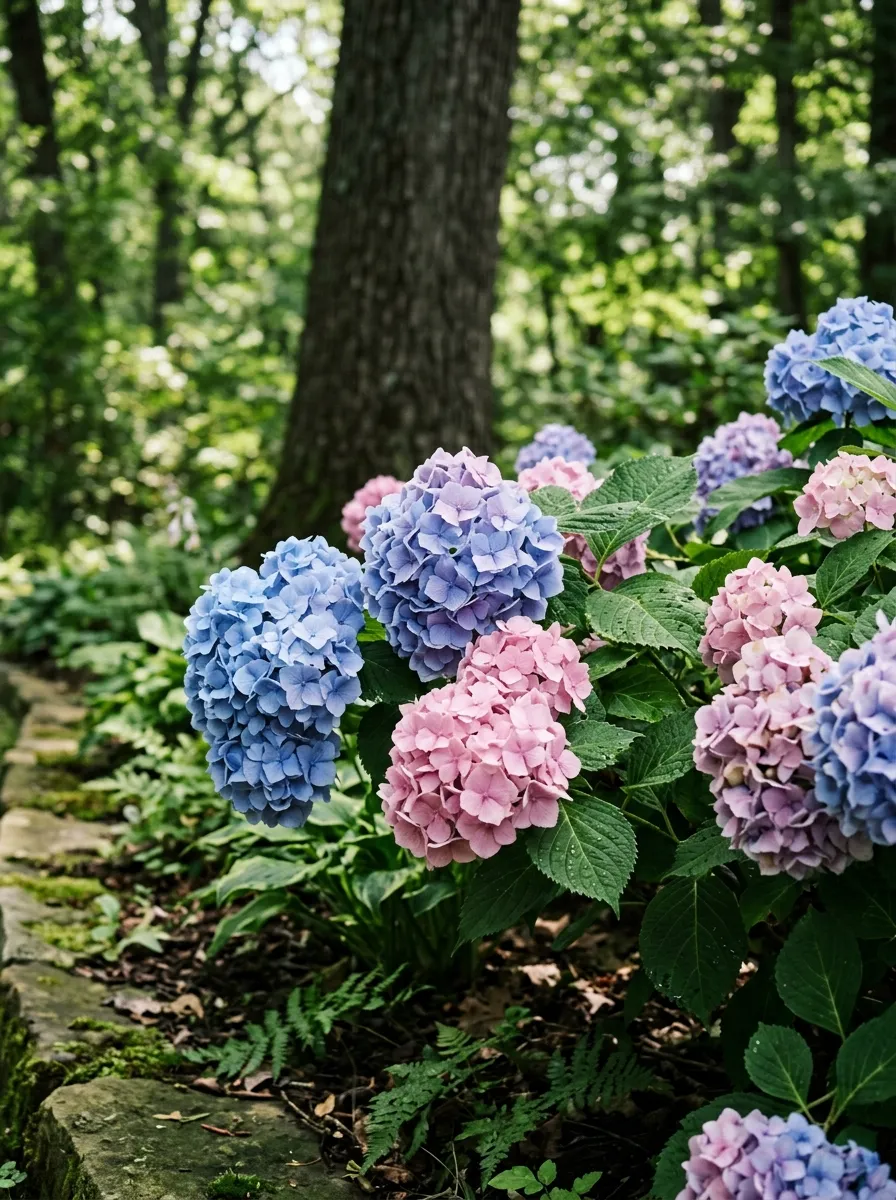
Hydrangeas handle partial shade better than many flowering shrubs, making them a solid choice for the dappled light under a tree. Bigleaf and panicle hydrangeas both tolerate morning sun with afternoon shade fairly well. Plant them along the outer edge of the tree’s canopy where they get some filtered light rather than deep, constant shade. Water deeply once or twice a week, especially during dry spells, since hydrangeas need consistent moisture to produce full blooms. Add compost to the soil at planting time to give roots a strong start. Prune spent blooms in late winter, following the specific variety’s pruning needs since some bloom on old wood and others on new growth. Adjusting soil pH can shift bloom color between blue and pink on certain varieties, which is a fun, low-cost experiment. Hydrangeas are widely sold and often go on sale at the end of the season, making this a budget-friendly way to add large, dramatic blooms to a shaded border.
14. Log and Stump Planters
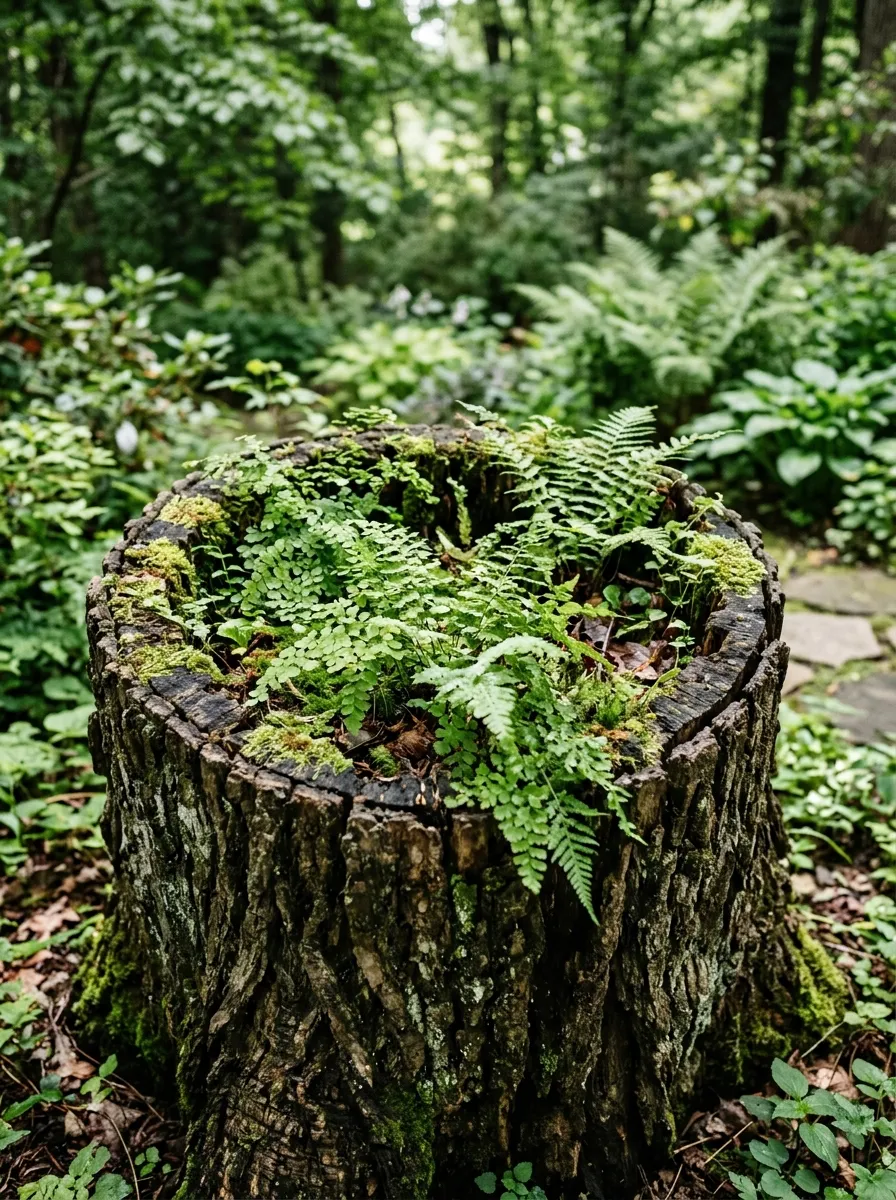
If a tree has been removed nearby, the leftover stump does not have to go to waste. Hollow out the center of a stump or thick log and fill it with potting soil to create an instant rustic planter. Small ferns, moss, or shade-tolerant annuals work well in this setup since the space is naturally sheltered and cool. This idea also works with fallen logs laid on their side, with a section carved out to hold soil and plants. Over time, the wood will slowly decompose, adding organic matter to the surrounding soil, which is a natural process rather than a problem. Position these planters along a path or near a bench for a rustic accent. This project costs nothing if you already have a stump on your property, and it turns something you might otherwise pay to remove into a garden feature. It also fits naturally into a woodland-style shade garden, blending in rather than looking out of place.
15. Layered Groundcover Mix
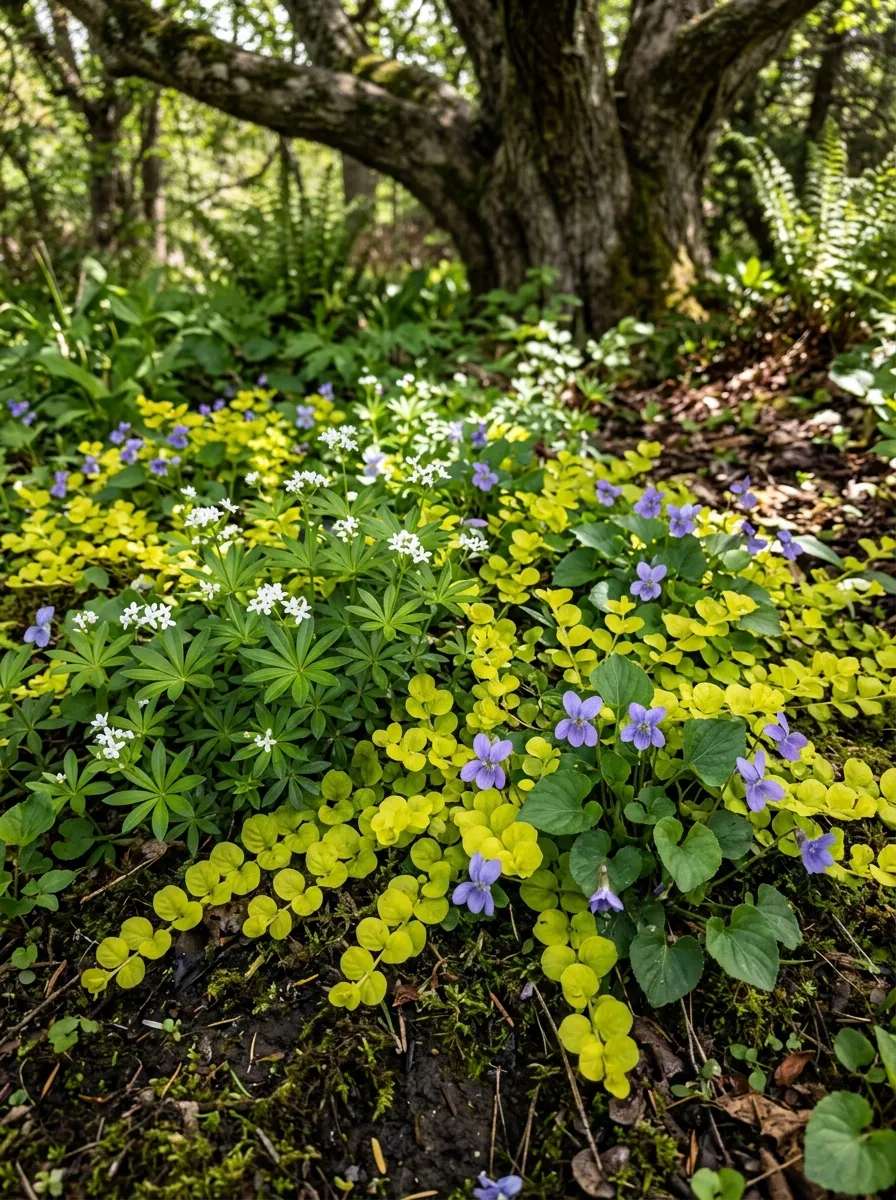
Mixing several groundcover types creates a fuller, more interesting carpet than planting just one variety. Combine creeping jenny, sweet woodruff, and wild violets for a mix of color, texture, and bloom timing throughout the season. Plant small starter patches a foot or so apart, since most groundcovers spread on their own once established. Water regularly during the first few months while roots take hold, then reduce as the plants mature and cover more ground. This layered approach fills gaps faster than relying on a single plant type, since each variety grows at a slightly different rate and habit. It also reduces bare soil, which cuts down on weeds needing to be pulled. Trim back any groundcover that starts spreading into areas you want kept clear, like pathways. Because groundcovers are often sold in small, affordable pots or can be divided from existing plants, this is a budget-friendly way to fill a large shaded area without buying dozens of individual plants.
16. Shade Garden Lighting with Solar Spotlights
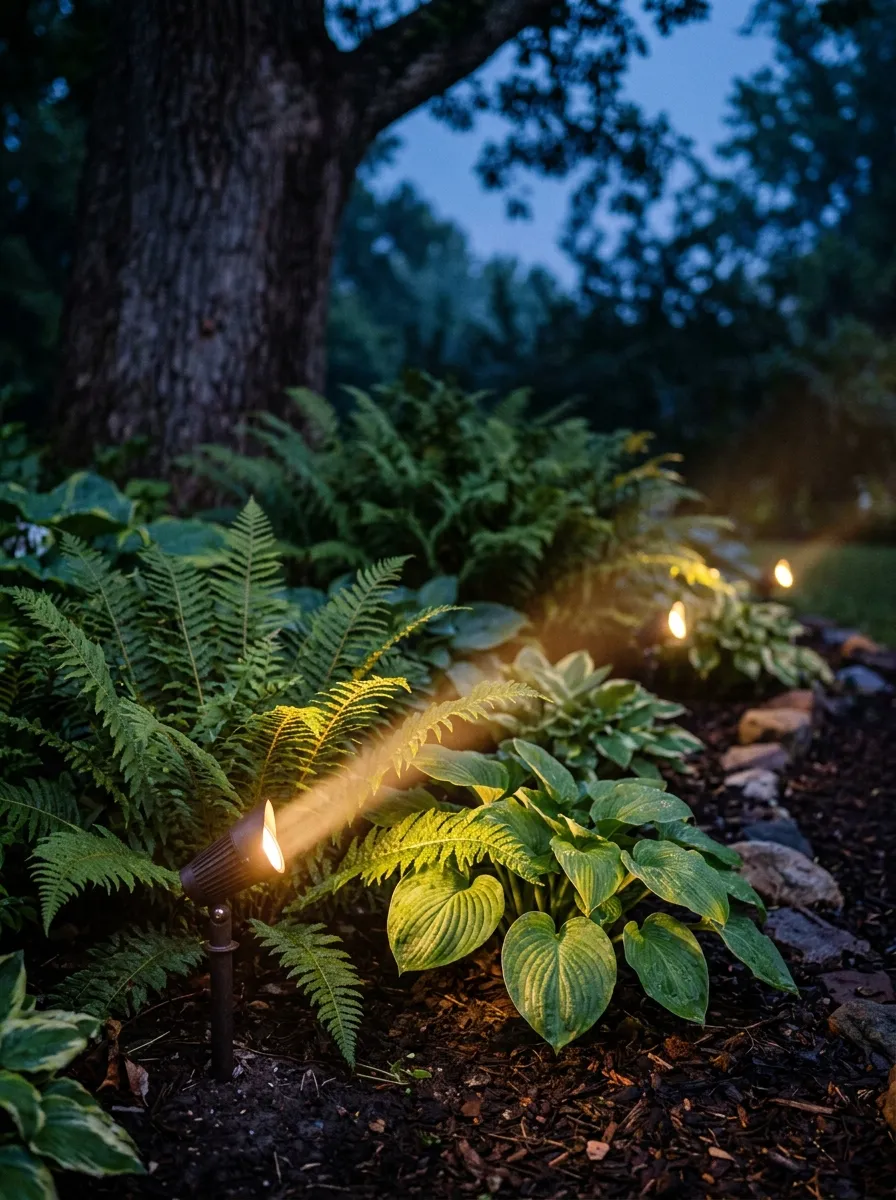
Shade gardens often go unnoticed after dark, but a few well-placed lights change that completely. Solar spotlights pushed into the soil near key plants highlight texture and shape once the sun goes down. Choose warm-toned bulbs rather than bright white for a softer, natural glow that suits a woodland setting. Position lights to shine upward through fern fronds or across hosta leaves, creating shadows and depth rather than flat, even lighting. Since the area is shaded during the day, check that the solar panels still get enough indirect light to charge, or choose battery-powered options if needed. Clean panels occasionally to remove dust and leaf debris that can block charging. This lighting also makes garden paths safer to walk after dark. Solar spotlights are inexpensive and widely available at hardware stores, making this an easy weekend upgrade. Once installed, this small addition makes your shaded garden feel just as inviting at night as it does during the day.
17. Vertical Interest with Climbing Hydrangea
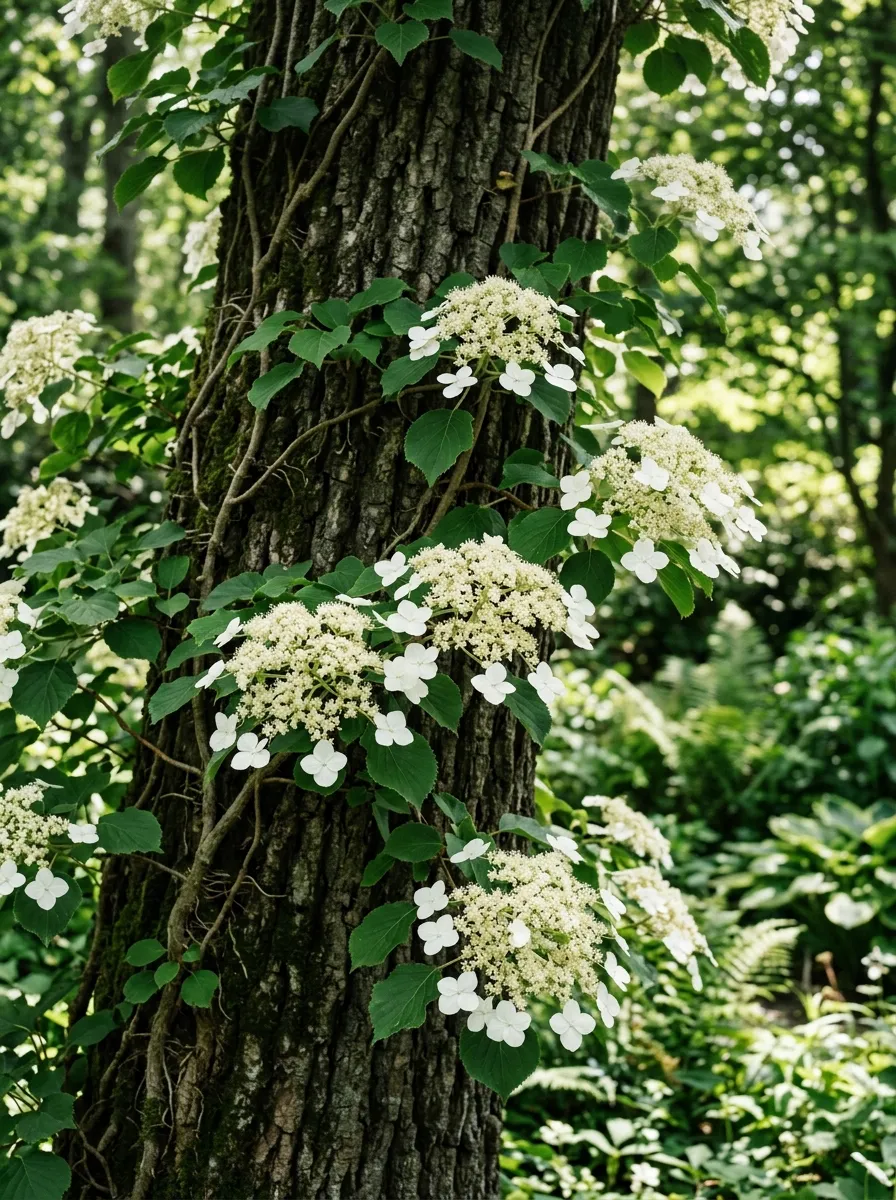
Climbing hydrangea is one of the few flowering vines that tolerates shade well, making it a good match for growing up a tree trunk or nearby structure. Plant it at the base of a mature, sturdy tree and let it climb naturally using small aerial roots that cling to bark. This vine grows slowly at first, so patience is needed during the first couple of seasons. Water regularly while it establishes, then reduce once it matures and becomes more self-sufficient. White lacy blooms appear in early summer, adding a soft contrast against the tree’s bark and surrounding greenery. Avoid planting on young or unhealthy trees, since the vine’s weight can add strain over many years. This idea adds vertical interest to a shade garden without needing a trellis or fence, using a structure you already have. Climbing hydrangea is widely available at nurseries and, while it takes time to fill in, it eventually creates a striking, low-maintenance feature.
18. Fairy Light Canopy for Nighttime Charm
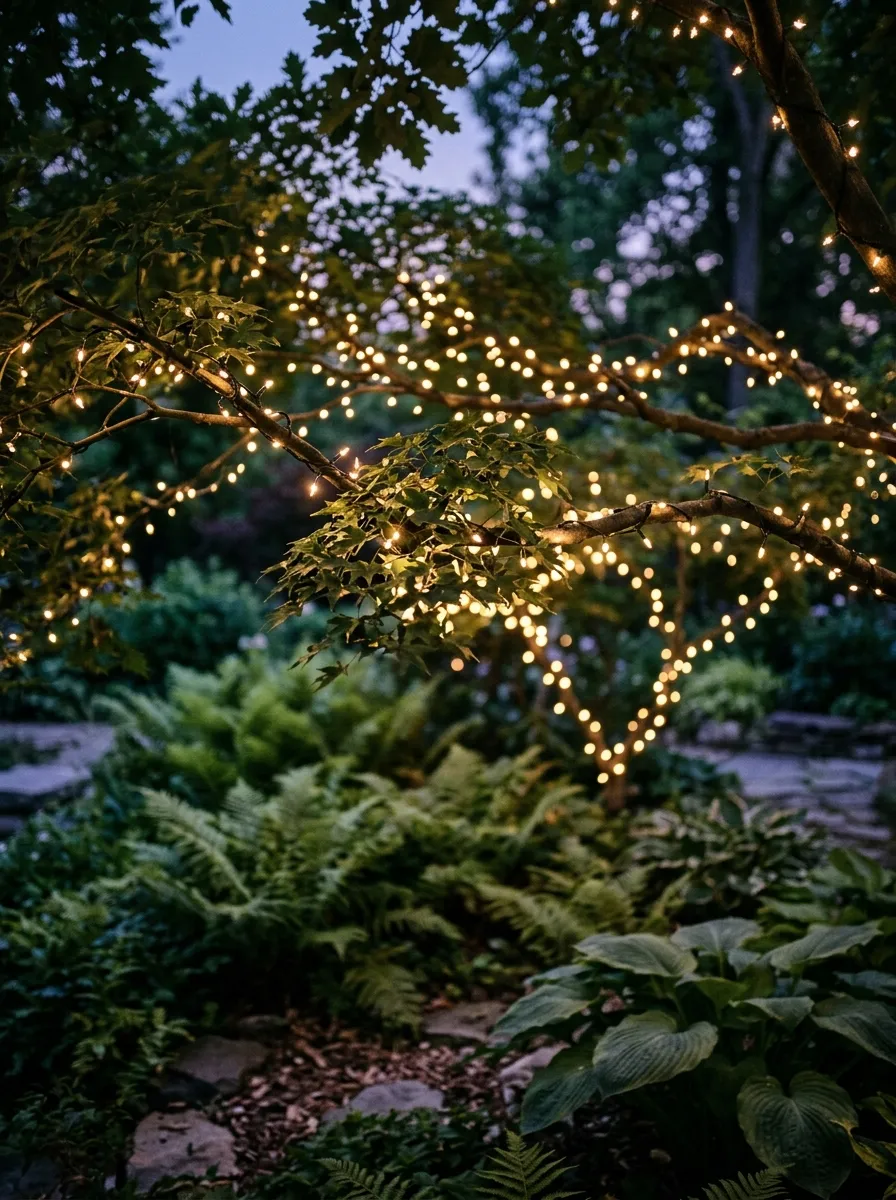
Stringing small lights through low branches turns a shaded tree into a nighttime feature rather than a dark patch of yard. Use battery-powered or solar fairy lights since running electrical cords outdoors can be tricky and less safe. Wrap the lights loosely around branches, letting them drape naturally rather than pulling them tight. Warm white bulbs create a soft, magical feel that suits a woodland-style shade garden better than bright colored lights. Turn them on in the evening to extend how long you can enjoy the space after sunset. This idea pairs well with a bench or seating area placed beneath the same tree, creating a cozy nighttime gathering spot. Check battery levels or solar charge periodically to keep the lights working consistently. This upgrade costs relatively little, especially if you already own string lights from another part of your home or yard. It makes a shaded tree feel like a destination rather than just an overlooked corner during the day.
19. Shade-Tolerant Ornamental Grasses
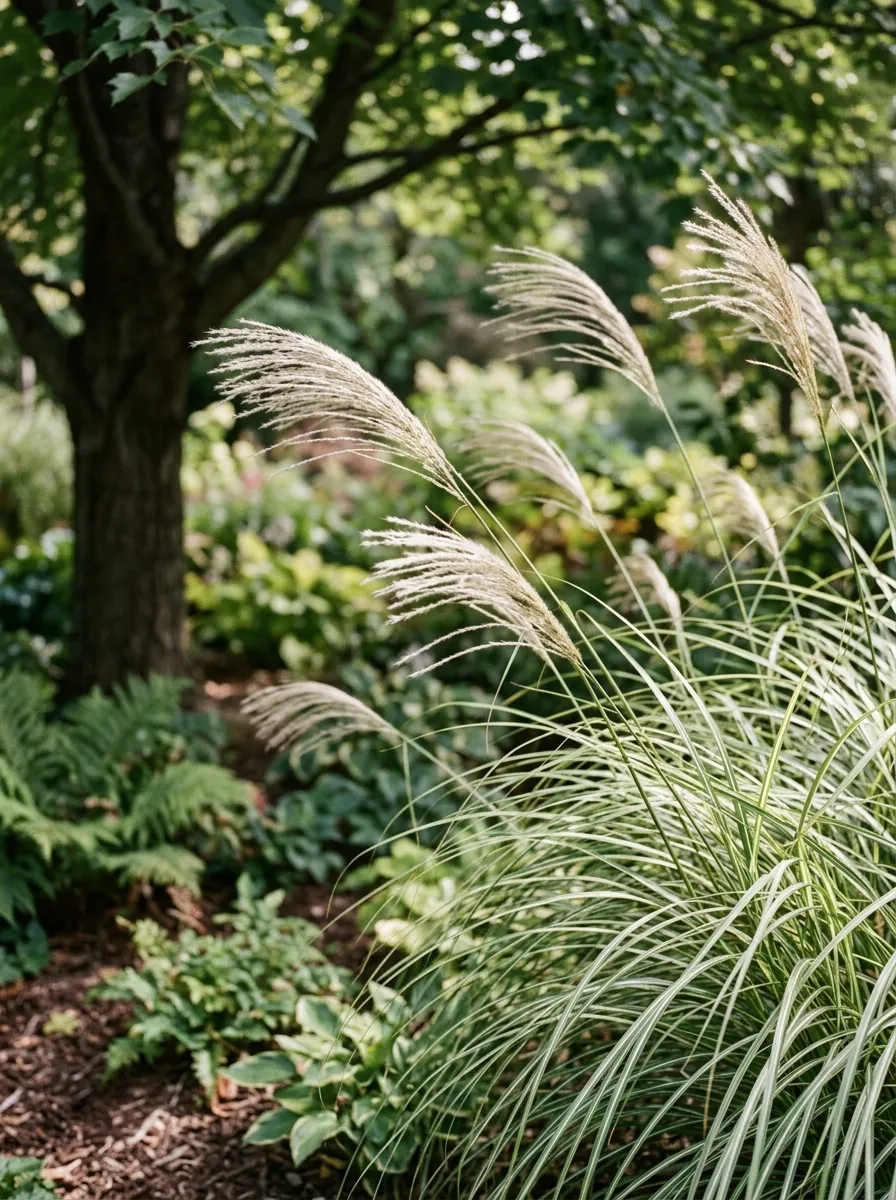
Not all ornamental grasses need full sun, and a few varieties handle shade surprisingly well. Japanese forest grass and sedge both grow nicely under tree canopies, adding movement and softness to a bed otherwise filled with broad-leafed plants. Plant them in small clumps spaced about a foot apart, since most spread gradually rather than aggressively. Water regularly during the first growing season, then taper off once established. These grasses add a different texture than hostas or ferns, creating contrast when planted together in the same bed. Cut back dead growth in early spring before new blades emerge for the season. Ornamental grasses also sway gently in even a light breeze, adding a sense of motion to an otherwise still, shaded space. They are widely available at nurseries and often affordable, especially in smaller starter sizes. This addition rounds out a shade garden’s texture palette, balancing the broad leaves of hostas with something finer and more delicate looking.
20. Natural Leaf Litter Mulch
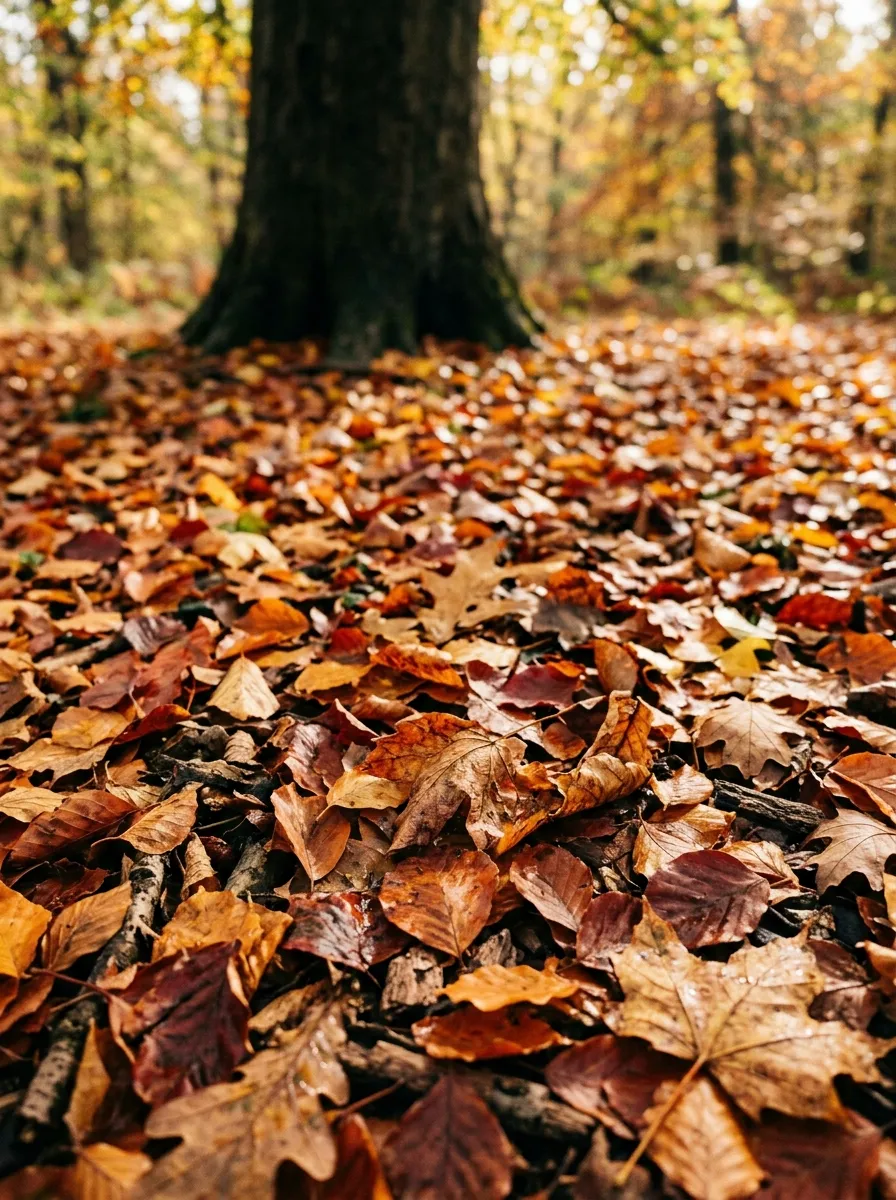
Instead of raking every leaf away each fall, consider leaving some in place as natural mulch under your tree. A thin, even layer of leaf litter protects plant roots, retains soil moisture, and breaks down slowly to add nutrients back into the ground. This mimics how forests naturally recycle nutrients without any human intervention. Shred larger leaves with a mower first if you want a neater, faster-breaking-down layer rather than whole leaves. Keep the layer to a few inches thick so it does not smother smaller plants growing underneath. This method costs nothing, since it uses material already falling from your own tree each year. It also provides shelter for beneficial insects and small creatures that help keep the garden balanced. Over time, this practice can noticeably improve soil quality without buying bagged mulch or fertilizer. This is one of the simplest, most budget-friendly ways to care for a shade garden, turning a fall chore into a genuine benefit for the space.
21. Container Garden for Deep Shade
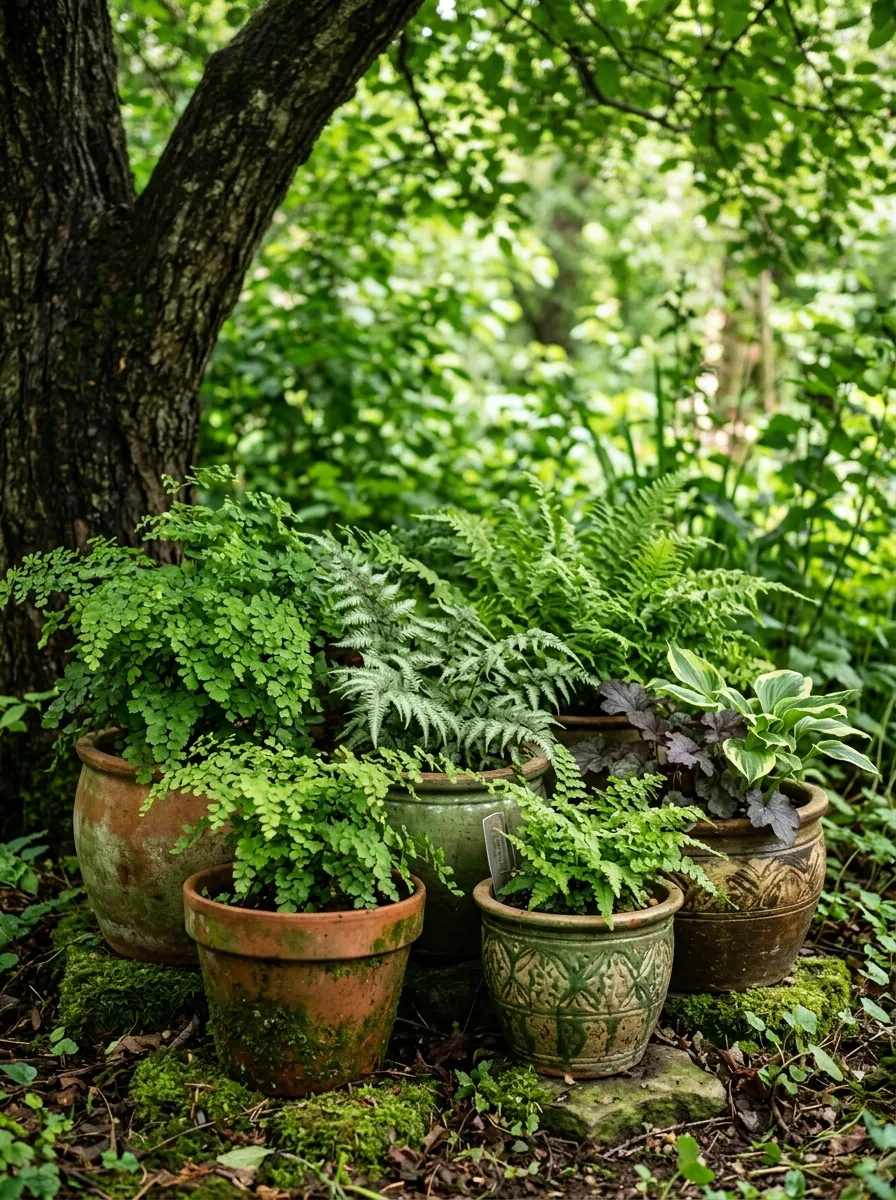
When soil under a tree is too rooty or poor to dig into, containers offer a simple workaround. Fill large pots with a quality potting mix and plant shade-tolerant options like ferns, caladiums, or coleus. Group pots of different heights together for visual interest, using a few taller plants toward the back and shorter ones in front. This setup also makes it easy to rearrange the display or move plants indoors during harsh weather. Water containers more often than in-ground plants, since pots dry out faster, especially in warmer months. Secondhand pots from yard sales or clearance sections often cost far less than buying new, large containers. This method sidesteps the problem of competing with tree roots for nutrients and water entirely. It also allows you to experiment with plant combinations each year without committing to a permanent bed. For deeply shaded, root-heavy areas where digging is difficult, containers may be the most practical and affordable solution available.
22. Mini Meditation Garden Under the Canopy
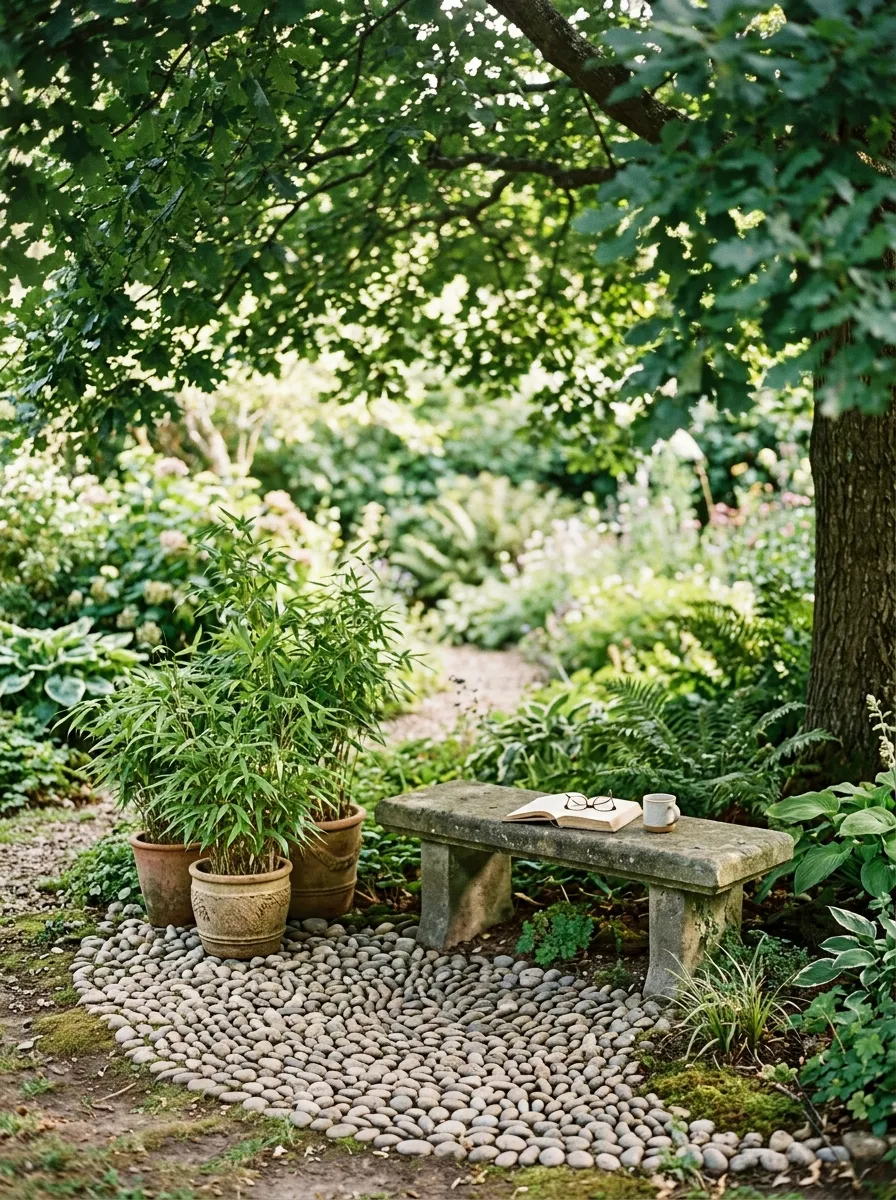
A small meditation corner makes use of the natural calm that shaded areas already provide. Place a simple stone or wooden seat beneath the tree, surrounded by calming plants like bamboo, ferns, or moss. Arrange a small patch of smooth pebbles nearby in a simple raked pattern for a quiet visual focus. Keep the space uncluttered, avoiding bright colors or busy plant combinations that might distract from the calm feel. Morning or late afternoon light filtering through leaves adds a soft, changing quality to the space throughout the day. This nook does not require elaborate design, just a few thoughtful elements arranged with intention. Add a small wind chime nearby for gentle background sound without needing an electric water feature. This project costs very little since it mainly involves rearranging existing plants and adding a simple seat. A shaded meditation garden gives you a reason to step outside and slow down, even on a busy day, using a part of the yard that might otherwise go unused.
Conclusion
Shade does not have to mean an empty, neglected corner of your yard. Hostas, ferns, moss, and a few well-placed stones can turn the ground beneath any tree into a full, layered garden that looks intentional rather than overlooked. Start with one or two ideas that match your soil and light conditions, then add more as budget and time allow. Many of these projects cost little more than a few plants, some mulch, or materials you already have on hand. Pick a spot under your favorite tree, choose a project from this list, and give that shaded ground a reason to be one of the best parts of your yard
1 thought on “22 Beautiful Garden Under Trees Ideas That Bring Life to Shady Areas”