
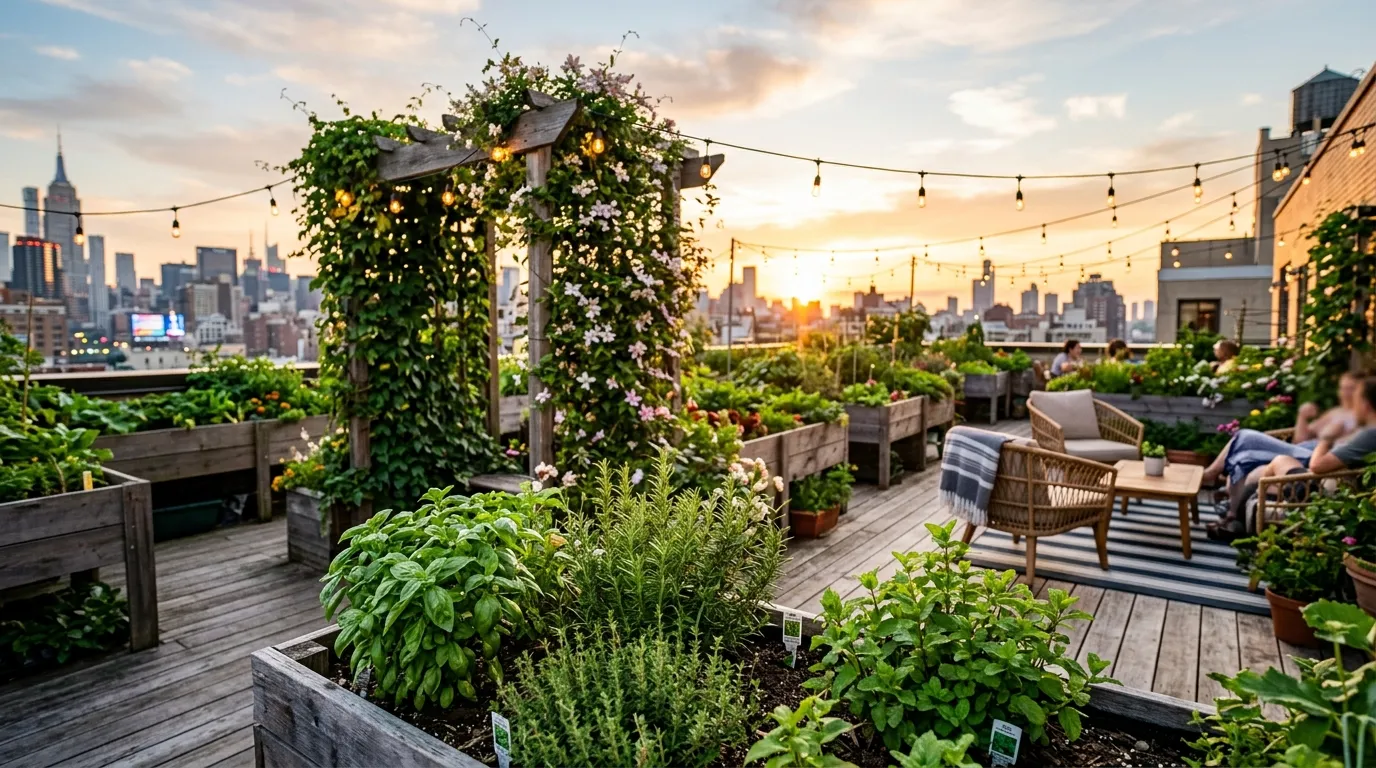
Turning a bare rooftop into a green retreat sounds like a big project, but it does not have to drain your wallet or your weekends. With a little planning, some reclaimed materials, and a handful of hardy plants, any flat rooftop, balcony, or terrace can become a place you actually want to spend time in. Below are 27 practical, budget-friendly rooftop garden ideas that mix greenery, seating, lighting, and small design touches to help you get the most out of an otherwise empty space. Whether you rent an apartment or own a home with a flat roof, there is something here you can start this weekend.
If you’re also looking for inspiration for creating beautiful green spaces in naturally shaded areas, explore these garden under trees ideas for thoughtful ways to combine plants, texture, and relaxing garden features.
1. Container Vegetable Garden
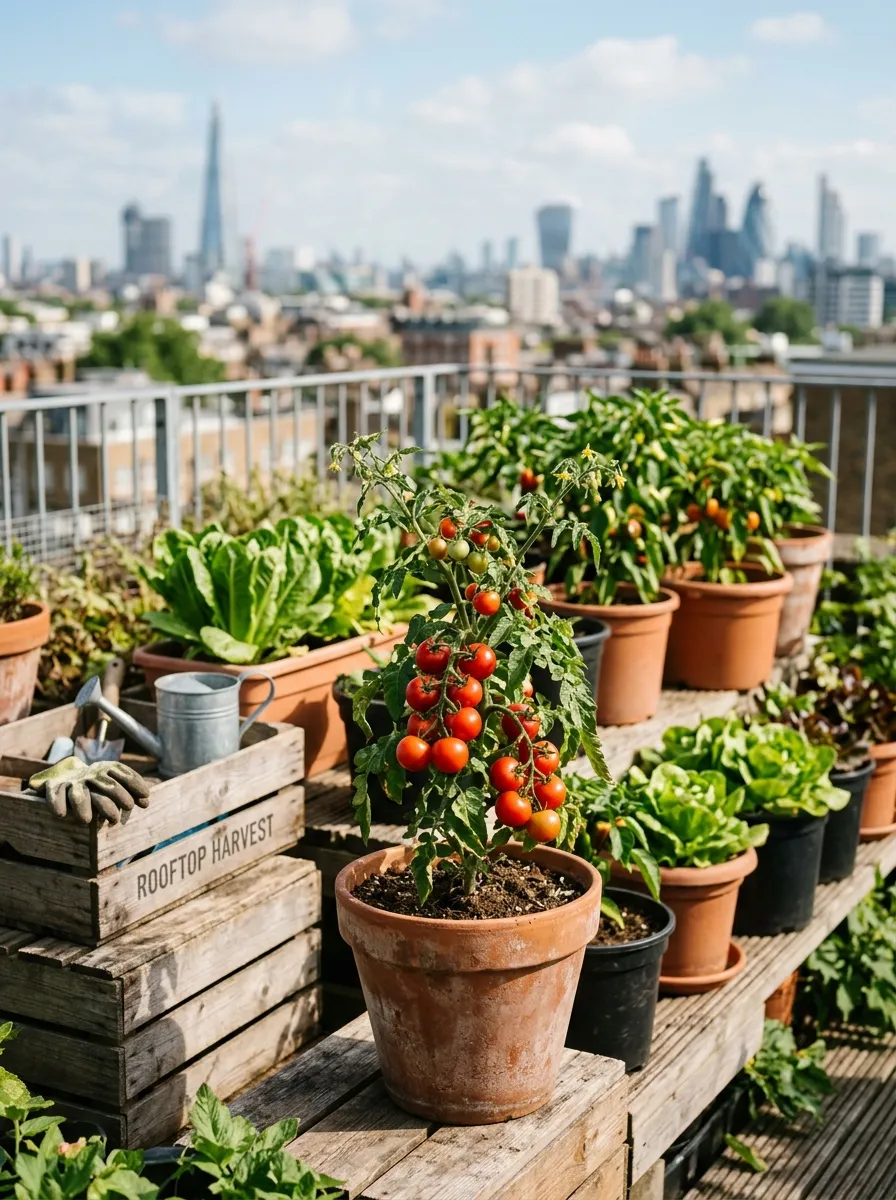
Growing your own food on a rooftop is easier than most people think. Start small with tomatoes, peppers, and herbs in five-gallon buckets. Drill a few holes in the bottom for drainage and you have an instant planter. Old paint buckets, plastic bins, or even food-grade barrels work just as well. Group containers by watering needs so you are not overwatering one plant while another dries out. Place taller crops toward the back so shorter ones still get sunlight. A cheap trellis made from bamboo stakes and twine supports vining plants like cucumbers or peas. Rotate crops each season to keep the soil healthy without buying new dirt every time. If space is tight, try a tiered shelf so you can stack three or four containers in one corner. Check the containers daily during hot weeks since rooftop soil dries out faster than ground soil. A layer of mulch or straw on top slows moisture loss and cuts down on watering chores. This setup costs very little and gives you fresh produce all summer.
2. Vertical Pallet Planters
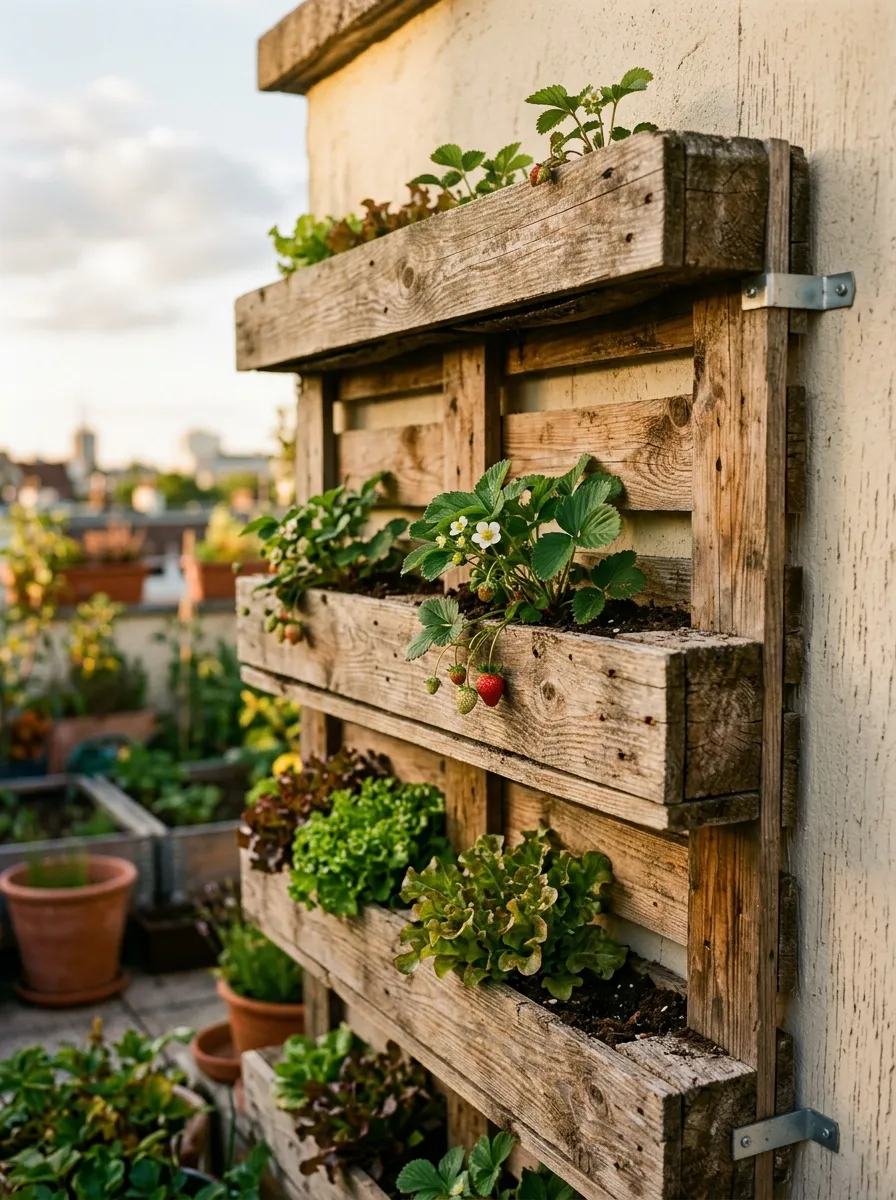
Wooden pallets are often free from local hardware stores or shipping yards. Stand one upright, staple landscape fabric to the back and bottom, then fill the gaps between slats with soil. This turns a flat surface into a growing wall. Strawberries, lettuce, and herbs do well here because their roots stay shallow. Lean the pallet against a railing or wall for support, or bolt it directly to a sturdy structure. Paint it first if you want a pop of color, or leave it natural for a rustic look. Water from the top and let gravity pull moisture down through each row. This method saves floor space, which matters a lot on a small rooftop. It also creates a natural privacy screen between you and neighboring buildings. If pallets are hard to find, a simple shoe organizer with pockets works the same way and hangs on almost any wall. Either option turns unused vertical space into a working garden without spending much money at all.
3. Hanging Herb Wall
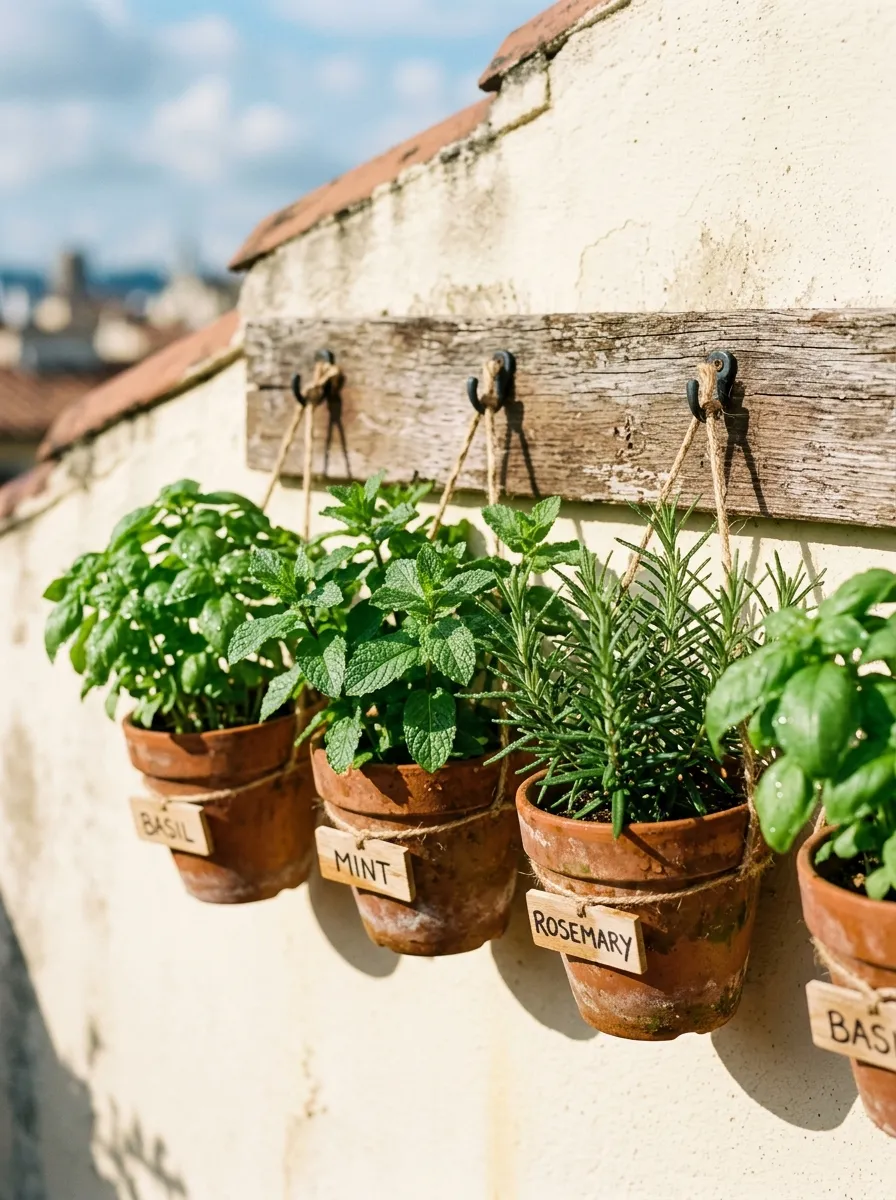
A hanging herb wall keeps your favorite cooking herbs within arm’s reach and frees up floor space for other projects. Use mason jars, tin cans, or small plastic pots attached to a wooden board with wire or hose clamps. Basil, mint, thyme, and rosemary all thrive in small containers and enjoy full sun. Space the pots evenly so each plant gets light without shading its neighbor. Old cans from the kitchen work fine once you punch drainage holes in the bottom. Hang the board at eye level near your outdoor dining spot so you can snip herbs while cooking. This setup also smells good every time the breeze picks up. Check soil moisture often since small pots dry out fast in direct sun. Group herbs with similar watering needs together to make care simpler. A herb wall costs almost nothing if you reuse containers you already have at home, and it adds instant charm to a plain rooftop corner.
4. Cozy Lounge Corner with Rugs and Pillows

Every rooftop garden needs a spot to sit and relax. An outdoor rug, a few weatherproof cushions, and low stools can transform a bare corner into a lounge area in an afternoon. Look for rugs made from recycled plastic fibers since they hold up better against sun and rain. Thrift stores and clearance sales are great places to find affordable outdoor cushions. Arrange seating around a small side table made from a repurposed crate or spool. Add potted plants around the edges to soften the space and create a sense of privacy. Keep the color palette simple so the area feels calm rather than cluttered. If your budget allows, a small canopy or umbrella adds shade during the hottest part of the day. Store cushions indoors when rain is expected to extend their life. This kind of setup does not require construction or permits, just a few hours of arranging furniture and plants. It becomes the heart of your rooftop, perfect for morning coffee or evening conversations.
5. String Lights for Evening Ambiance

String lights turn a daytime garden into a nighttime destination without much effort. Solar-powered string lights are the cheapest option since they need no wiring or outlets. Wrap them around railings, trellises, or a simple wooden frame built from leftover lumber. Warm white bulbs create a cozy feel, while colored bulbs add a playful touch for parties. Space the lights evenly and test them before mounting to catch any dead bulbs early. Hang them at different heights for a layered look rather than one flat line. Combine string lights with a few lanterns or candles on your seating area for extra warmth. Battery-powered options work well if your rooftop lacks outdoor outlets. Check solar panels occasionally to keep them free of dust and leaves so they charge properly. This upgrade costs very little and makes a big difference in how often you use the space after sunset. It also makes the garden feel finished, even if other projects are still in progress.
6. Raised Bed Boxes from Reclaimed Wood
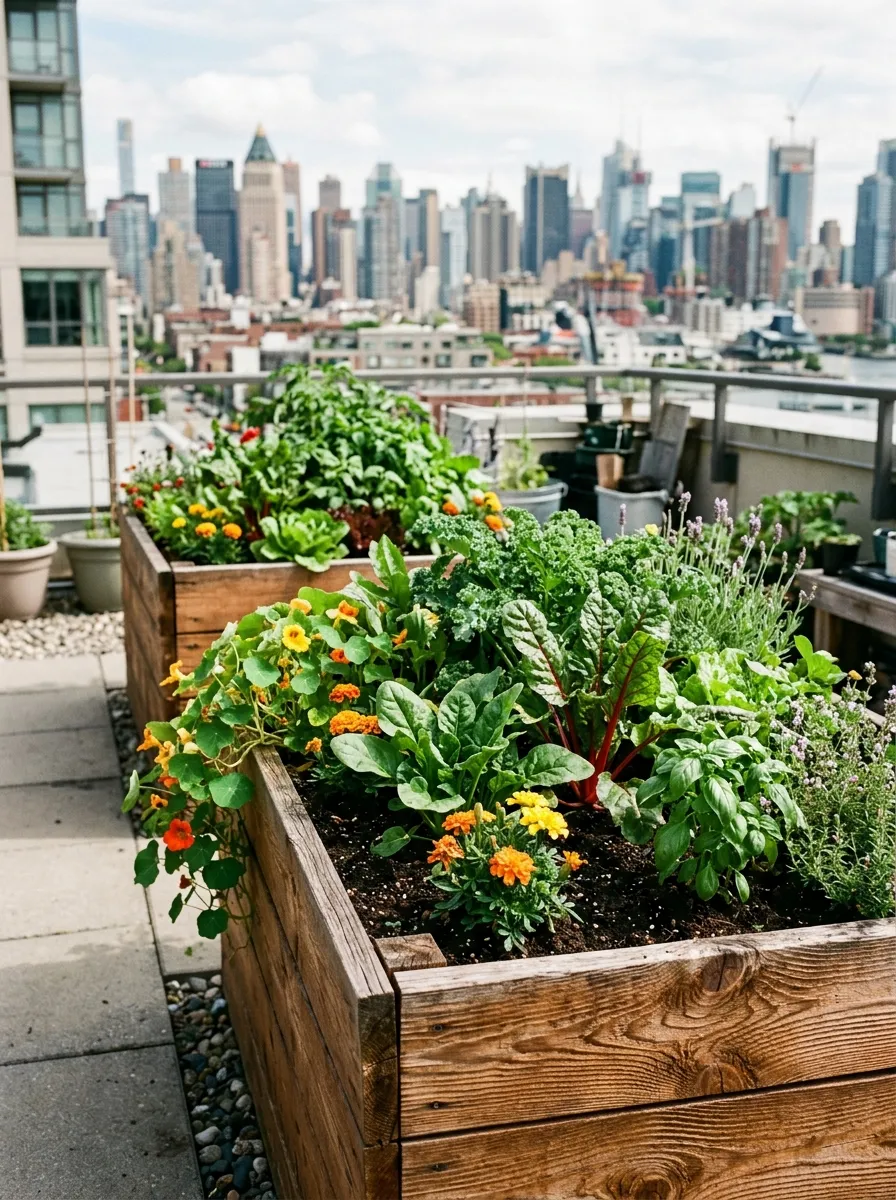
Raised beds give plants room to grow deep roots and make gardening easier on your back. Build boxes from reclaimed fence boards, old crates, or scrap lumber instead of buying new wood. Line the bottom with landscape fabric to keep soil in place and protect the rooftop surface below. Keep the boxes shallow, around eight to twelve inches deep, to reduce weight on the roof structure. Fill with a mix of compost and potting soil rather than heavy garden dirt. Group beds close together to save space, leaving just enough room to walk between them. Rotate what you plant each season to keep the soil balanced. Raised beds also help with drainage, which matters on a rooftop where water needs somewhere to go. If reclaimed wood is not available, check local classifieds or construction sites for scrap pieces headed to the dump. This project takes a weekend and basic tools, but it gives your rooftop a structured, organized feel that a scattered container garden may lack.
7. Mini Greenhouse Nook
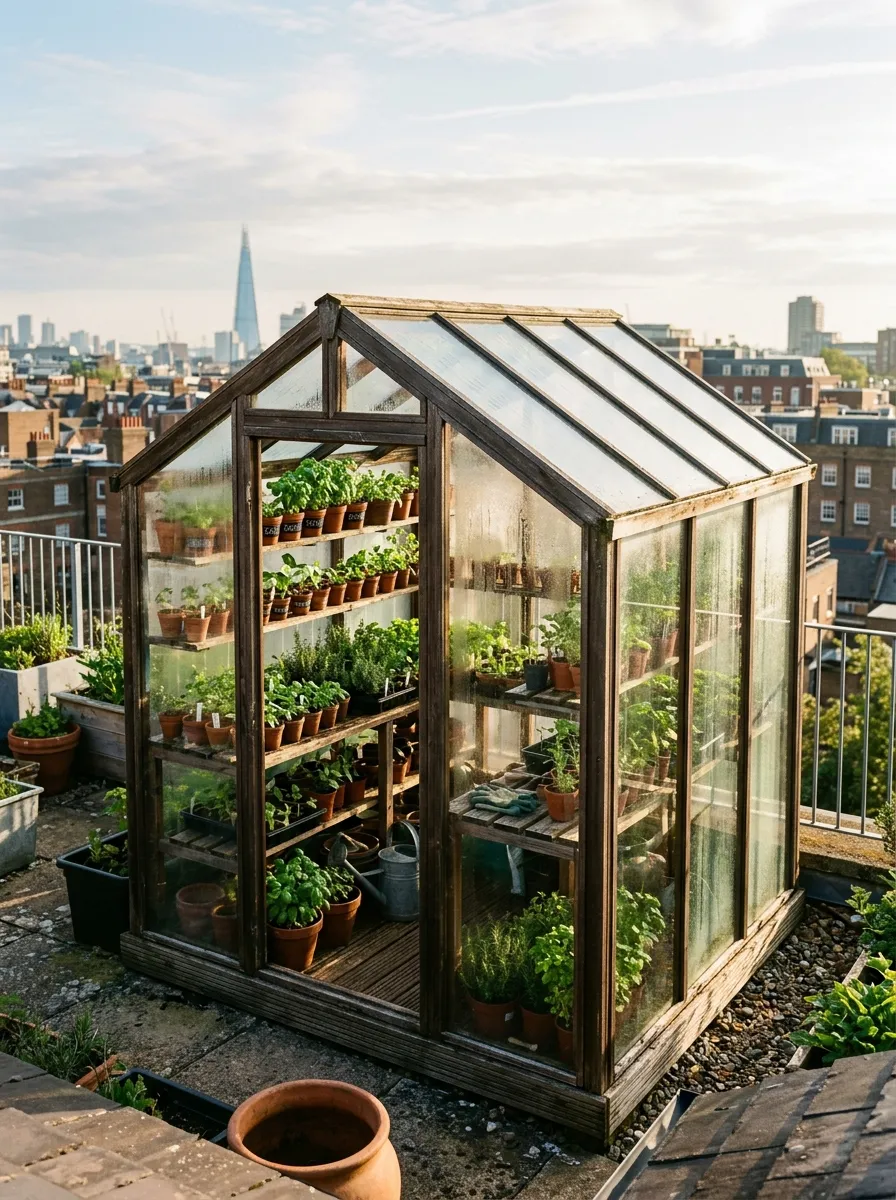
A mini greenhouse extends your growing season and protects delicate plants from wind and cold snaps. You do not need a large structure. A small PVC frame wrapped in clear plastic sheeting works fine for starting seeds or protecting young seedlings. Old window frames can also be repurposed into a simple lean-to greenhouse against a rooftop wall. Keep the structure low profile so it does not catch too much wind. Add a small vent or door you can open on hot days to prevent overheating. Use wire shelving inside to maximize space for trays and pots. This nook is especially useful in early spring when outdoor temperatures still swing between warm days and cold nights. Check the greenhouse each morning for condensation buildup and open it briefly to let moisture escape. A mini greenhouse costs little if you use recycled materials, and it lets you start plants weeks earlier than you could outdoors. It is a small investment that pays off with a longer growing season.
8. Butterfly and Bee Flower Patch

Pollinators need places to land, and a rooftop can offer exactly that. Plant a small patch of lavender, marigolds, zinnias, and coneflowers to attract bees and butterflies. These flowers are inexpensive, easy to grow from seed, and do not need much care once established. Group them together in one sunny corner rather than scattering them across the roof. A shallow dish of water with a few pebbles gives bees a safe place to drink. Avoid pesticides in this area so pollinators can visit safely. Deadhead spent blooms regularly to encourage more flowers throughout the season. This patch also adds color and movement to your rooftop, making it feel alive. Kids enjoy watching butterflies land on the blooms, which makes this a fun family project too. Seeds cost only a few dollars per packet, making this one of the most affordable additions to any rooftop garden. Within a few weeks, you will likely notice more pollinators visiting your other plants as well.
9. Rooftop Fire Pit Seating Area

A small fire pit can turn a rooftop into a gathering spot on cool evenings. Always check local rules and building codes before adding an open flame to a rooftop, since some areas only allow propane or tabletop versions. A portable propane fire bowl is often the safest and most affordable option for rooftop use. Arrange a few chairs or benches around it, leaving enough space to move safely. Keep flammable materials, including dry plants, a safe distance away. Add a small side table for drinks and snacks. This spot works well combined with the lounge corner idea mentioned earlier, creating one larger social area. Blankets stored in a nearby bin keep guests warm on chilly nights. A fire pit does not need to be expensive since many hardware stores carry compact models at low prices. This feature adds warmth, light, and a reason to spend more evenings outside, even after the sun goes down.
10. Vertical Succulent Wall
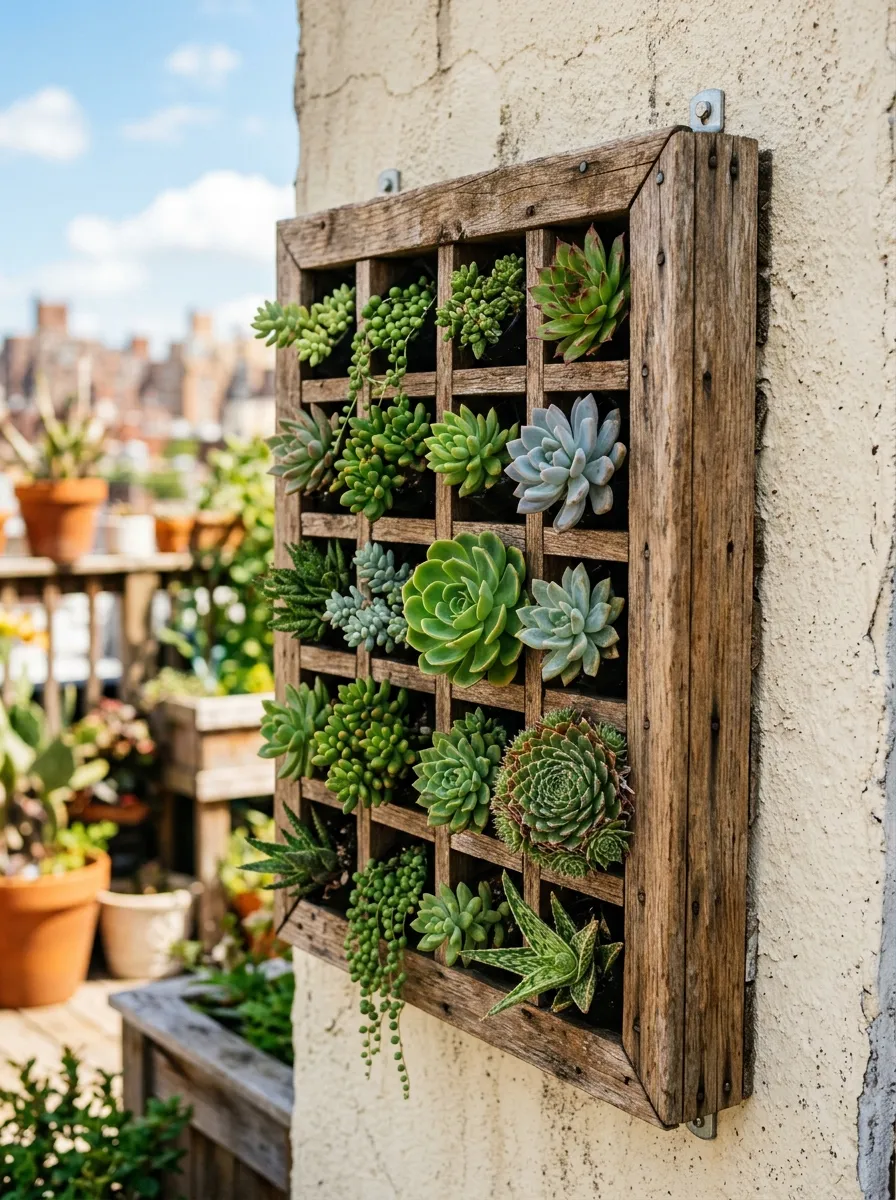
Succulents are perfect for rooftops because they tolerate heat, wind, and irregular watering. Build a simple vertical frame from a wooden pallet or picture frame lined with wire mesh and filled with a well-draining soil mix. Tuck small succulent cuttings into each pocket and let them root in place over a few weeks. Jade, echeveria, and sedum are easy varieties to start with and are often available cheaply at local nurseries. Mount the frame at an angle rather than fully vertical at first, so roots can establish before standing it upright. Water sparingly, since succulents rot easily in soggy soil. This wall adds texture and color without demanding much maintenance, which makes it ideal for rooftops that get intense sun. It also works well in small spaces where floor room is limited. Over time, the succulents will fill in the pockets, creating a lush, tile-like pattern. This project costs very little if you start with cuttings from friends or your own existing plants.
11. Recycled Tire Planters
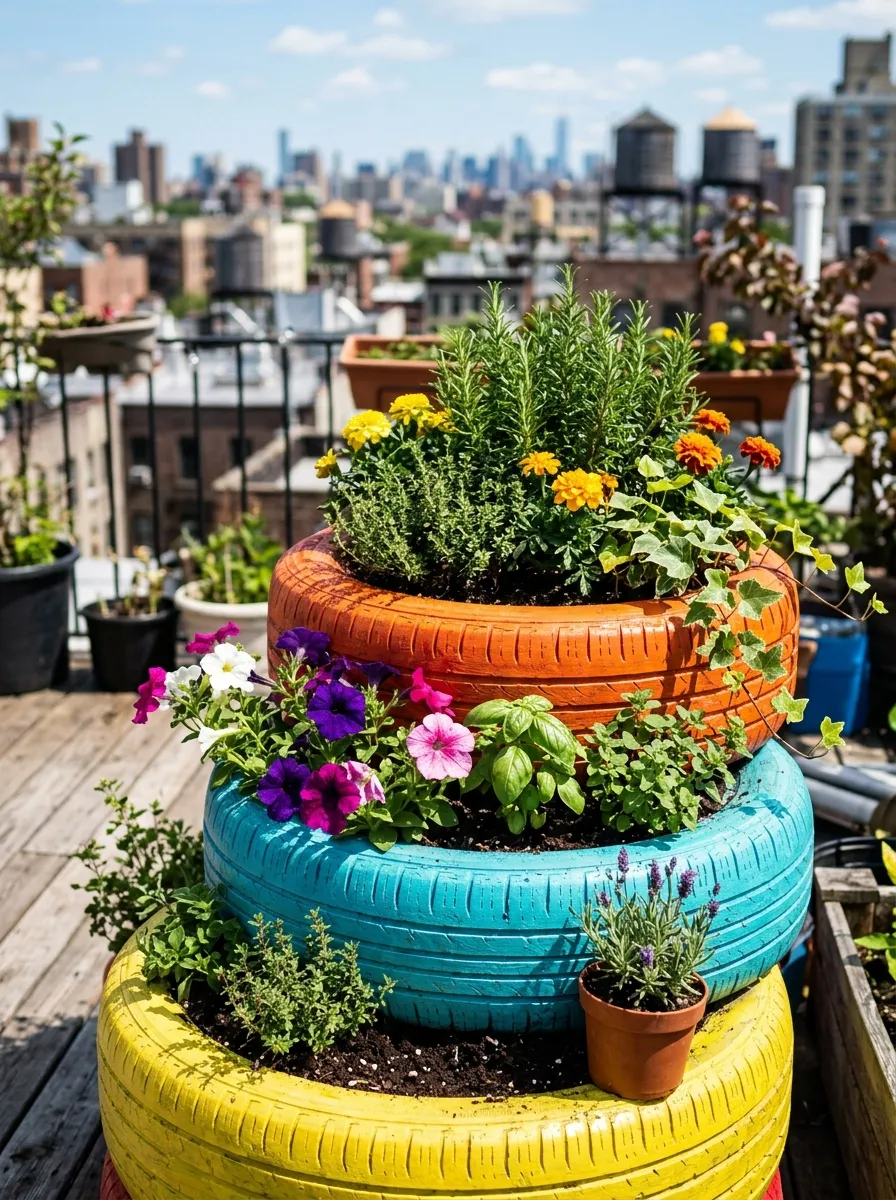
Old tires make sturdy, free planters that are easy to find at auto shops looking to get rid of them. Clean the tires, then paint them in bright colors to cover the rubber and add personality to your rooftop. Stack two or three tires for deeper planting beds, which works well for potatoes or root vegetables. A single tire on its own suits flowers or shallow-rooted herbs. Drill a few drainage holes in the bottom layer before adding soil. Tires hold heat well, which can help extend the growing season into cooler months. Arrange them in clusters or rows depending on your available space. This idea also keeps tires out of landfills, giving them a second life. Kids often enjoy helping paint the tires, making it a fun weekend activity for the whole family. Because the material is free, this is one of the most budget-friendly raised bed options available for any rooftop garden project. For more creative inspiration on giving old tires a new purpose, check out these tire planter ideas for unique ways to turn recycled tires into practical and eye-catching garden planters.
12. Shade Sail Canopy

Rooftops often get intense, direct sun with little natural shade. A shade sail solves this problem without blocking the view or airflow the way a solid roof would. Attach sturdy hooks to existing walls, posts, or a simple wooden frame, then stretch the fabric sail between them at an angle. This creates a shaded pocket perfect for seating, dining, or shade-loving plants. Shade sails come in various sizes and colors, so choose one that matches your rooftop’s overall look. Installation usually takes less than an hour with basic hardware. Check tension regularly, especially after storms, to keep the fabric taut and secure. This addition protects both people and plants from scorching afternoon sun, which can stress delicate leaves. It also lowers the temperature in the shaded area, making the rooftop more comfortable during summer months. Compared to building a permanent structure, a shade sail is far more affordable and can be taken down easily for winter storage.
13. Rooftop Yoga and Meditation Deck

A quiet corner dedicated to stretching or meditation can turn your rooftop into a personal retreat. Lay down interlocking deck tiles or a simple outdoor rug to create a defined space separate from the rest of the garden. Surround the area with calming plants like bamboo, lavender, or ornamental grasses that sway gently in the breeze. Keep the space uncluttered, with just a mat, a small cushion, and maybe a single lantern or candle. Face the deck toward a pleasant view if possible, whether that is the skyline or a patch of sky. Morning light works well here since it is softer and less harsh than midday sun. This area does not need furniture or elaborate decor, just enough calm to make it inviting. Adding a small water feature nearby, discussed later, can enhance the peaceful mood with gentle background sound. This project costs very little since it mostly involves rearranging what you already have and adding a few affordable plants.
14. DIY Trellis for Climbing Vines
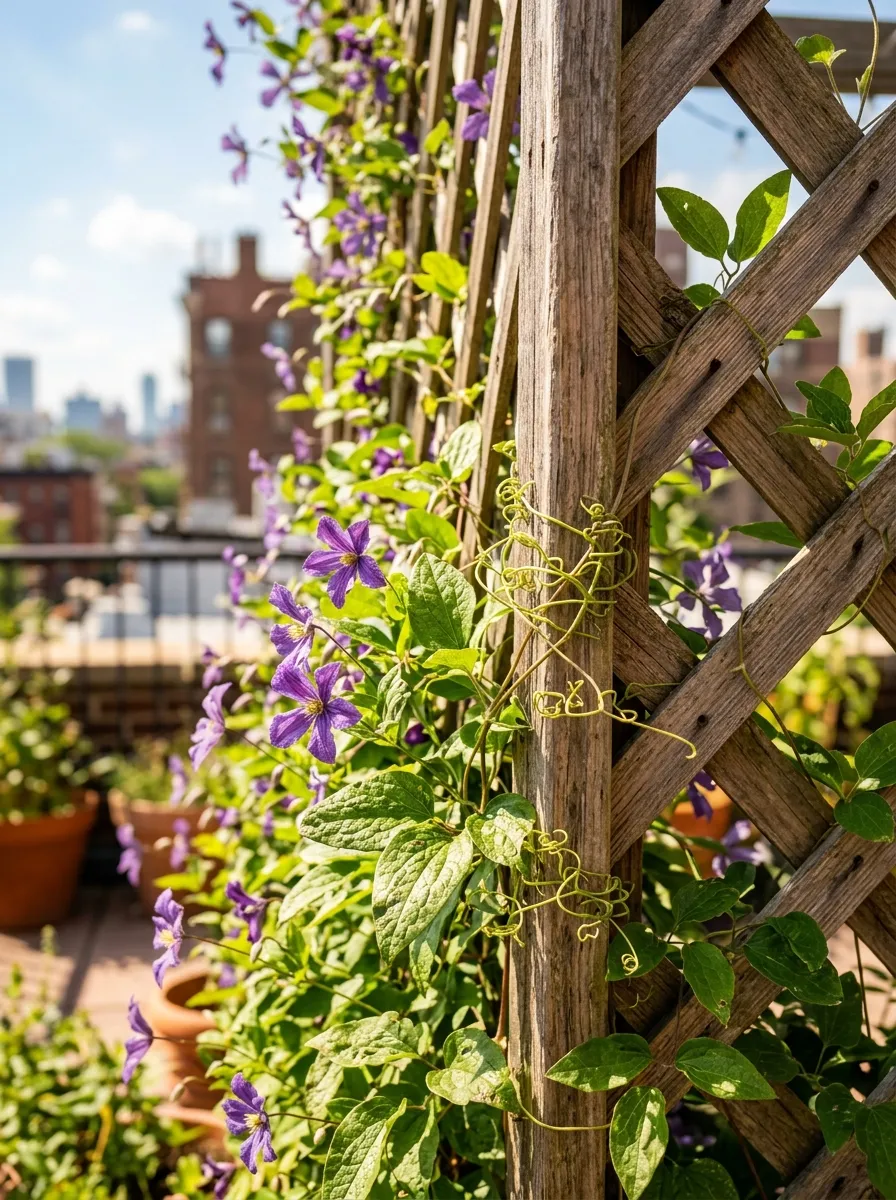
Climbing plants add height and greenery without taking up much floor space, which makes them ideal for rooftops. Build a simple trellis using bamboo stakes, twine, or leftover wooden slats arranged in a lattice pattern. Lean it against a wall or attach it to a planter box for support. Morning glory, sweet peas, and climbing beans are fast-growing options that fill in a trellis within weeks. Position the trellis where it can also double as a privacy screen between you and neighboring rooftops. Water the base regularly since climbing plants often have shallow roots that dry out quickly. Guide young vines toward the trellis by hand until they start climbing on their own. This project uses minimal materials and can be built in under an hour. Once established, a trellis wall creates natural shade and a sense of enclosure that makes the rooftop feel more like a private garden room rather than an open, exposed space.
15. Small Water Feature or Fountain

The sound of moving water adds a calming layer to any rooftop garden. A small tabletop fountain or a repurposed ceramic pot fountain kit can be set up in an afternoon without any plumbing knowledge. Look for solar-powered pump kits to avoid running electrical cords across the rooftop. Place the fountain near your seating area so you can hear it while relaxing. Surround it with moisture-loving plants like ferns or small ornamental grasses to soften the edges. Clean the pump and change the water every couple of weeks to prevent algae buildup. Even a small basin with a floating solar fountain disk can create the same soothing effect at a lower cost. This feature also attracts birds looking for a place to drink, adding more life to your garden. A water feature does not need to be large or expensive to make a noticeable difference in how peaceful your rooftop feels, especially during warm summer evenings.
16. Pea Gravel Pathways
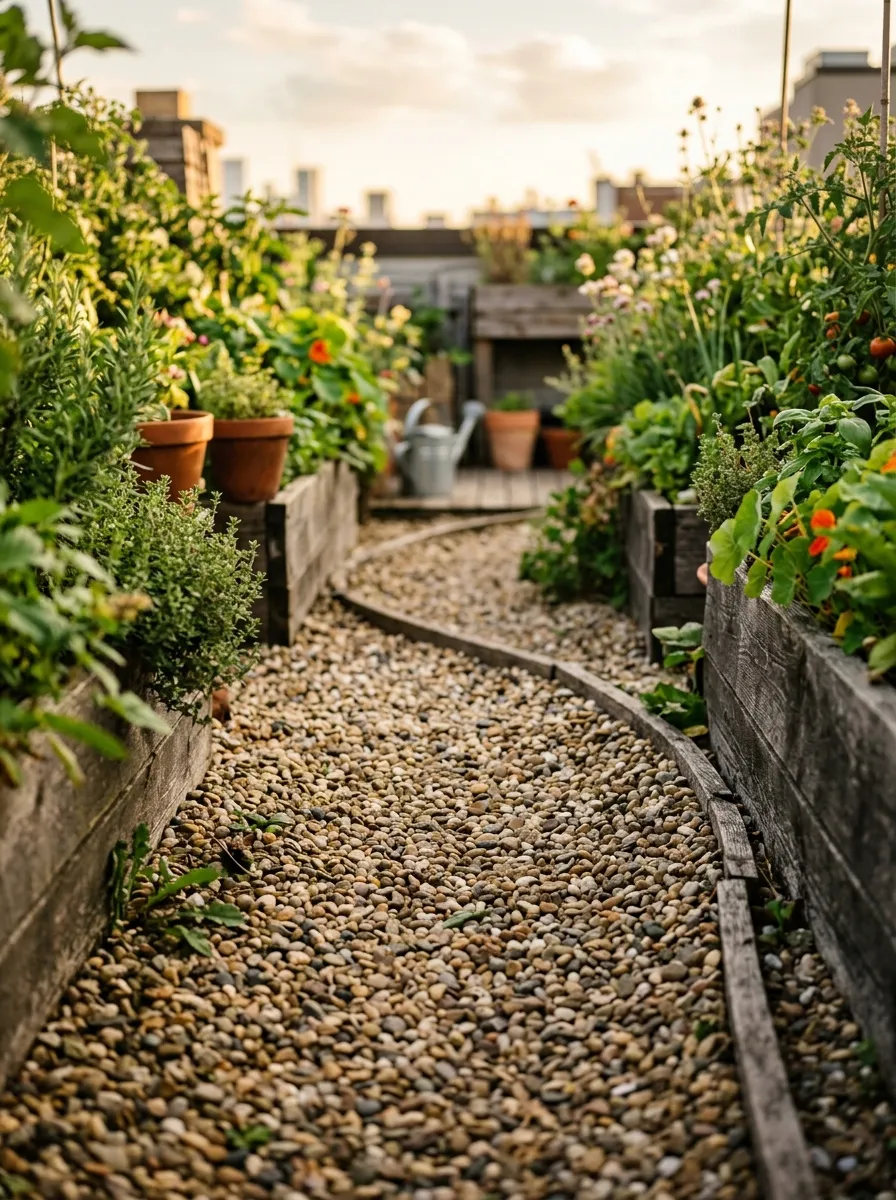
Bare rooftop surfaces can feel harsh and industrial. A simple gravel pathway softens the look and gives your garden a sense of structure. Lay down pea gravel in a defined path between raised beds, containers, or seating areas. Use edging material like bricks or reclaimed wood to keep the gravel contained and prevent it from spreading. This type of pathway also helps with drainage, letting excess water pass through rather than pooling on the roof surface. Choose a lightweight gravel option if weight is a concern for your rooftop structure. Sweep the path occasionally to keep soil and debris from mixing into the gravel. This project is inexpensive since gravel is sold by the bag at most hardware stores and does not require special tools to install. A defined path also makes the space feel more intentional and finished, guiding visitors naturally from one area of the garden to another rather than leaving everything open and undefined.
17. Compost Bin Corner
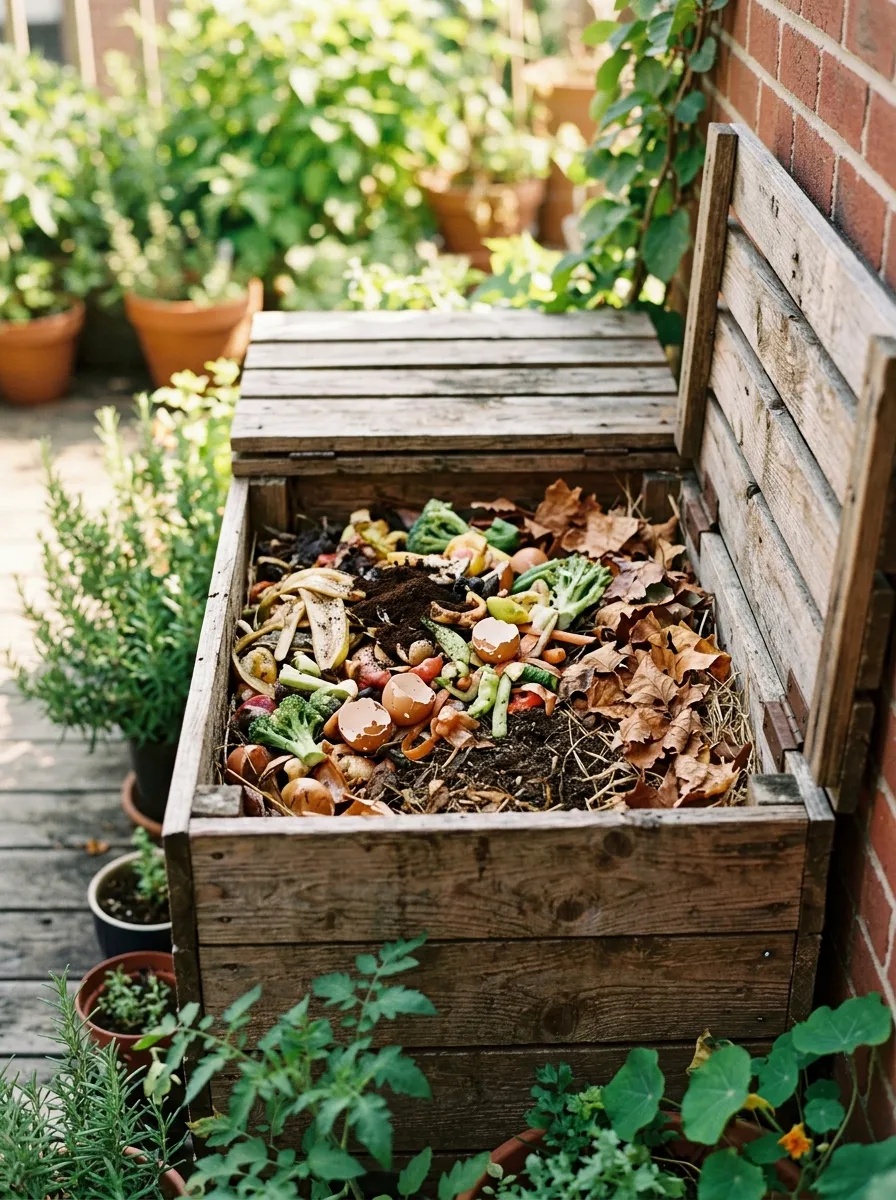
A compost bin turns kitchen scraps into free fertilizer for your rooftop plants. Build a small bin from wooden pallets or a plastic storage tote with holes drilled for airflow. Keep it tucked into a corner away from your seating area to avoid any odor concerns. Add a mix of kitchen scraps, dry leaves, and shredded paper, turning the pile every week or so with a small shovel or stick. Avoid adding meat, dairy, or oily foods, which can attract pests. Within a couple of months, you will have rich compost ready to mix into your containers and raised beds. This cuts down on the need to buy soil or fertilizer, saving money over time. A compost bin also reduces the amount of trash you send to the landfill. If space is very limited, a small worm composting bin works just as well and takes up even less room. Either option turns waste into a useful resource right on your rooftop.
18. Rooftop Dining Nook

A dedicated dining spot makes your rooftop feel like an extension of your home rather than just a garden. A small folding table and two chairs are enough to create this nook without taking up much space. Look for secondhand bistro sets at thrift stores or online marketplaces to save money. Surround the table with potted plants to create a sense of privacy from neighboring buildings. Add a simple tablecloth or placemats to make the space feel intentional. String lights or a lantern overhead extend the usable hours into the evening. This spot works well for morning coffee, quick lunches, or dinner under the stars. Fold up the furniture and store it during bad weather to extend its lifespan. Even a rooftop with limited square footage can fit a small dining nook if you choose compact furniture. This idea encourages you to actually use your rooftop garden daily, rather than just looking at it from inside.
19. Fairy Garden Miniature Display
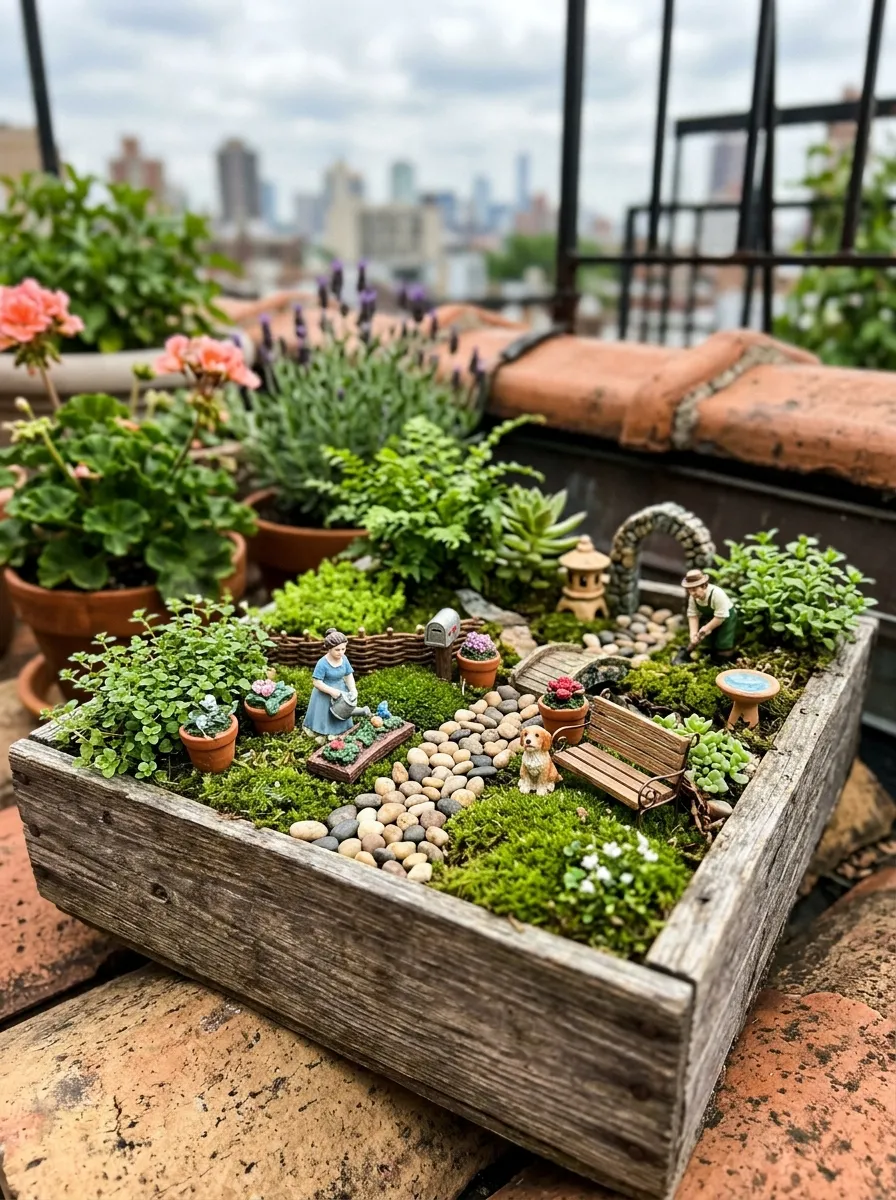
A miniature fairy garden adds a whimsical touch and works well in a small container or corner of a larger bed. Use a shallow wooden crate or an old wheelbarrow as the base, then fill it with soil and moss. Add small pebbles for pathways and tiny figurines or houses found at craft stores or dollar shops. Low-growing plants like moss, thyme, or baby’s tears work well as miniature ground cover. This project is especially fun for families with kids, who often enjoy helping design the tiny scene. Keep the display in a partly shaded spot to prevent the moss from drying out too quickly. Change small details seasonally, like adding tiny pumpkins in fall or small ornaments in winter. This idea costs very little since most materials can be found secondhand or repurposed from around the house. A fairy garden adds a playful focal point that draws attention and conversation, even in the smallest rooftop space.
20. Potted Fruit Trees

Growing fruit on a rooftop is possible with the right container and tree variety. Choose dwarf citrus, fig, or apple trees bred specifically for container growing. Use a large pot, at least fifteen gallons, with good drainage holes to support root growth. Position the tree in the sunniest spot on your rooftop, since fruit trees need several hours of direct light each day. Feed the soil with compost or organic fertilizer during the growing season to support healthy fruit production. Prune the tree yearly to keep its size manageable in a container setting. Bring cold-sensitive varieties like citrus indoors or wrap them during freezing temperatures if you live somewhere with harsh winters. A single potted fruit tree can produce a surprising amount of fruit over a few seasons once established. Buying a young tree costs more upfront than seeds, but it pays off with fresh fruit for years. This is a longer-term project, but one that adds real value to your rooftop.
21. Living Wall with Moss Art

A moss wall adds texture and greenery to vertical surfaces that would otherwise sit empty. Attach sheet moss to a wooden board or wire frame using a natural glue or twine, arranging patches in a pattern you like. Moss thrives in shaded, humid spots, so choose a wall that does not get harsh afternoon sun. Mist the wall regularly with a spray bottle to keep the moss healthy, since it absorbs moisture through its surface rather than roots. This project costs very little since moss can often be collected responsibly from shaded areas or purchased cheaply from garden centers. A living wall also helps muffle noise and softens hard rooftop surfaces like concrete or brick. Combine different moss varieties for a layered, textured look that changes subtly with the seasons. This idea works especially well in shaded corners where other plants might struggle to grow, turning an awkward dead zone into a striking green feature.
22. Bird Feeder and Birdbath Station
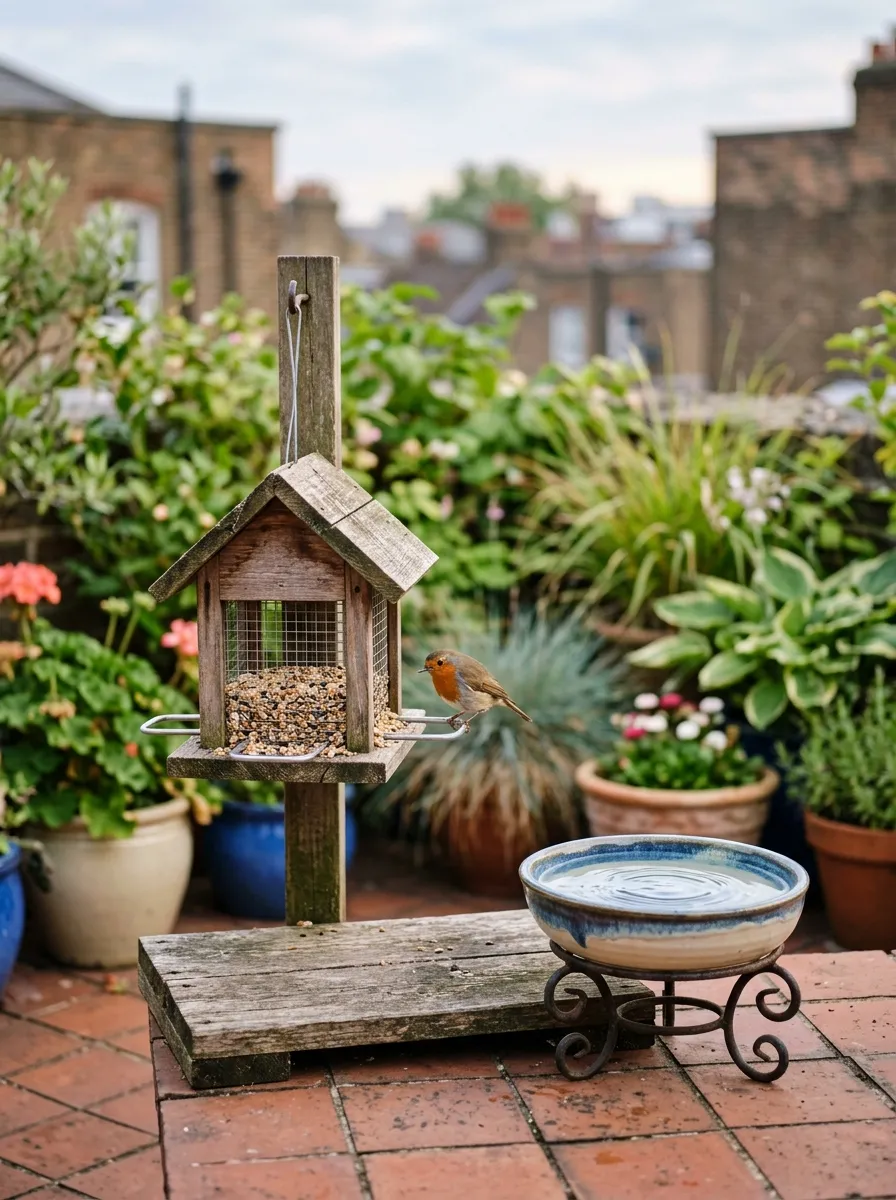
Inviting birds to your rooftop adds movement, sound, and natural pest control to your garden. Build a simple feeder from a repurposed milk carton or wooden box filled with birdseed. Pair it with a shallow dish or small ceramic bowl filled with fresh water for a basic birdbath. Place both items away from your seating area but within view so you can enjoy watching visitors from a distance. Refill the feeder regularly and clean the birdbath every few days to keep the water fresh and prevent mosquito breeding. Birds also help control insect populations that might otherwise damage your plants. Position the station near shrubs or taller plants so birds have a safe place to retreat if needed. This addition costs very little, especially if you use household items as your base. Over time, you may notice regular visitors returning daily, adding a lively, natural rhythm to your rooftop garden that changes with the seasons.
23. Wooden Pallet Deck Flooring
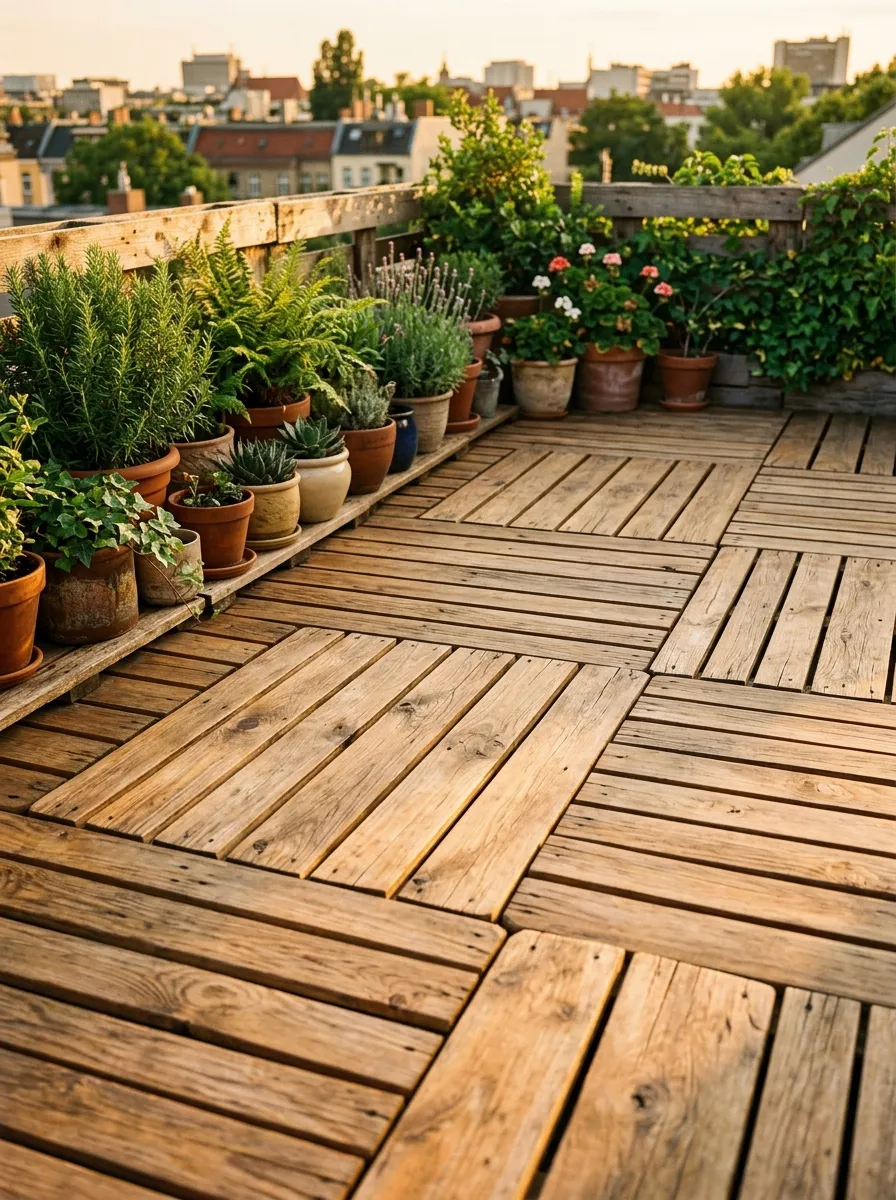
Bare concrete or tar rooftops can feel cold and uninviting. Wooden pallets, sanded down and arranged in a grid, create an instant deck floor without the cost of a full renovation. Sand rough edges smooth, then lay the pallets flat across the rooftop surface, connecting them with basic screws or brackets. Leave small gaps between pallets for drainage so water does not pool during rain. Add a coat of outdoor sealant to protect the wood from sun and moisture damage. This flooring instantly warms up the look of your rooftop and makes bare feet more comfortable during summer. Arrange furniture, planters, and rugs directly on top once the flooring is secure. If pallets are hard to source, reclaimed decking boards work just as well and can often be found at reduced prices from renovation projects. This upgrade requires more effort than other ideas on this list, but it transforms the entire feel of the space for a fraction of professional decking costs.
24. Rooftop Reading Nook with Canopy
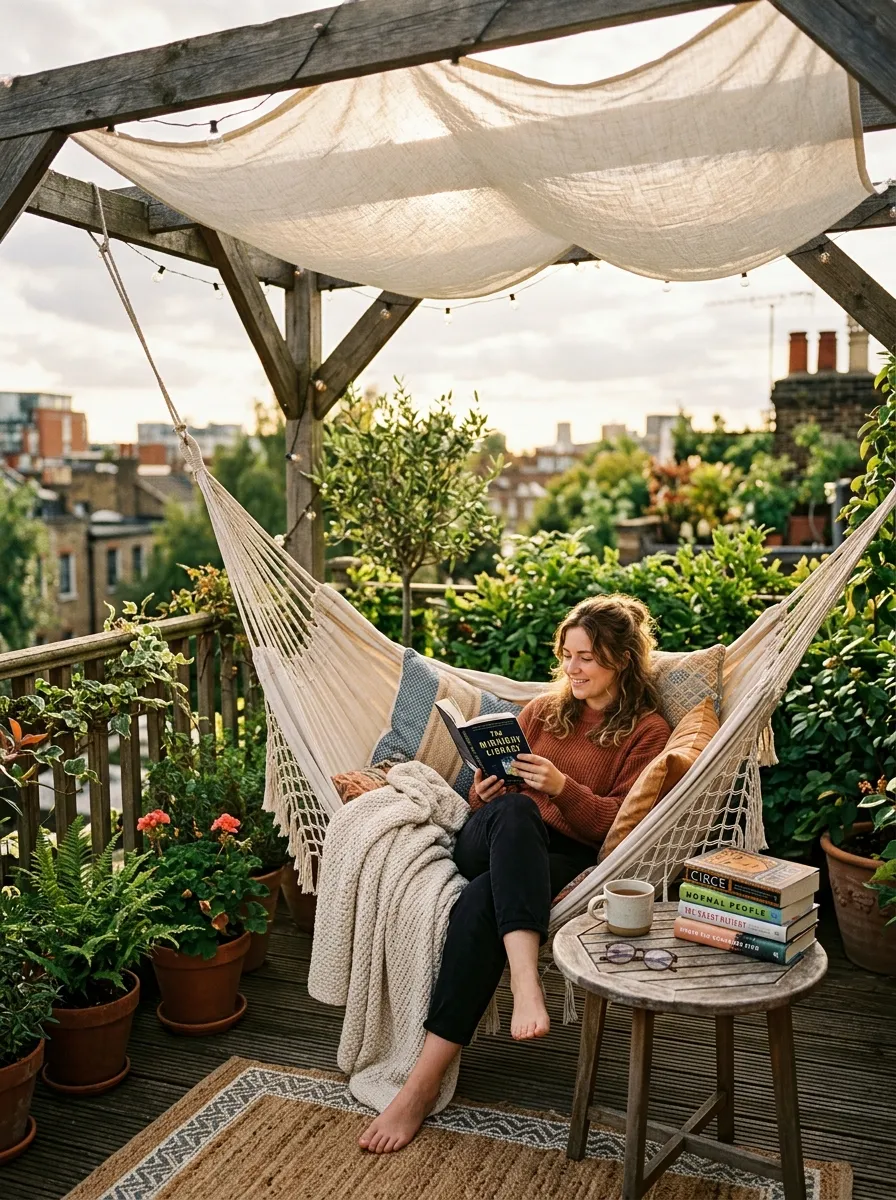
A reading nook gives you a reason to spend quiet afternoons outside with a book. A hammock chair or a comfortable outdoor armchair paired with a small side table creates a simple, inviting setup. Hang a lightweight fabric canopy overhead to filter direct sunlight and add a soft, private feel to the corner. Surround the nook with tall plants or a trellis of climbing vines for extra shade and privacy. Keep a small basket nearby to hold books, a blanket, and sunglasses so everything you need is within reach. Choose a spot away from the main walking path so the area feels tucked away and calm. This idea works well combined with the yoga deck mentioned earlier, creating a quiet zone separate from social seating areas. A reading nook does not require much investment, especially if you already own a comfortable chair or hammock, making it one of the easiest upgrades to add real personality to your rooftop.
25. Solar-Powered Garden Lanterns
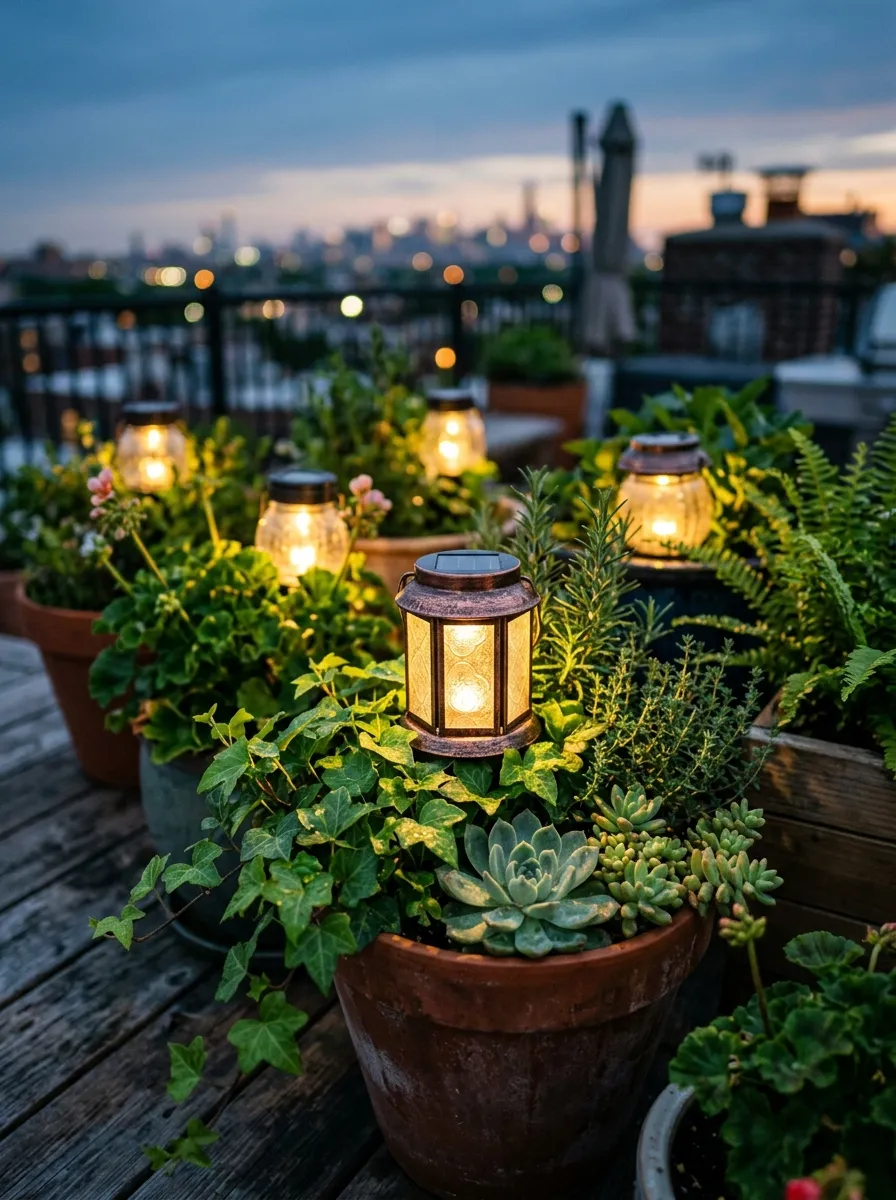
Solar lanterns add soft lighting throughout your rooftop without any wiring or electrical costs. Place them along pathways, at the base of planters, or on dining tables to guide movement after dark. These lanterns charge during the day and turn on automatically at dusk, making them low maintenance. Choose lanterns with a warm light tone for a cozy feel rather than a harsh white glow. Mix different lantern heights and styles for a layered lighting effect across the space. Clean the solar panels occasionally to keep them charging efficiently, especially after dusty or rainy weeks. This lighting option pairs well with the string lights mentioned earlier, creating multiple light sources for different areas of the rooftop. Solar lanterns are widely available at low prices from hardware and discount stores, making them one of the most affordable ways to extend your garden’s usability into the evening hours without any ongoing energy costs.
26. Kitchen Garden with Companion Planting
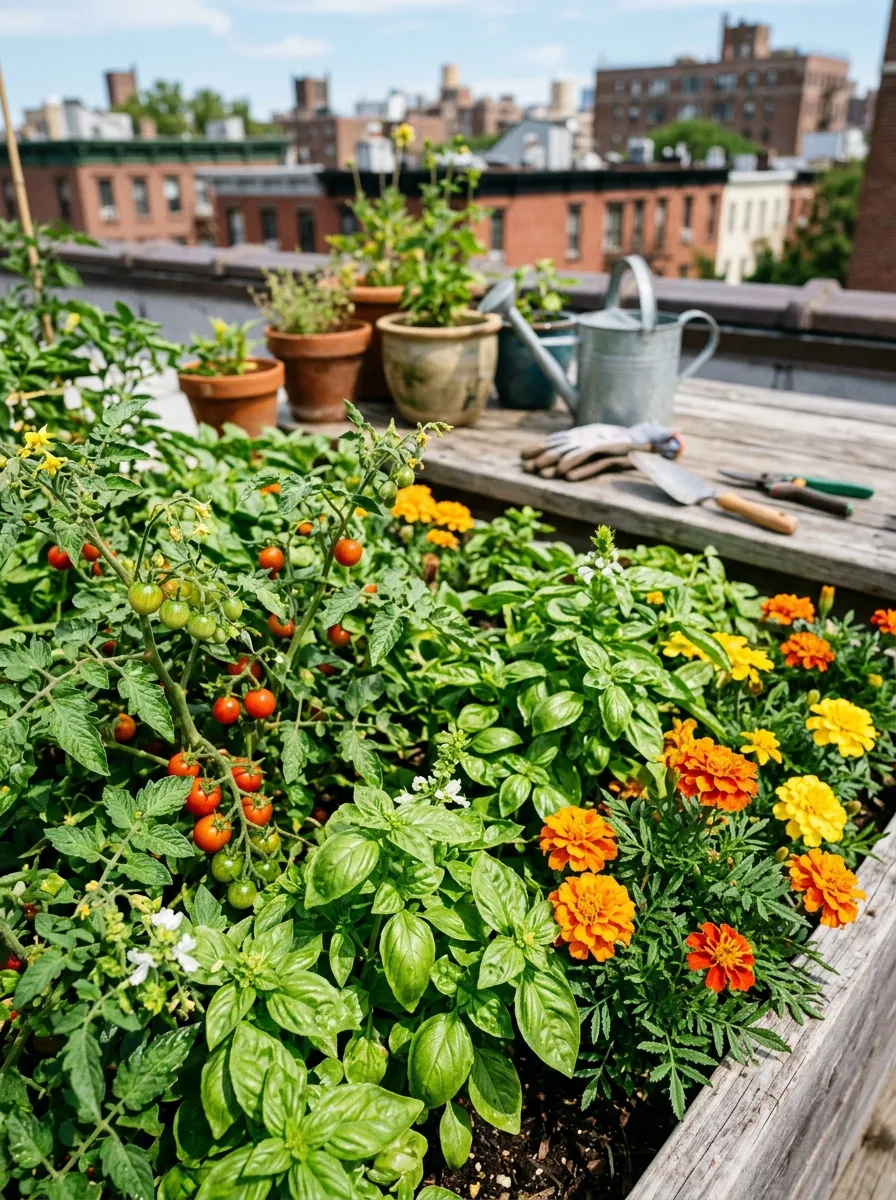
Companion planting helps your rooftop garden grow healthier with fewer pest problems. Pair tomatoes with basil, since basil helps repel certain insects while improving tomato flavor. Plant marigolds near vegetable beds to naturally deter pests without chemical sprays. Group plants with similar water and sun needs together to simplify care and reduce wasted effort. This method also makes better use of limited rooftop space, since some plants grow tall while others stay low and fill in gaps below. Research a few basic pairings before planting, since some combinations work better than others depending on your climate. Keep a simple notebook or phone note tracking what worked well each season to improve your garden over time. This approach costs nothing extra since it just changes how you arrange plants you were likely growing anyway. Over a season or two, you may notice fewer pest problems and better yields simply by planting smarter rather than spending more money on treatments.
27. Multi-Level Plant Stand Display
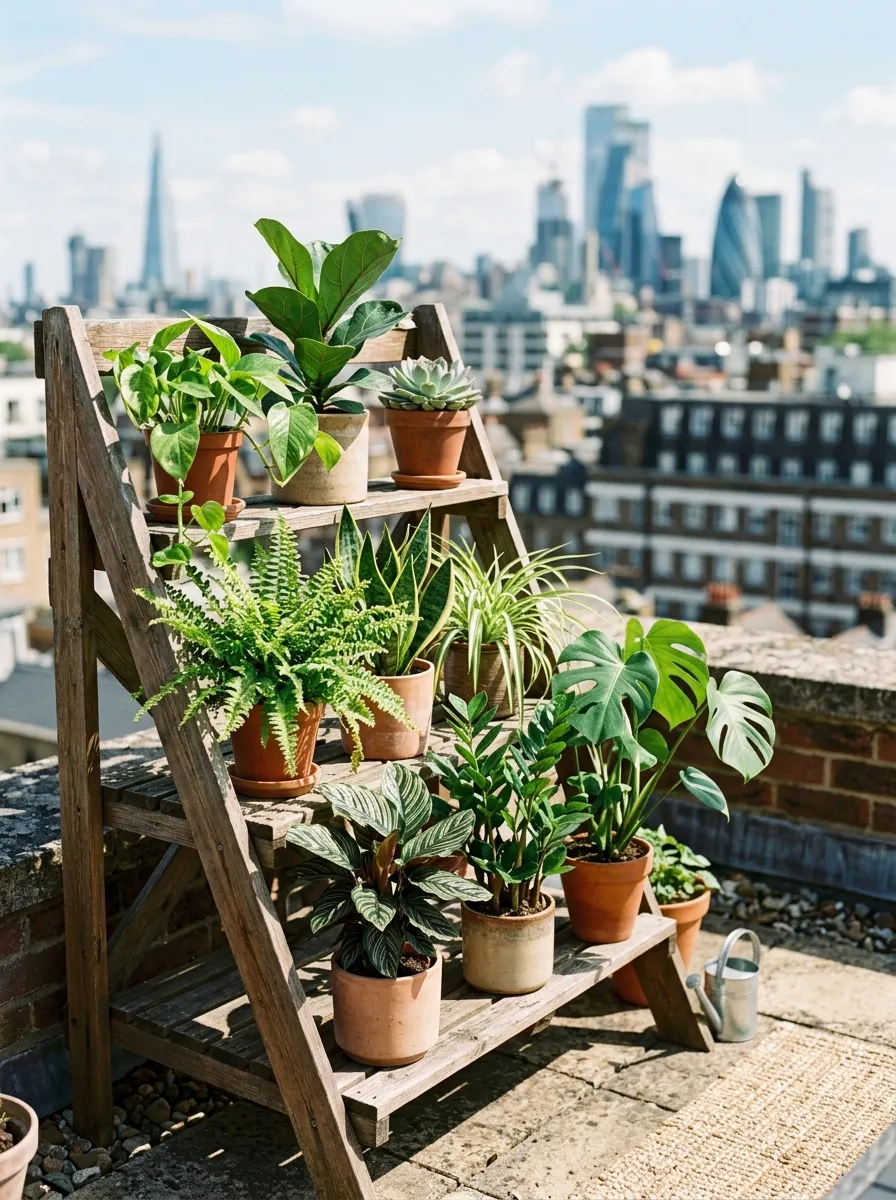
A tiered plant stand makes the most of a small footprint by growing upward instead of outward. Build one from scrap wood or an old ladder repurposed to hold pots at different heights. Arrange plants so taller varieties sit at the back and shorter ones sit toward the front, allowing sunlight to reach everything evenly. This display works well near a wall or corner where floor space is limited but vertical space is open. Mix textures and colors across the tiers for visual interest, combining flowering plants with leafy greens. A ladder-style stand also folds flat for storage during winter months if needed. This project costs very little if you already have an old ladder or scrap wood lying around. A multi-level display turns a cluttered collection of pots into an organized, attractive feature, making your rooftop feel more like a curated garden rather than a random assortment of containers scattered across the floor.
Conclusion
A rooftop does not need a big budget or a professional crew to become a real garden. Small projects like container vegetables, a pallet planter, or a string of solar lights add up over time into a space full of life, color, and comfort. Start with one or two ideas that fit your rooftop’s sun, space, and your own daily habits, then build from there season by season. Reused materials, secondhand furniture, and simple DIY builds keep costs low while still giving your rooftop real character. Pick a project from this list, gather a few basic supplies, and turn your empty rooftop into a space you look forward to visiting every day.
1 thought on “27 Incredible Rooftop Garden Ideas That Transform Empty Spaces”