
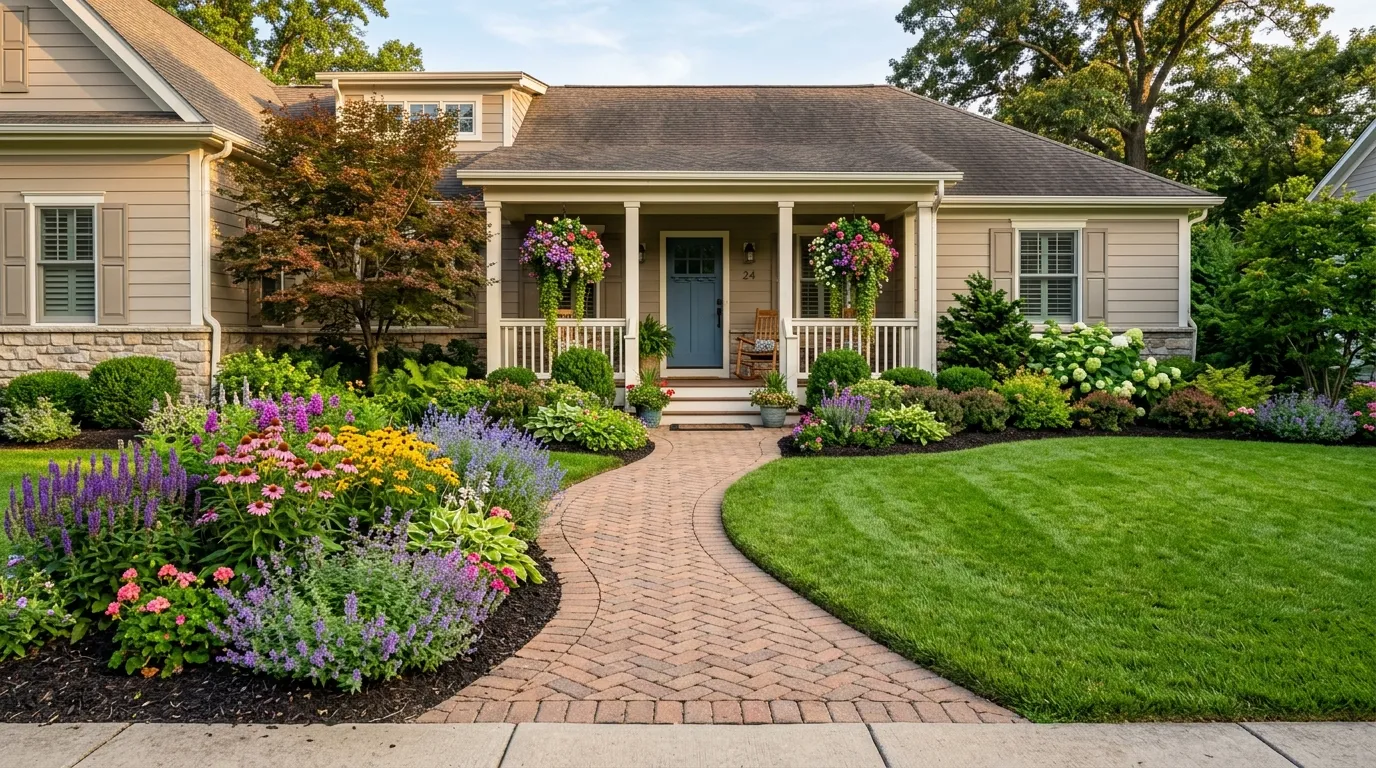
The front of a home sets the tone before anyone steps through the door. A well-planned yard can turn a plain entrance into something people remember, and most of the changes that make the biggest difference cost far less than a full renovation. This list walks through practical, real-world ways to plant, arrange, and finish a front yard so it looks cared for and inviting from the street. Whether you’re working with a small city lot or a wide suburban lawn, these ideas focus on simple actions you can take with a weekend and a modest budget.
1. Plant a Flowering Tree Near the Entrance
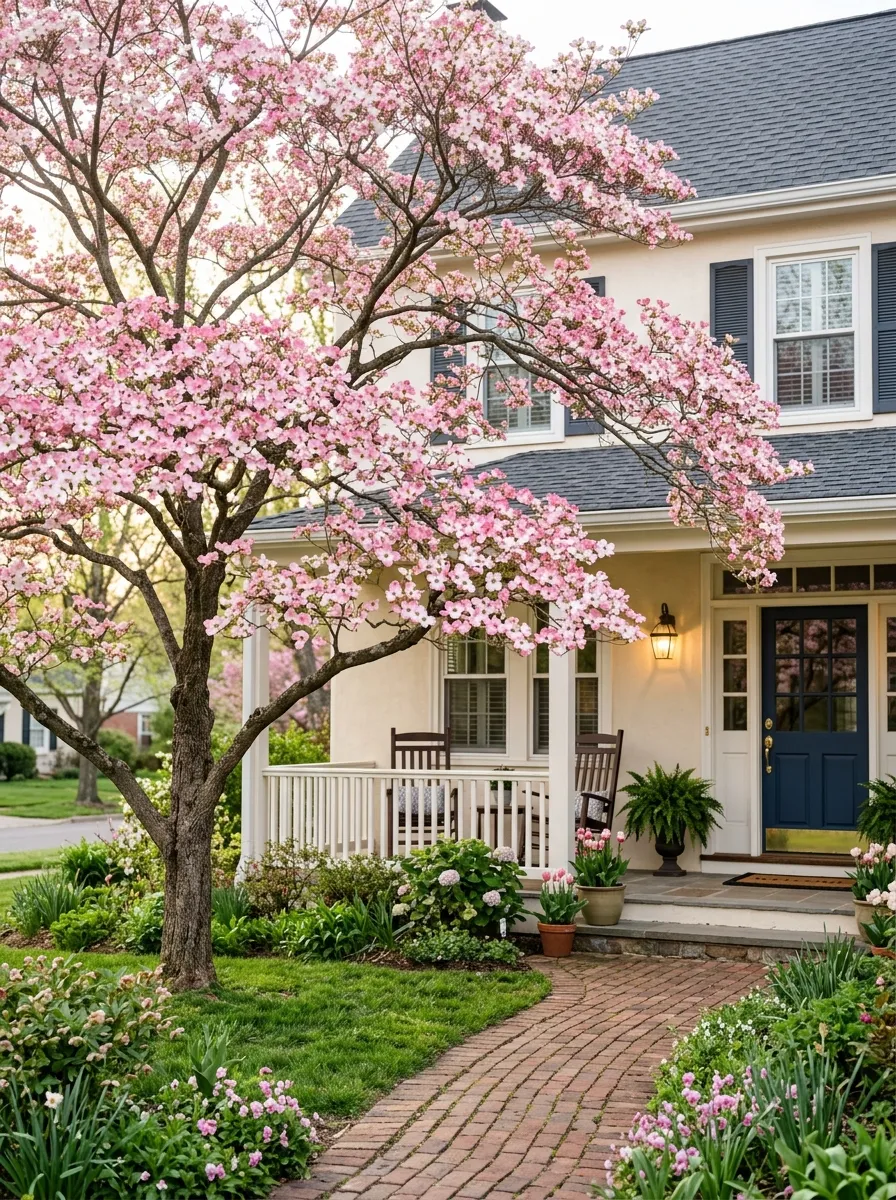
A single flowering tree near the entry gives a front yard a natural focal point. Dogwood, redbud, and crabapple trees all bloom in spring and add shape year-round. Plant it a few feet from the walkway so branches don’t block foot traffic as they grow. A budget tip: buy a young sapling instead of a mature tree—the price difference is large, and most trees catch up in size within a few seasons. Water deeply once a week during the first year to help roots establish. Mulch around the base to retain moisture and keep grass from competing for nutrients. Position the tree so it frames the front door rather than hiding it. This single planting gives a yard structure, seasonal color, and a sense of permanence that a bed of annuals alone can’t match. If you’re looking for more budget-friendly ways to add charm and personality to your outdoor space, explore these DIY home garden ideas for simple projects you can create yourself.
2. Line the Walkway with Matching Planters
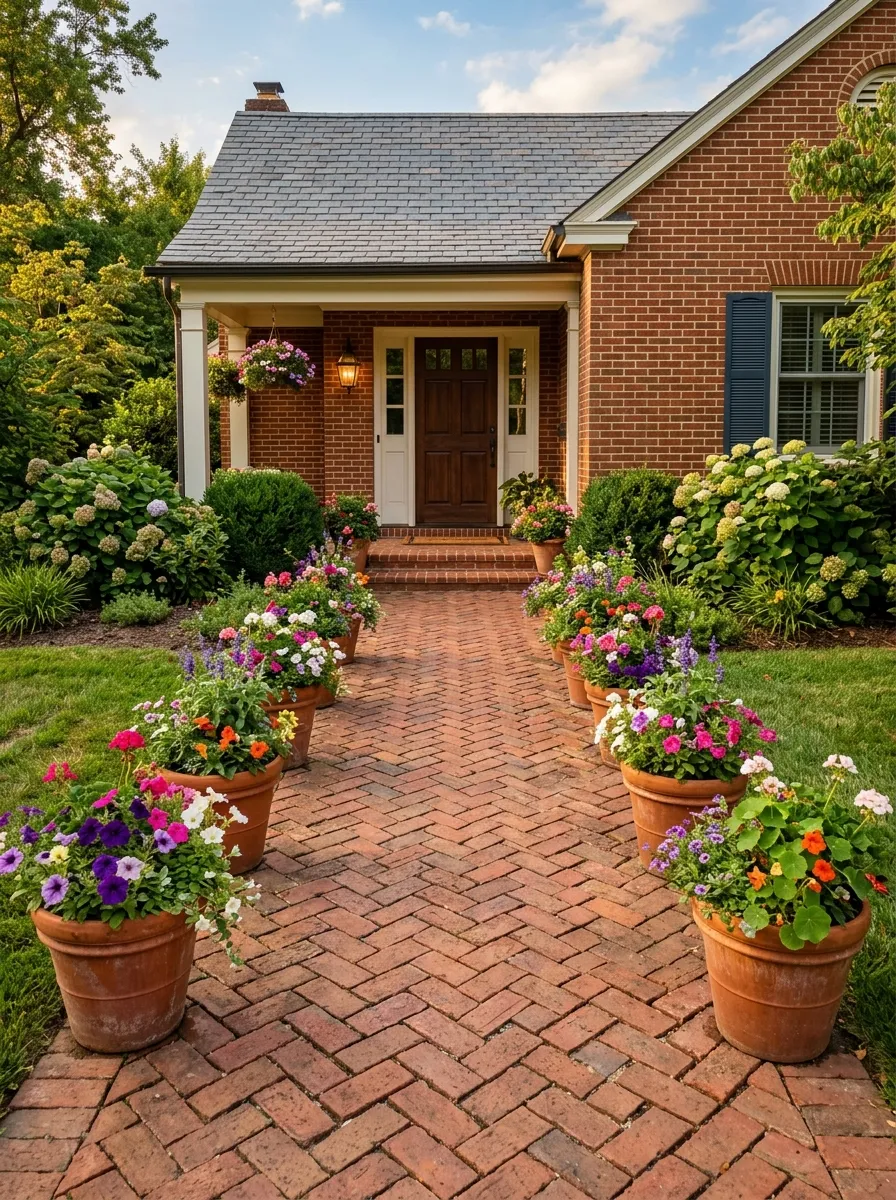
Matching planters along a walkway create a sense of order the moment someone approaches. Use two or three pairs of identical pots, spaced evenly, filled with the same flower variety in each. A budget-friendly option: buy plain terracotta pots and repeat one flower type, like marigolds or petunias, across all of them. Repetition is what makes this look polished rather than scattered. Keep planters low enough that they don’t block the path itself. Water them together on the same schedule so growth stays even across the row. This simple, repeatable setup works on any size walkway, from a short concrete path to a long paver driveway entrance, and it takes less than an afternoon to put together with plants from a local nursery.
3. Add Symmetry at the Front Door
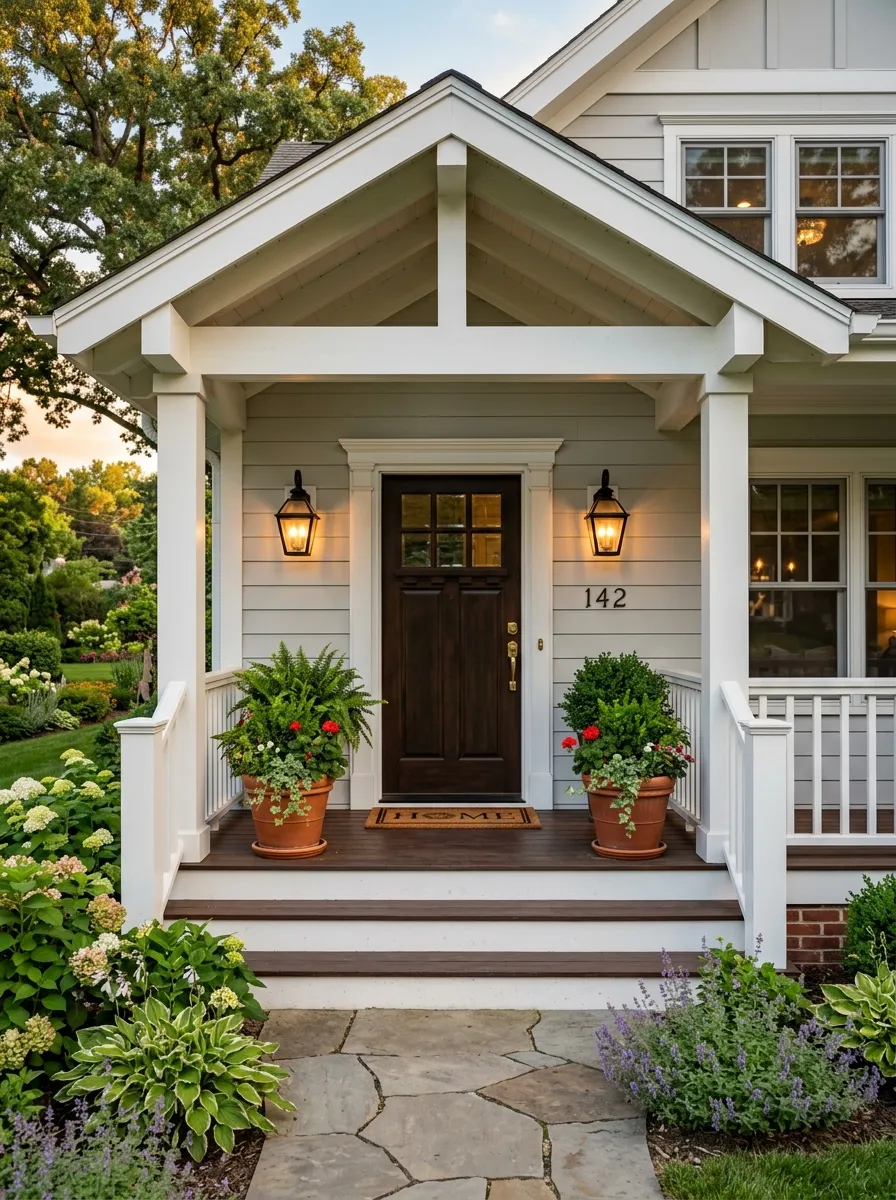
Symmetry near the entrance signals order at a glance. Place matching planters, lanterns, or small shrubs on either side of the front door. A budget tip: two identical pots from a hardware store, planted with the same flower, cost very little but make a big visual impact. Mirror the size and shape of shrubs flanking the entry so neither side looks heavier than the other. This doesn’t mean the whole yard needs to be symmetrical, just the few feet closest to the door. Add matching light fixtures if the current ones are mismatched or outdated. This small, focused change is one of the fastest ways to make an entrance feel finished, and it photographs well for listings if the home is for sale.
4. Layer Shrubs by Height Along the Foundation
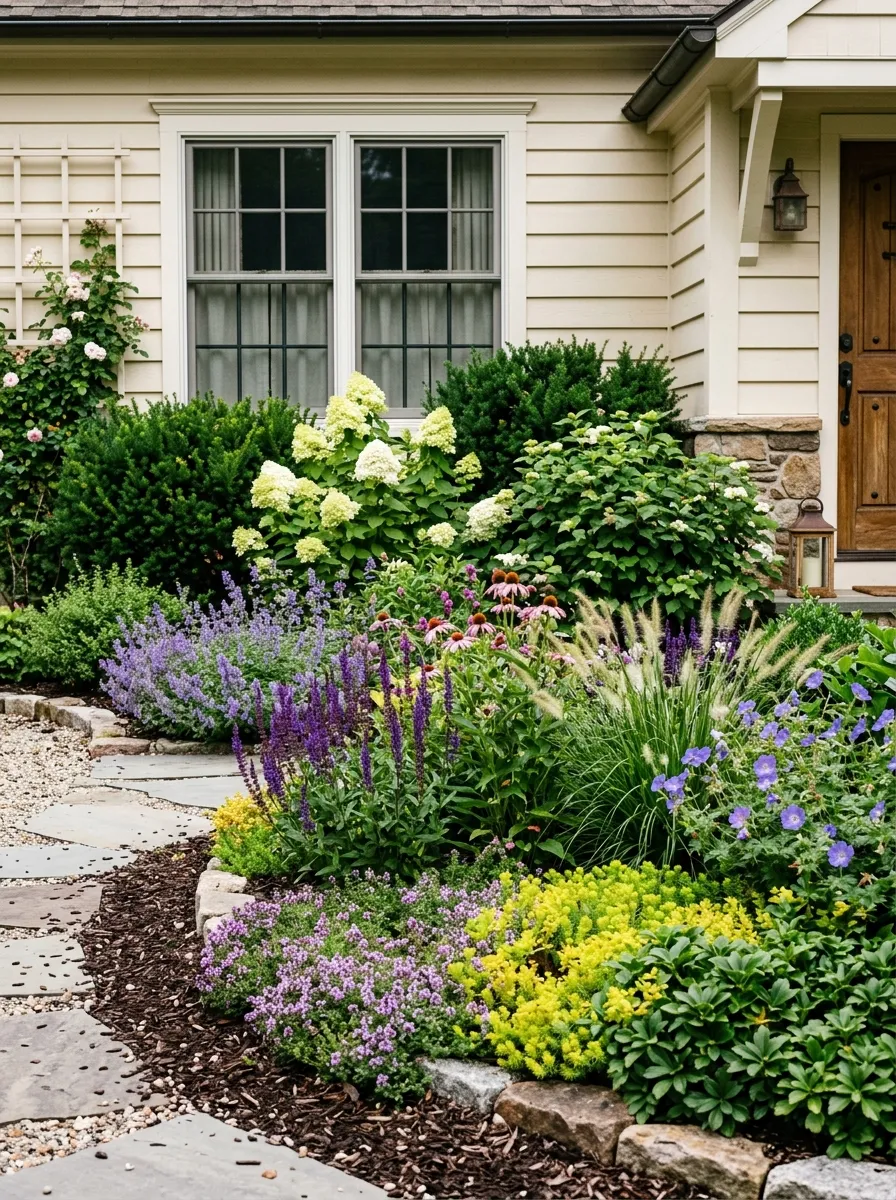
Flat foundation planting looks unfinished from the street. Layering by height fixes that instantly. Place taller shrubs like boxwood or holly against the house, add mid-height perennials in front of them, and finish with low groundcover along the edge closest to the lawn. A budget tip: buy smaller, younger shrubs and space them for their mature size rather than paying more for larger plants that need dividing later. This layered look gives the front of a home depth and texture instead of a single flat green wall. Keep plant heights below window sills so natural light isn’t blocked. This approach works on nearly any house style and remains one of the most reliable ways to make a foundation bed look designed rather than an afterthought.
5. Use a Cohesive Color Palette
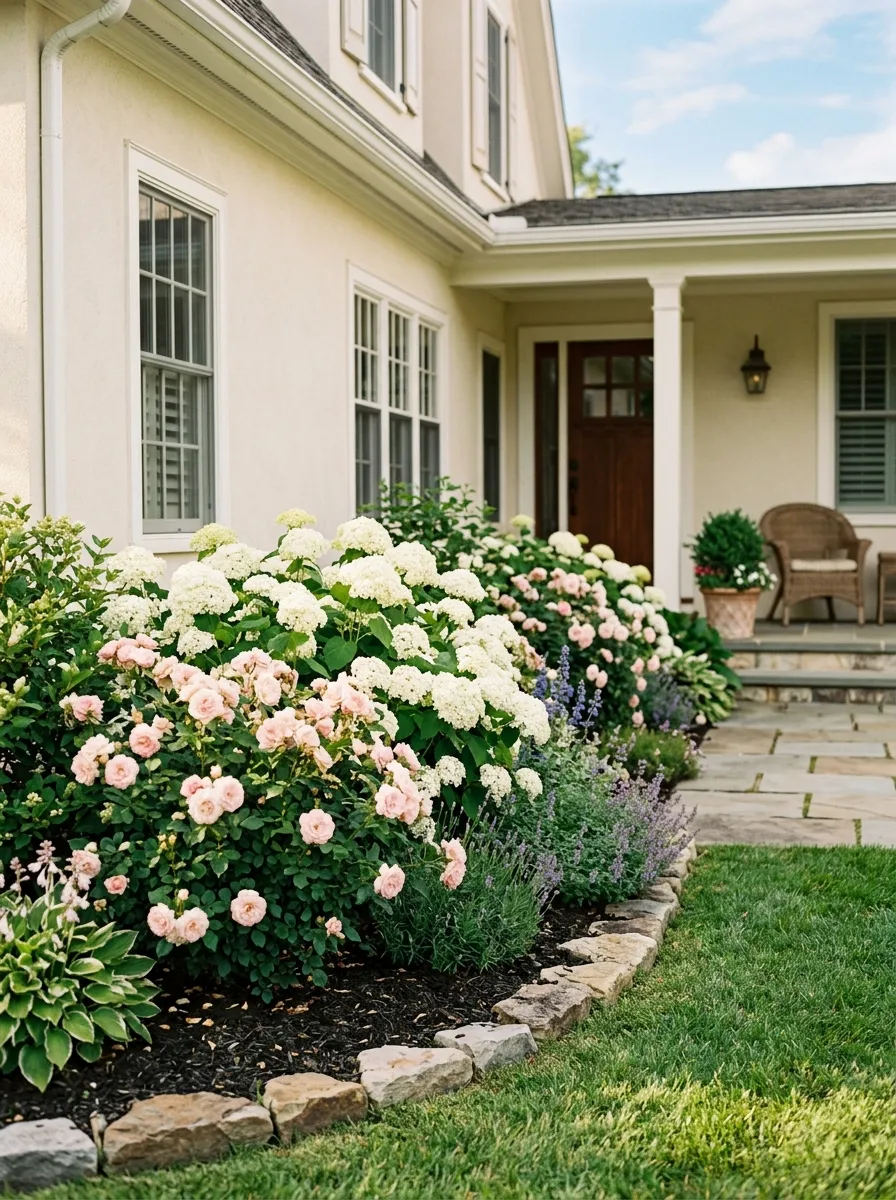
Random color combinations can make a front yard look busy instead of polished. Choosing two or three colors and repeating them throughout the beds creates a calmer, more organized look. A budget tip: pick colors that complement your home’s exterior paint or brick tone, then choose affordable annuals in those shades, like marigolds, petunias, or zinnias. Let green foliage act as the neutral that ties everything together. Repeat the same color combination in different beds around the yard for rhythm and consistency. This approach costs nothing extra beyond the plants you’d buy anyway, but the visual difference between a cohesive palette and a random mix is dramatic when viewed from the street or a passing car.
6. Edge Every Bed for a Clean Line
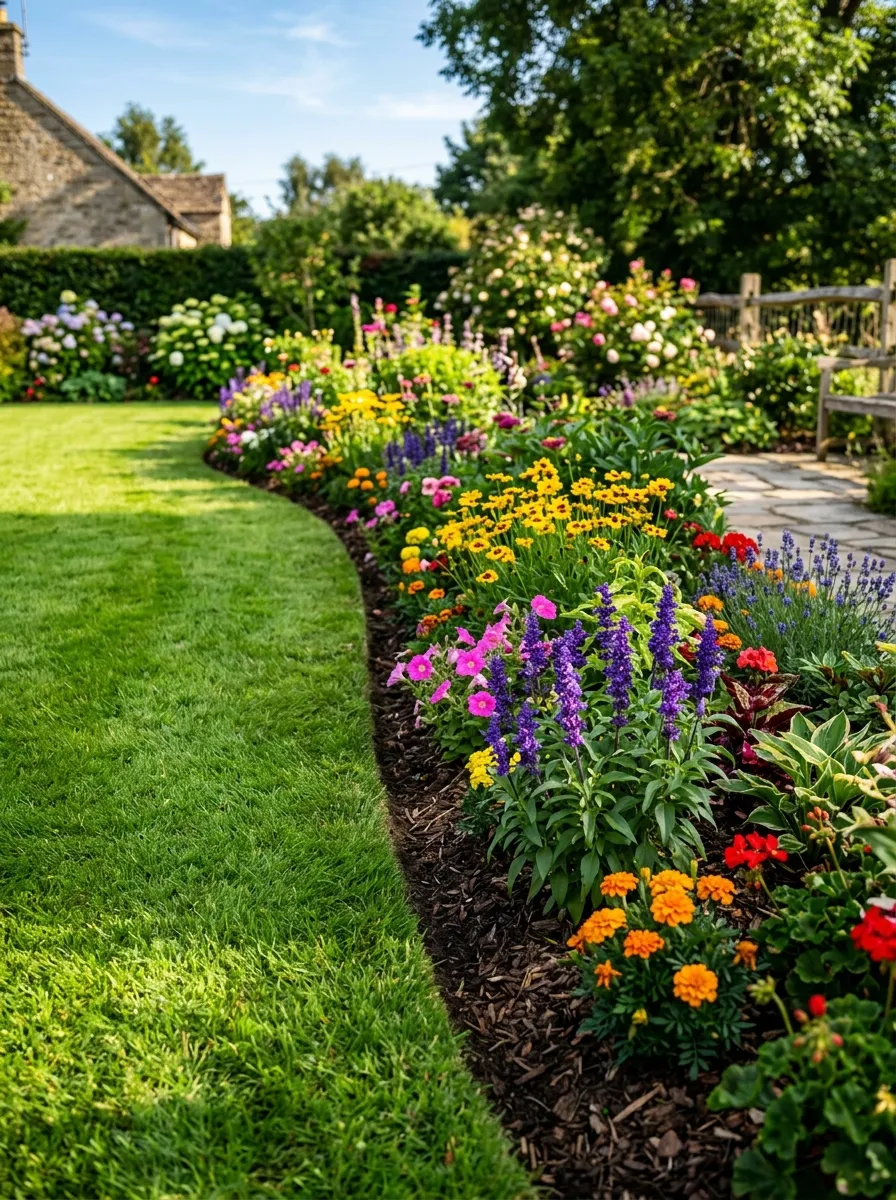
Clean edges make a yard look cared for even if the plants themselves are simple. Use a spade or edging tool to cut a crisp line between beds and grass. A budget DIY option: skip store-bought edging material entirely and just maintain a clean cut edge every few weeks with hand tools. For a more permanent option, lay bricks or stones along the border for a finished look that needs less upkeep. Re-edge in spring and again mid-summer to keep lines sharp as grass and plants grow. This small, repeatable task takes less than twenty minutes per bed but makes an outsized difference in how tidy the whole yard reads from the sidewalk or driveway.
7. Apply Fresh Mulch Every Spring
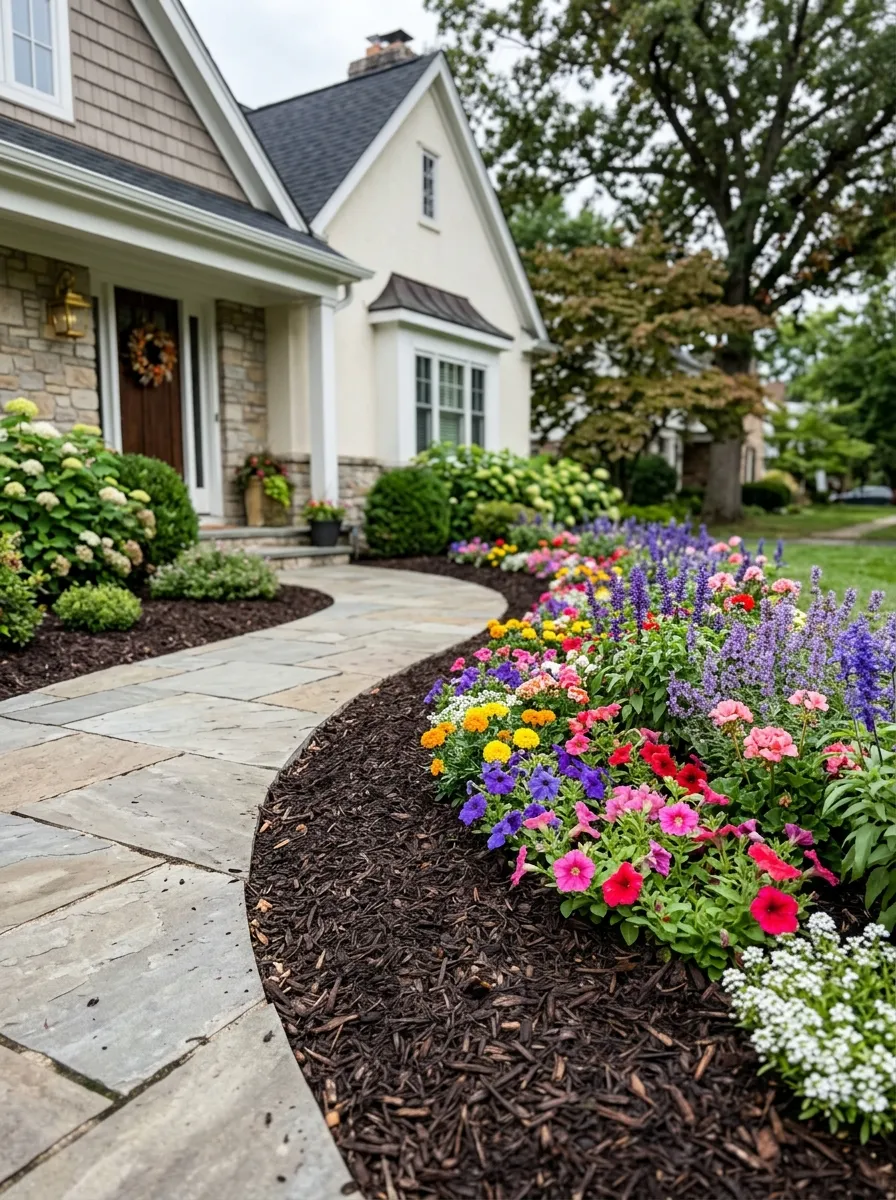
Fresh mulch is one of the fastest, cheapest ways to make tired beds look renewed. Apply two to three inches across all planting areas each spring. Dark mulch makes flower colors stand out more, while lighter mulch works well in shaded areas. A budget tip: many cities and local tree services give away mulch for free – a quick phone call can save real money compared to buying bagged mulch at a store. Keep mulch a few inches away from stems and tree trunks to avoid rot. Mulch also cuts down on weeding and watering over the season, so the upfront work pays off in less maintenance later. This single yearly task refreshes the whole yard’s appearance in an afternoon.
8. Repaint or Replace the Mailbox
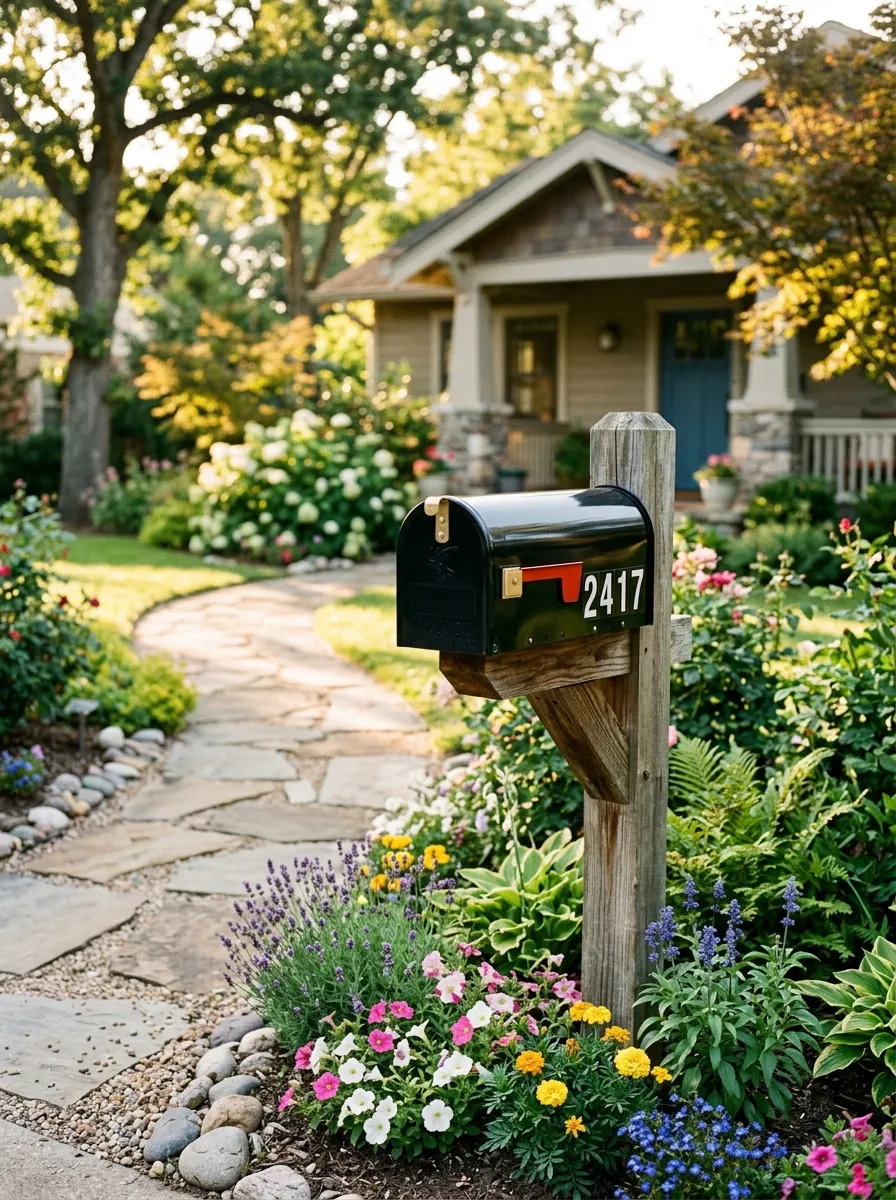
A tired, rusted mailbox draws the eye in the wrong direction. Repainting it or swapping it for a new one is a small task with a real payoff. A budget tip: a can of exterior spray paint and an afternoon can transform an old metal mailbox for a few dollars. Choose a color that matches the front door or trim for a coordinated look. Plant a small cluster of low-maintenance flowers, like creeping phlox or dwarf marigolds, around the base of the post. This tiny detail is often overlooked, but it sits at the edge of the property where passing cars and walkers notice it first. A clean, updated mailbox adds polish without any structural work required.
9. Add a Decorative House Number Display
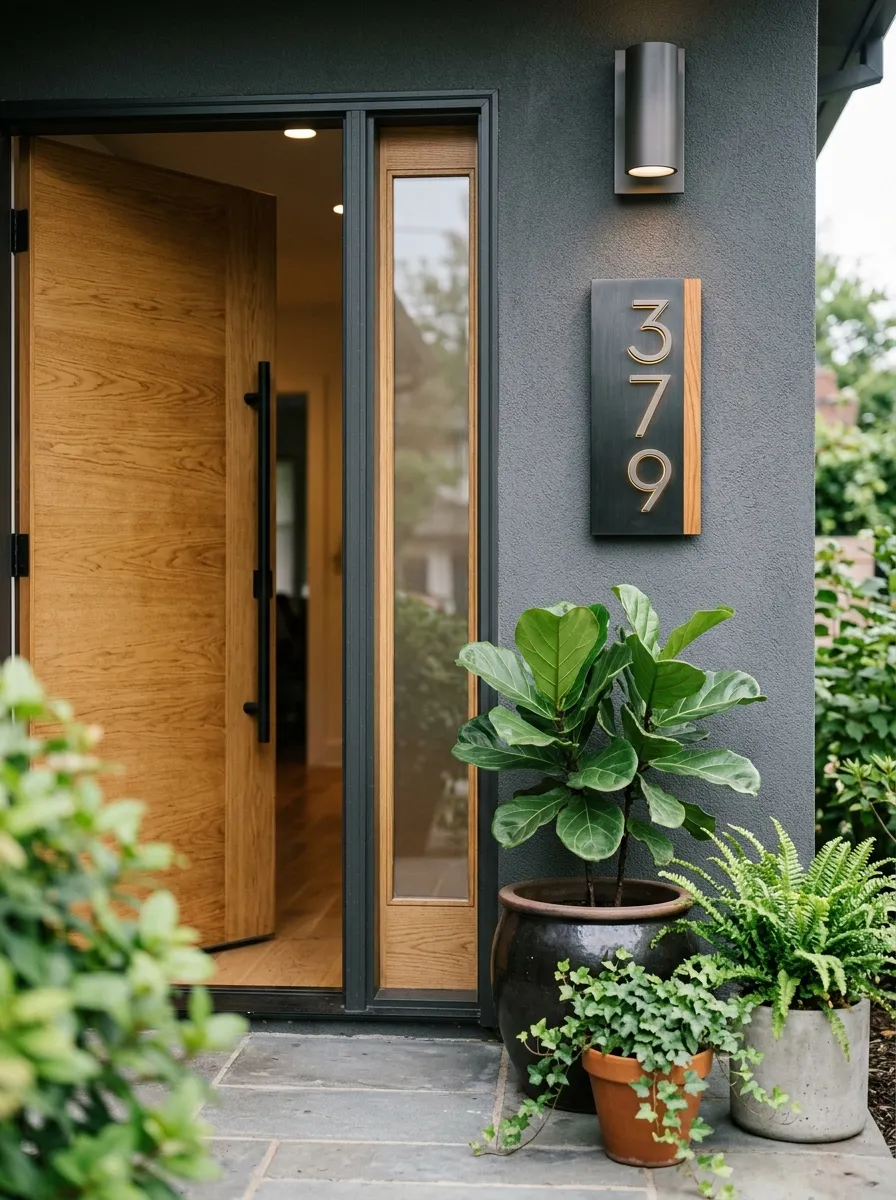
Clear, attractive house numbers help visitors and add a finishing touch to the entrance. Replace worn or mismatched numbers with a simple, cohesive set in a font and finish that matches your door hardware. A budget tip: check hardware stores for basic metal or vinyl number sets rather than custom-made signs, which cost significantly more. Mount them at eye level near the door or beside a porch light for visibility after dark. Pair the numbers with a small potted plant nearby to soften the hardware against the wall. This is a quick, low-cost project that finishes off the entrance area and helps the whole front of the home feel considered down to the smallest detail.
10. Install Low-Voltage Pathway Lighting
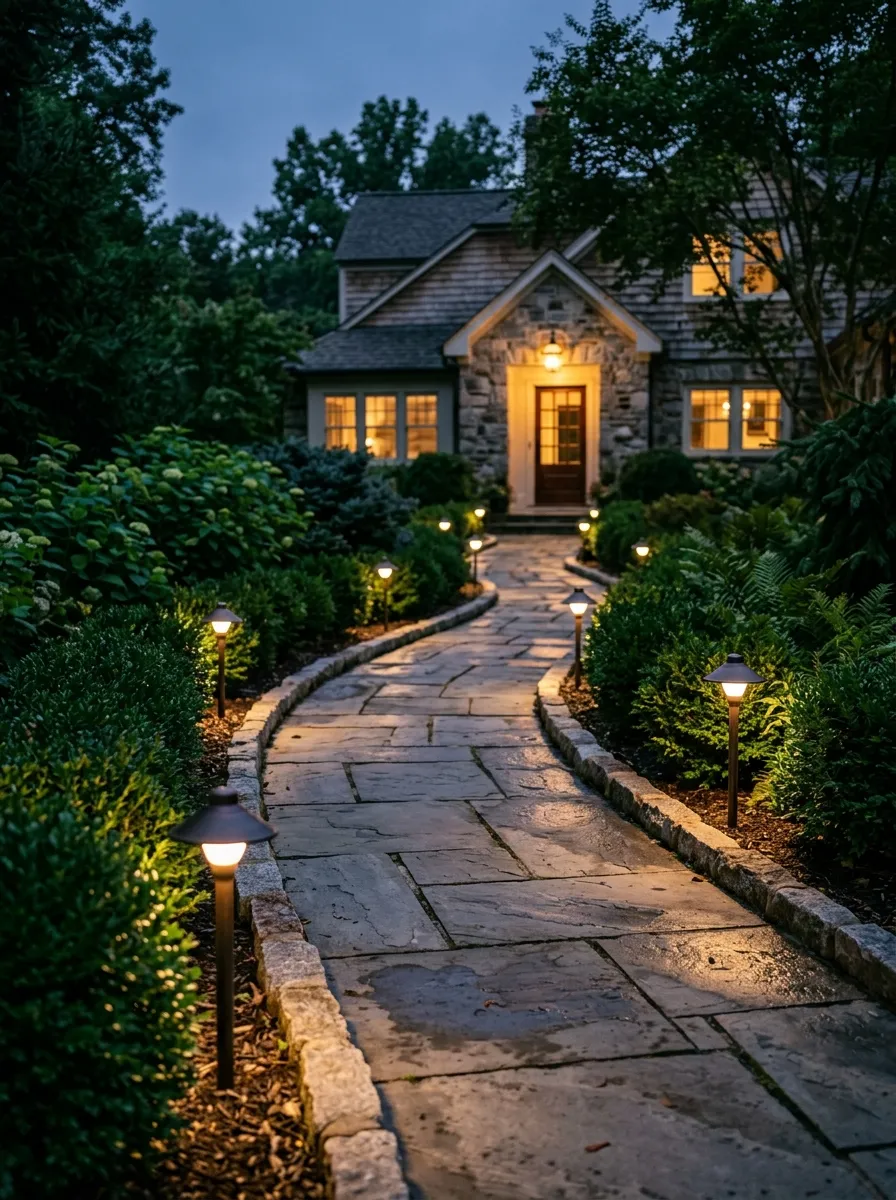
Lighting extends curb appeal into the evening hours. Low-voltage pathway lights are affordable and simple to install without hiring an electrician. A budget tip: solar-powered stake lights need no wiring at all – just push them into the soil along the walkway every few feet. Add a couple of uplights aimed at a tree or shrub for extra depth after dark. This kind of lighting also adds a layer of safety for anyone walking up at night. Choose warm-toned bulbs rather than harsh white light for a softer, more welcoming glow. This project can be completed in under an hour and makes a real difference in how the home presents itself once the sun goes down.
11. Trim Overgrown Shrubs Blocking Windows
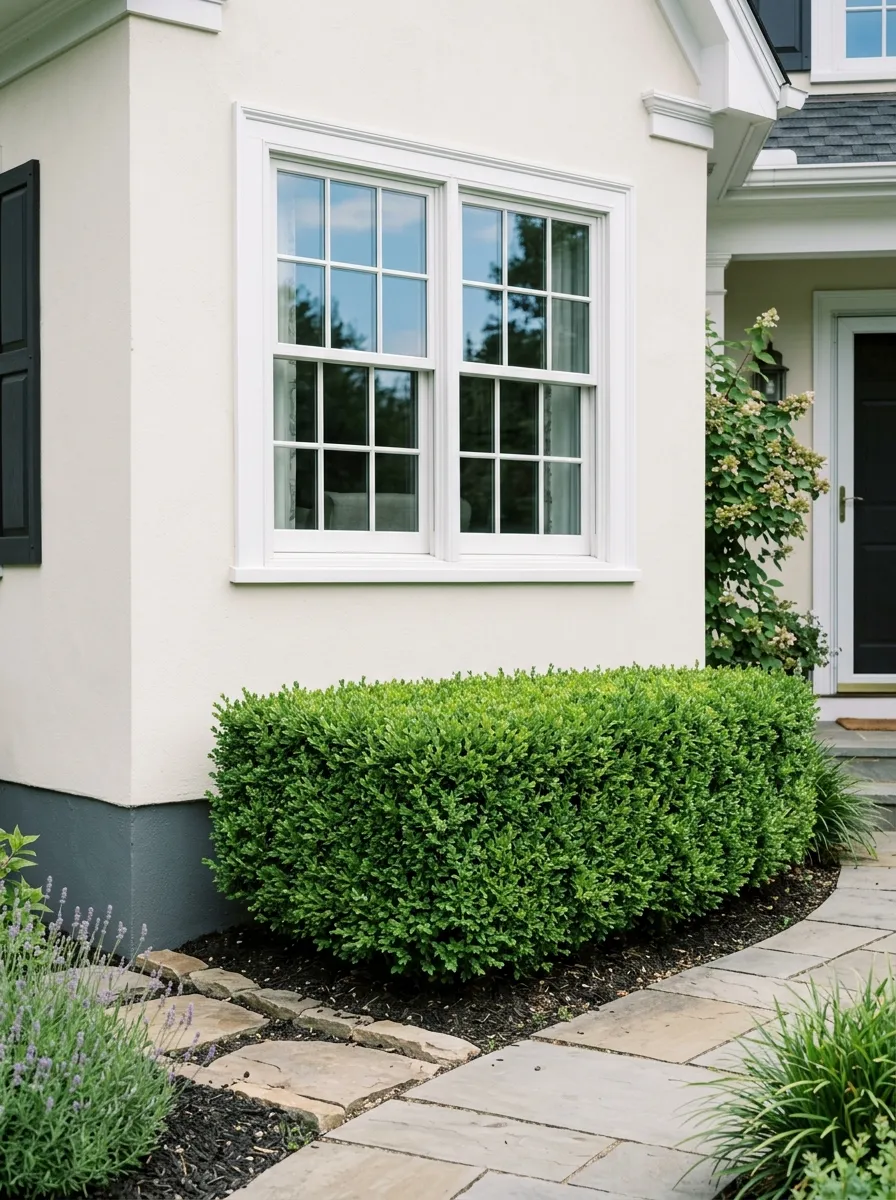
Overgrown shrubs can hide windows and make a house look neglected from the street. Trim them back so they stay well below the window line. A budget tip: this costs nothing beyond a pair of hand pruners and an hour of time. Prune in early spring or after flowering, depending on the shrub type, to avoid cutting off next season’s blooms. Shape shrubs with a slight taper, narrower at the top than the bottom, so lower branches still get sunlight. Removing dead or crossing branches also improves the plant’s health long-term. This simple maintenance task takes very little effort but can dramatically change how open and cared-for the front of a home looks within a single afternoon.
12. Add a Small Water Feature Near the Entry
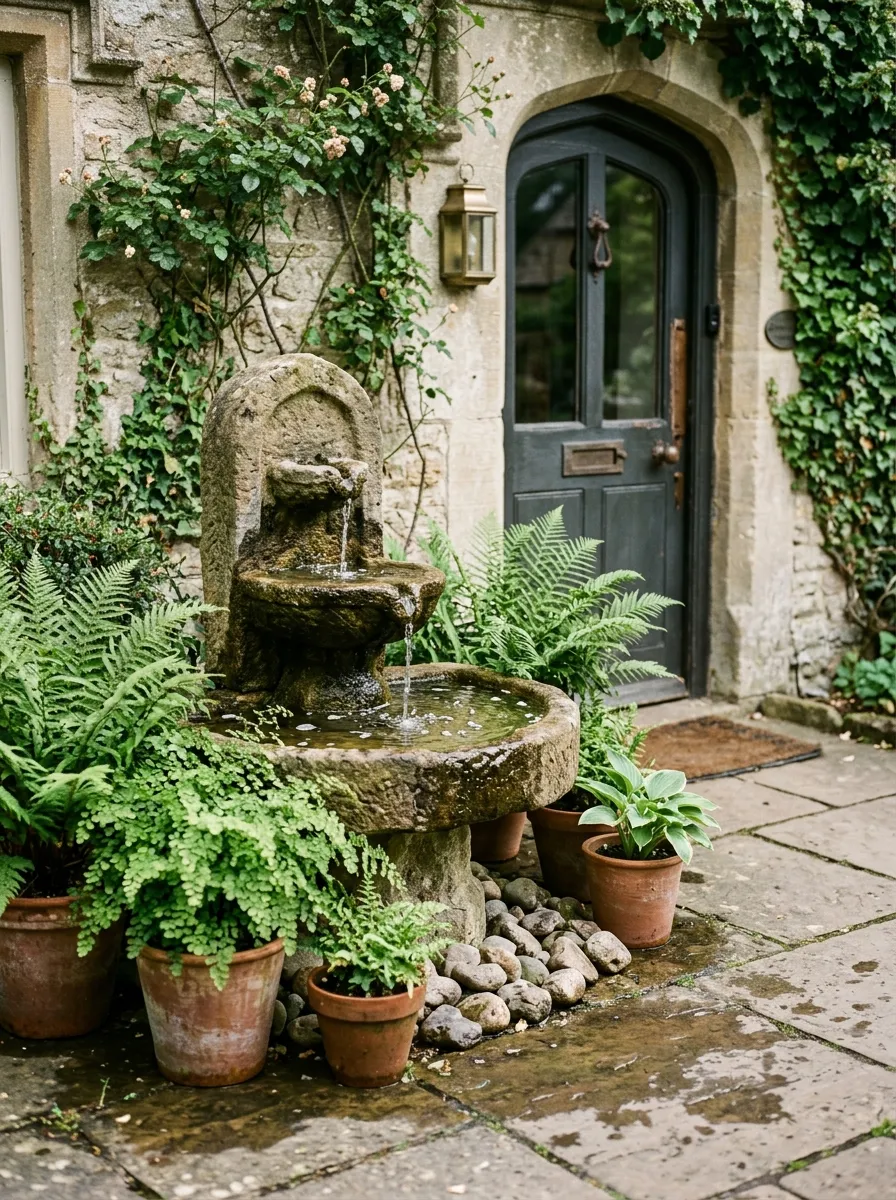
A small fountain near the entry adds sound and a calm feeling before guests even reach the door. A tabletop or small tiered fountain works well tucked beside a porch step or in a corner bed. A budget DIY option: repurpose a large ceramic pot with the drain hole sealed, adding a small submersible pump from a hardware store. Keep the feature modest in scale so it doesn’t overwhelm a small entry area. The sound of moving water also helps mask street noise for anyone sitting on the porch. This addition works particularly well for homes near busy roads, giving the entrance a calmer, more private feeling without any major construction.
13. Plant a Row of Boxwood for Structure
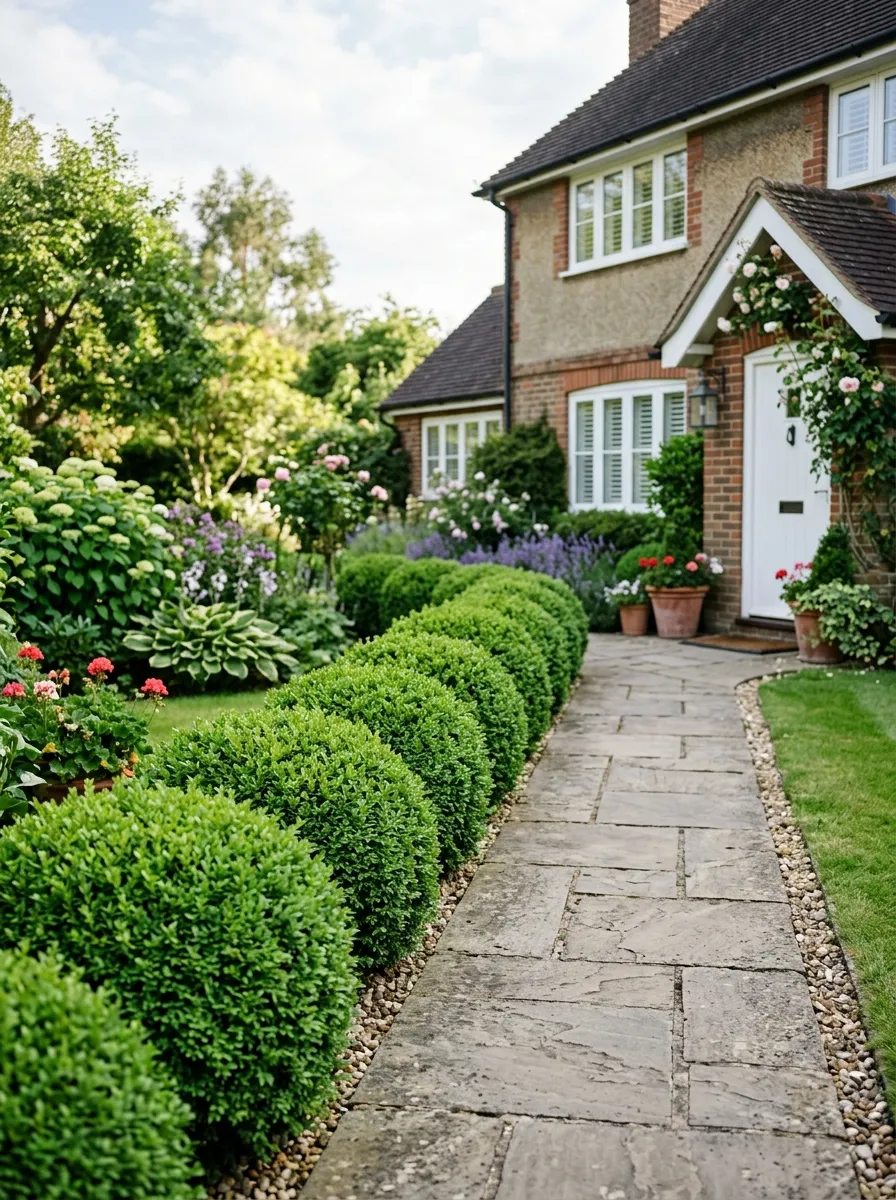
Boxwood shrubs bring year-round structure to a front yard, staying green through every season. Plant a row along a walkway or foundation for a clean, formal look. A budget tip: buy smaller boxwood plants and space them a bit closer than recommended, since they fill in within a couple of seasons and cost less upfront than larger, more established plants. Trim lightly twice a year to keep a tidy shape. Boxwood pairs well with seasonal flowers planted in front, since the greenery acts as a steady backdrop for changing color. This structural planting gives a front yard a sense of permanence and order, even during winter months when most flowering plants have gone dormant.
14. Refresh the Front Door Color
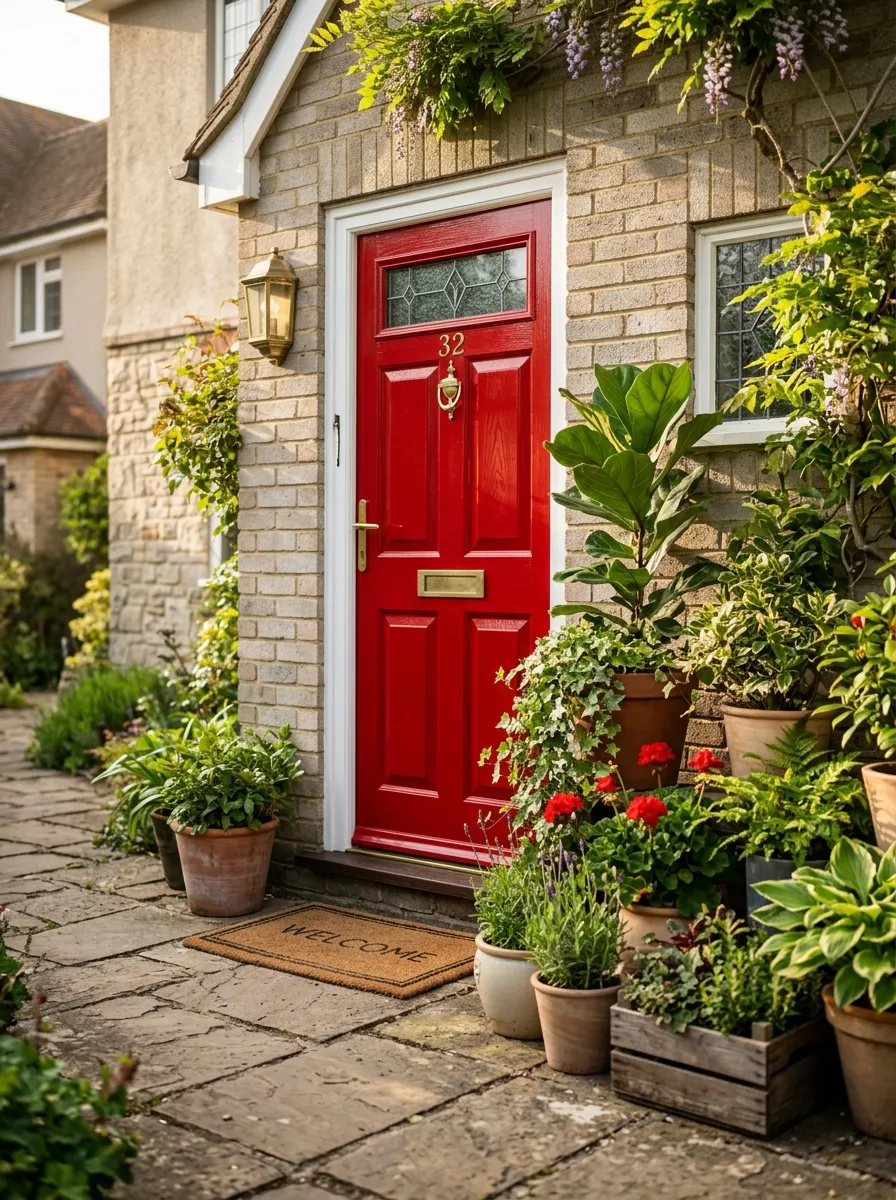
The front door is one of the first details anyone notices, and a fresh coat of paint changes the entire entrance. A budget tip: a quart of exterior paint is inexpensive and can transform a door in a single afternoon. Choose a color that contrasts with the house’s exterior for visual interest, like a deep red or navy against a neutral facade. Clean and sand the door lightly before painting for a smoother finish. Pair the new color with updated hardware, like a fresh doorknob or knocker, for a bigger impact. This project requires no gardening at all, but it directly supports the surrounding landscaping by giving the whole entrance a coordinated, finished look.
15. Add Window Boxes Beneath Front Windows
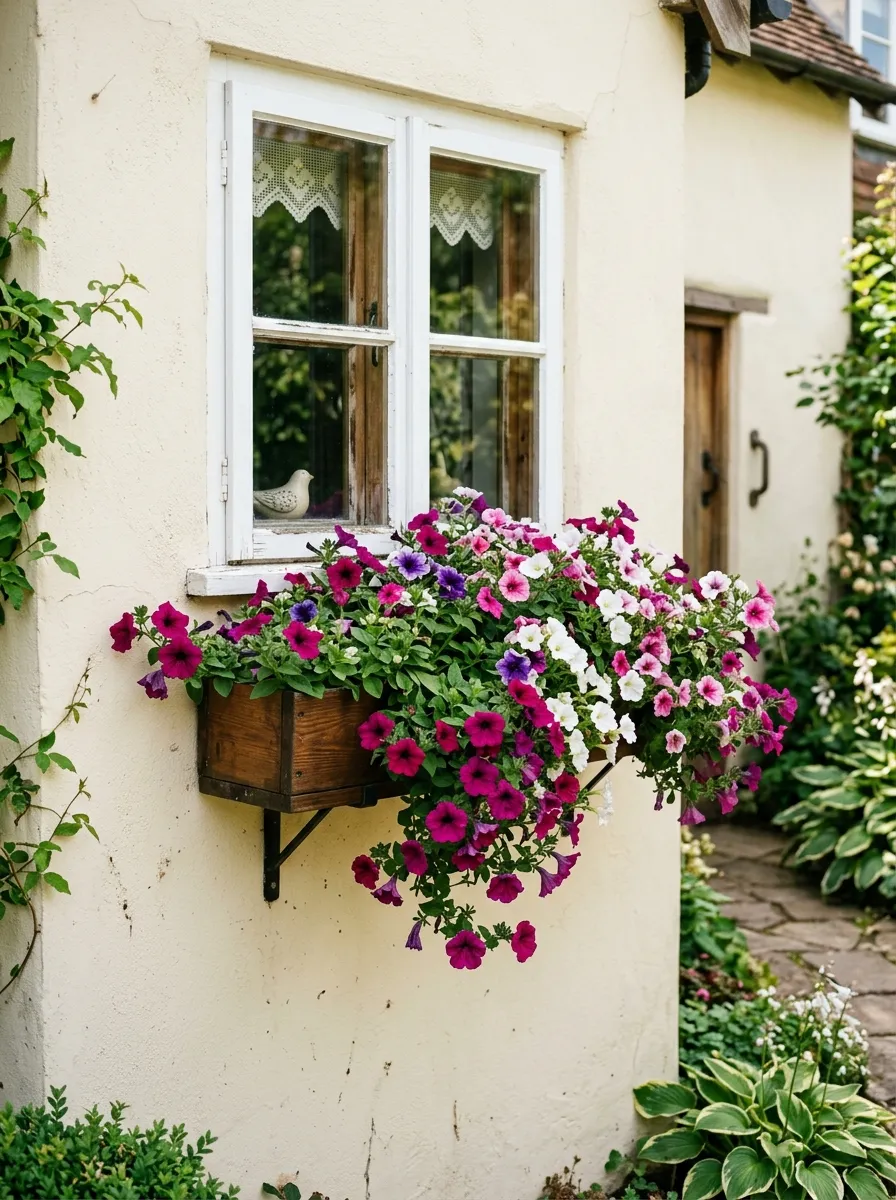
Window boxes add color at eye level and tie the landscaping to the house itself. Attach a simple wooden or metal box beneath front-facing windows using basic mounting brackets. A budget DIY option: build boxes from leftover fence boards and seal them with exterior stain. Fill with cascading flowers like petunias or lobelia that spill over the edges softly. Rotate seasonal plantings twice a year to keep the look current. Window boxes work especially well on homes with plain facades, adding texture and color without any ground-level planting required. This project connects the architecture of the house with the surrounding garden beds, making the whole front yard feel like one cohesive design instead of separate elements.
16. Create a Defined Border with Stone Edging
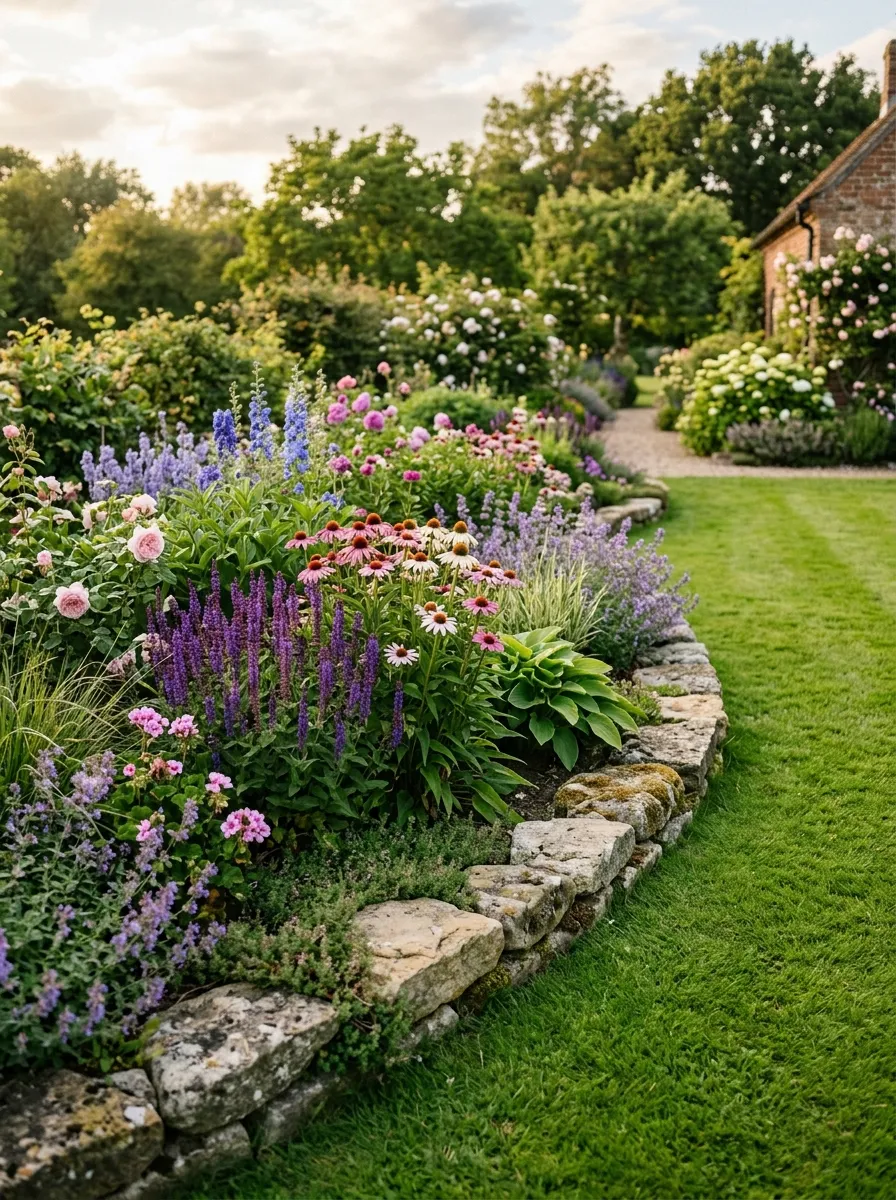
Stone edging gives garden beds a permanent, polished border that holds its shape season after season. A budget tip: check landscaping supply yards for irregular or leftover stone pieces, often sold at a discount compared to uniform edging stones. Lay them along the bed’s border, partially buried, for a natural look. This keeps mulch contained and creates a clear line between lawn and planting area without ongoing maintenance like re-cutting a grass edge. Stone edging also holds up well through freeze-thaw cycles in colder climates. Pair it with layered plantings behind it for a finished, designed appearance. This is a one-time project that continues paying off in reduced yard work for years afterward.
17. Add a Decorative Arbor Over the Walkway
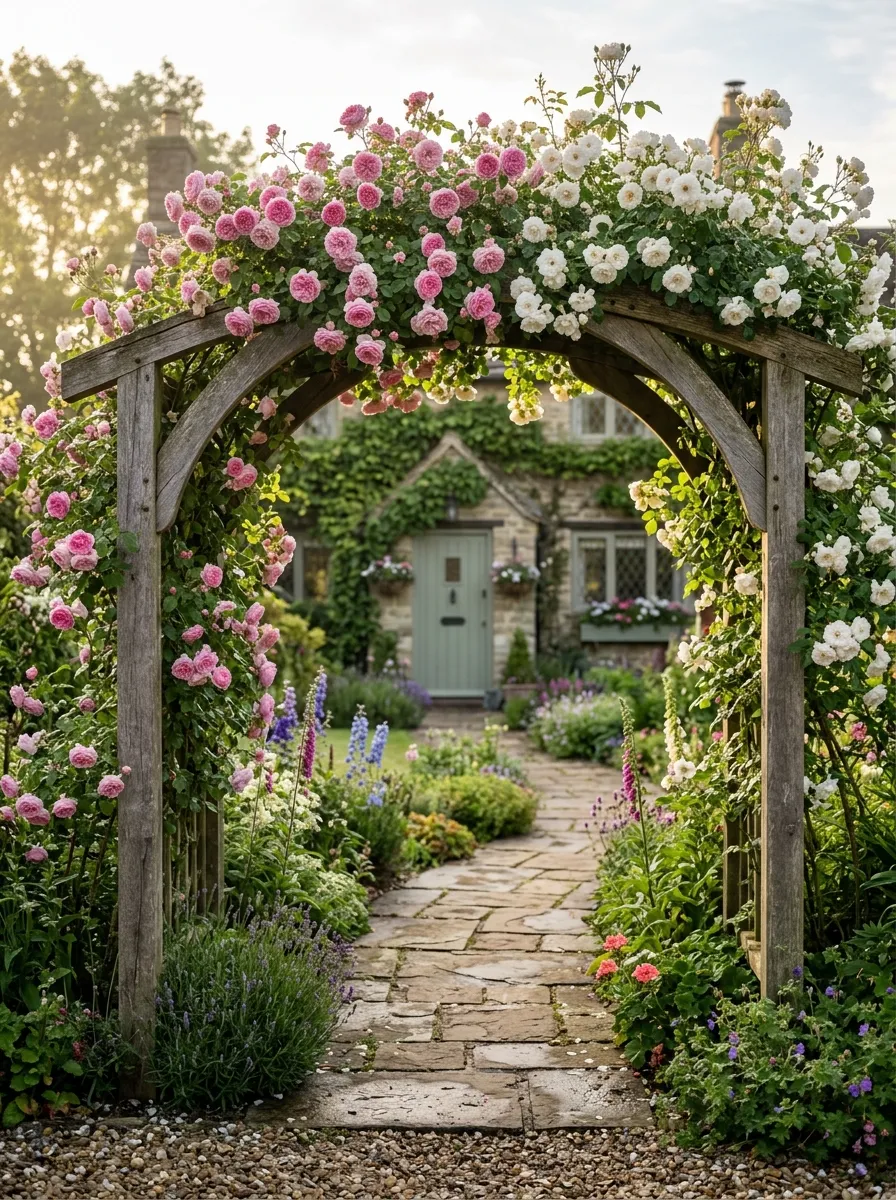
An arbor over the front walkway creates a sense of arrival and adds height to a flat front yard. A budget DIY version can be built from basic lumber and simple joinery, available as a weekend project with hardware store materials. Plant climbing roses, clematis, or jasmine at the base so the structure fills in with greenery over a season or two. Position the arbor a few feet from the front door so it frames the entrance without blocking the path. This structural addition draws the eye upward and gives an otherwise flat yard a sense of depth and occasion, especially when paired with lighting for evening visibility.
18. Choose Perennials Over Annuals for Long-Term Savings
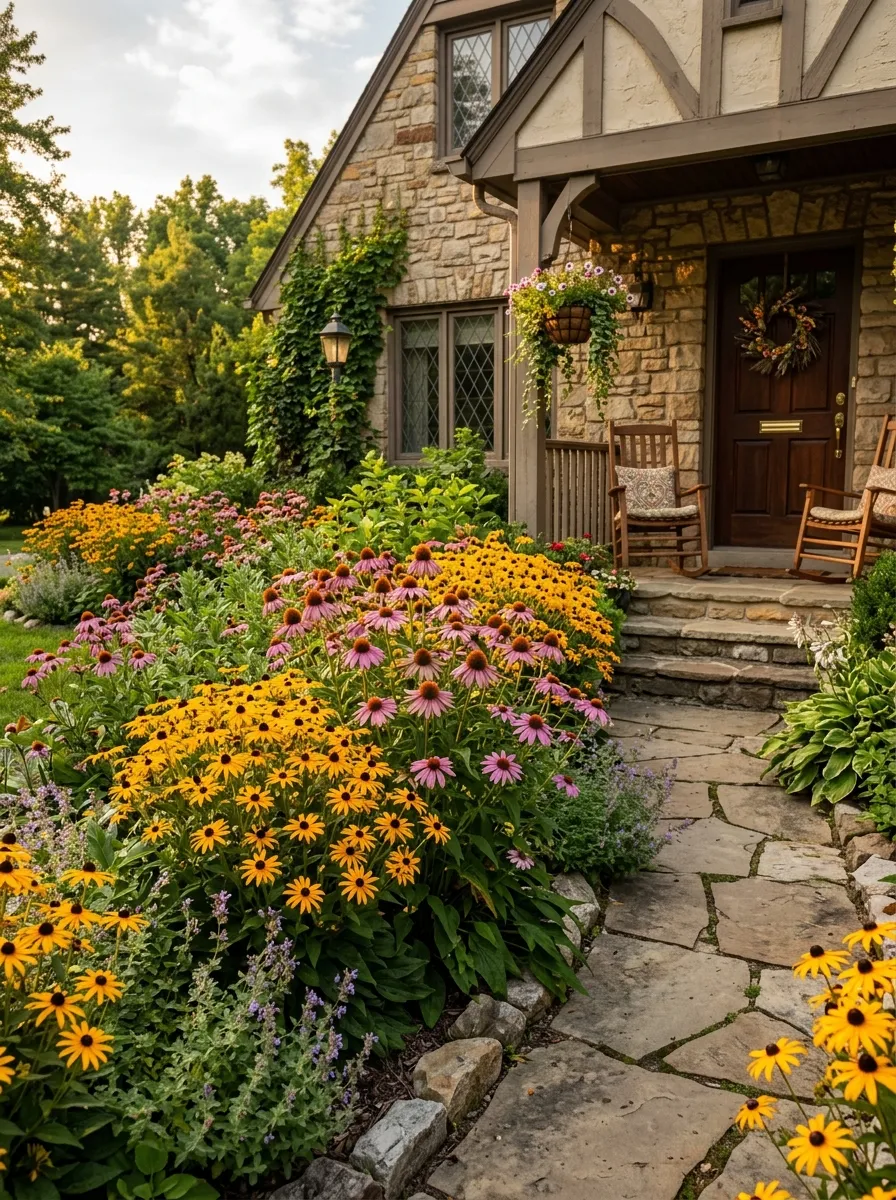
Annual flowers look great for one season, then need replanting the following year. Perennials return on their own, which saves money over time. A budget tip: shop end-of-season sales in late summer, when perennials often drop 50 percent or more in price. Coneflowers, daylilies, and black-eyed Susans are hardy, reliable choices for front yard beds. Mix in a few inexpensive annuals for pops of color between perennial blooms during their off seasons. This combination keeps the yard colorful throughout the year while reducing how much needs replacing each spring. Perennials also tend to develop fuller, more established root systems over time, making them more resistant to drought once settled in.
19. Add a Small Bench Near the Garden
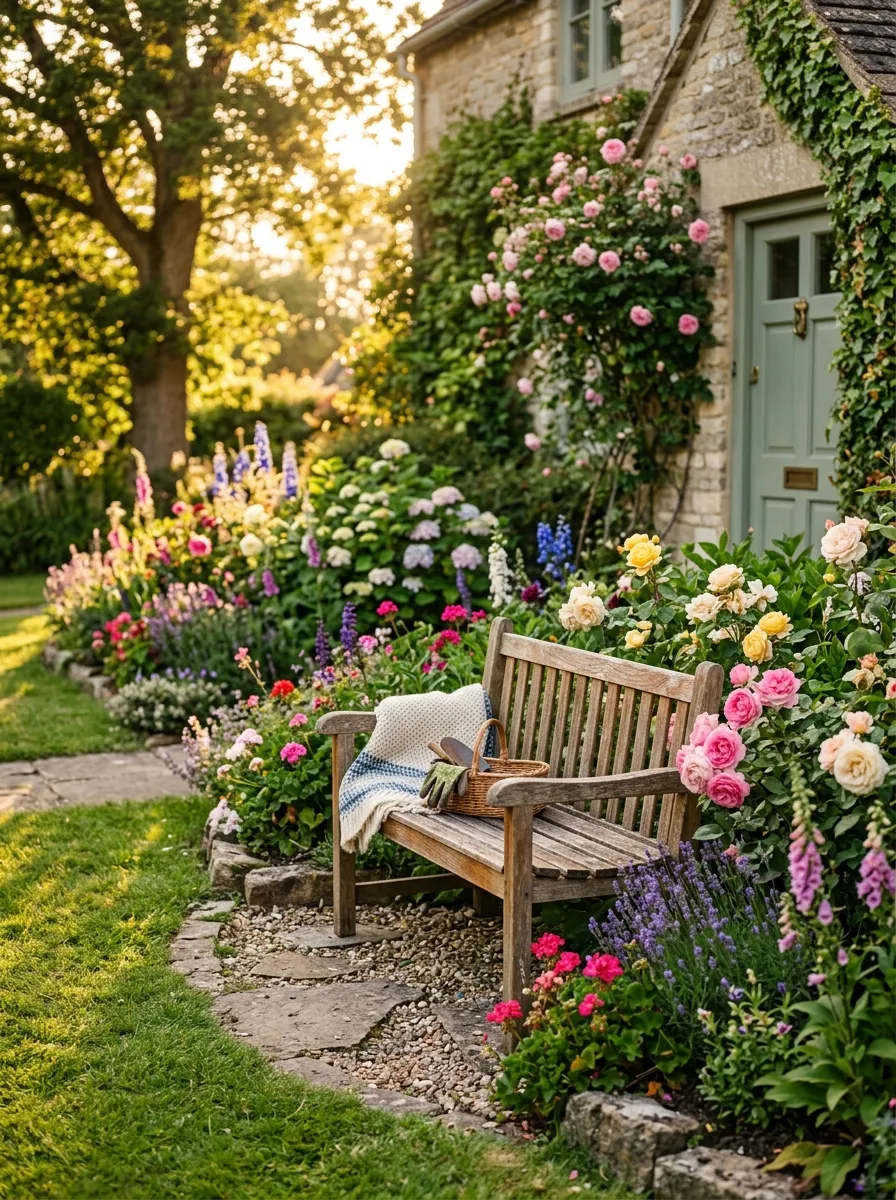
A small bench near the front garden adds a welcoming, lived-in feeling to the yard. A budget DIY option: build a simple bench from reclaimed wood, or check secondhand shops for a weathered piece that just needs a fresh coat of paint. Place it where it faces the street or a flower bed rather than tucked out of sight. This small addition suggests the yard is a space to enjoy, not just something to maintain. Add a small potted plant beside it for extra warmth. A bench doesn’t need to be used often to add real value here — it changes how the whole front yard reads, signaling care and intention rather than a purely functional lawn.
20. Group Flower Pots at the Entry Steps
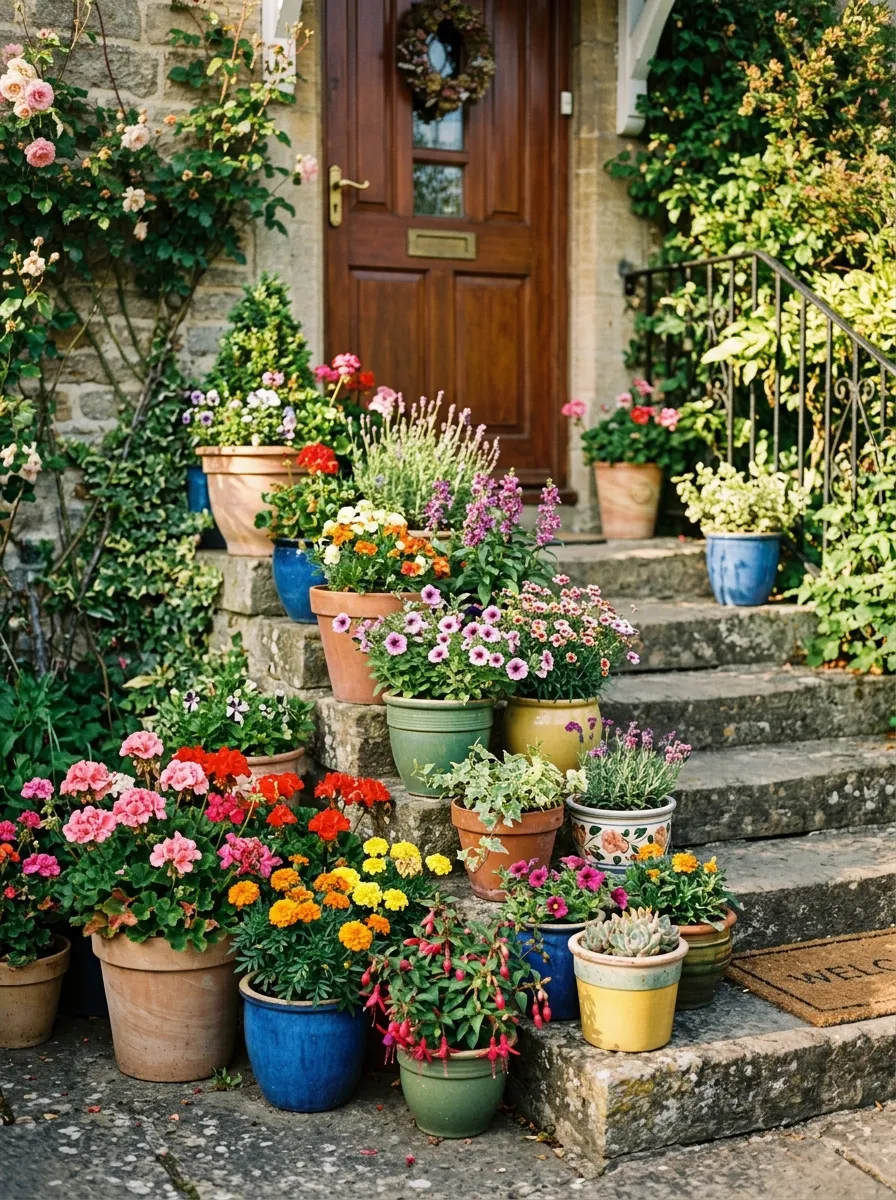
Grouping several pots together at the base of the entry steps creates an inviting, layered look. A budget tip: use a mix of thrifted pots painted in one or two coordinating colors rather than buying a matching set new. Vary the heights within the group, placing a taller pot toward the back and shorter ones in front, so each plant is visible. Choose flowers with a shared color palette so the grouping feels intentional rather than random. Water this cluster together on the same schedule to keep growth even. This small, low-cost project adds real personality right at the point where visitors pause before knocking, making the entrance feel considered and warm.
21. Replace a Patch of Grass with a Rock Garden
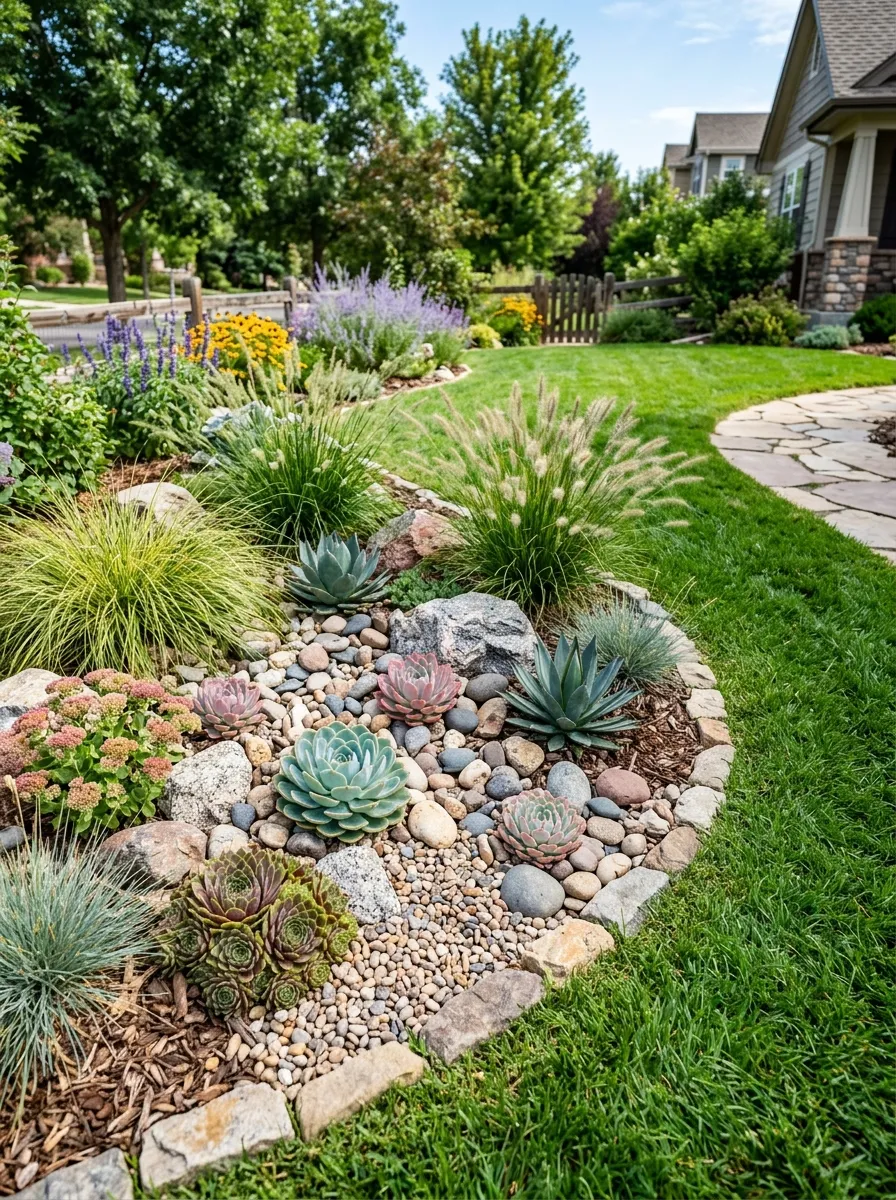
A struggling patch of grass, especially in shade or poor soil, can become a rock garden instead of a constant maintenance headache. Layer in stones of different sizes, then add drought-tolerant plants like sedum, ornamental grasses, or succulents between them. A budget tip: source stones from a local landscaping yard’s discount pile rather than buying decorative rock at full price. This approach works well in areas where grass has never grown evenly, turning a weak spot into a feature instead of an eyesore. Rock gardens also need very little watering once established, cutting down on both water bills and mowing time in that section of the yard.
22. Add Seasonal Wreaths or Door Accents
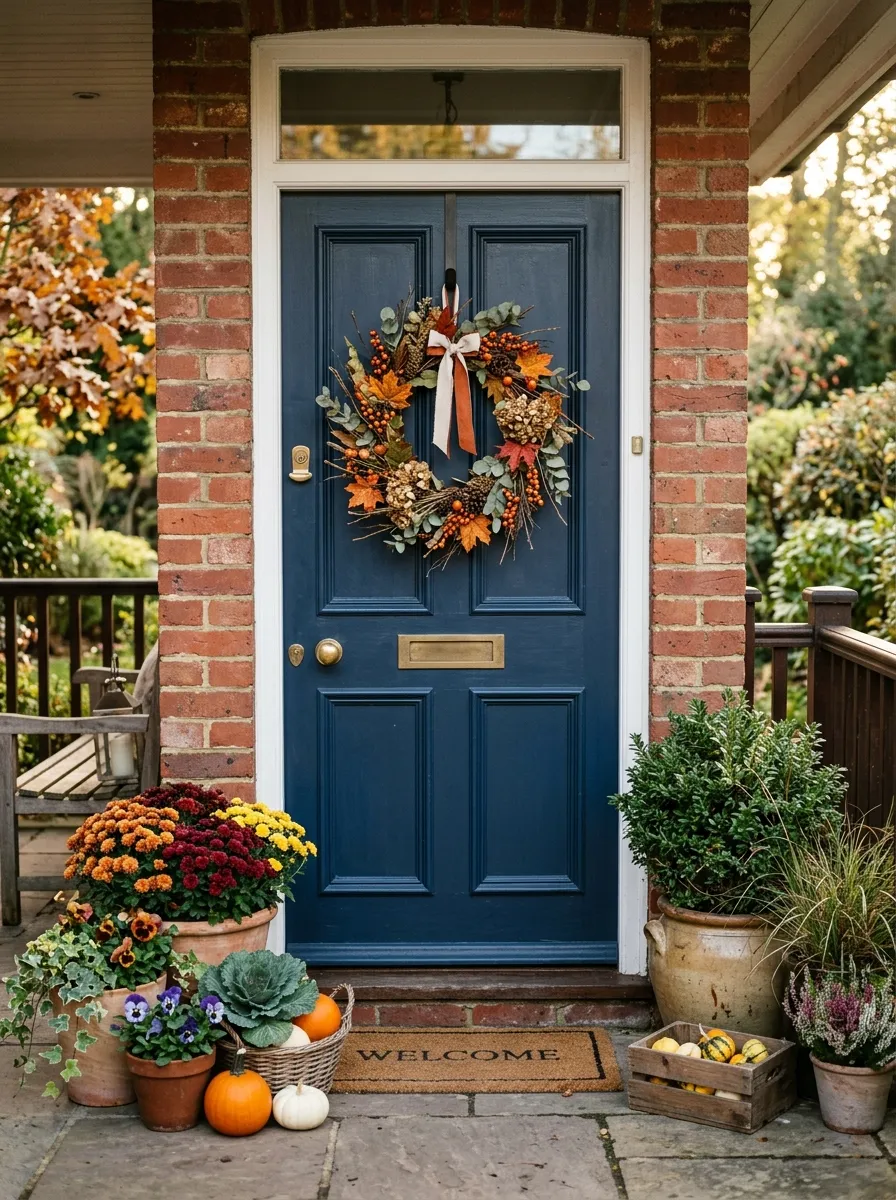
A seasonal wreath or door accent adds a small, changeable detail that keeps the entrance feeling current throughout the year. A budget tip: make a simple wreath from foraged branches, dried flowers, or greenery clipped from the yard itself rather than buying one pre-made. Swap it out every few months to reflect the season, from spring blooms to autumn leaves. This detail works alongside the surrounding garden beds, tying the door itself into the overall landscaping theme. It’s a low-cost, low-effort way to keep the front entrance from feeling static, and it can be updated in under ten minutes whenever the mood calls for a change.
23. Plant Ornamental Grasses for Movement
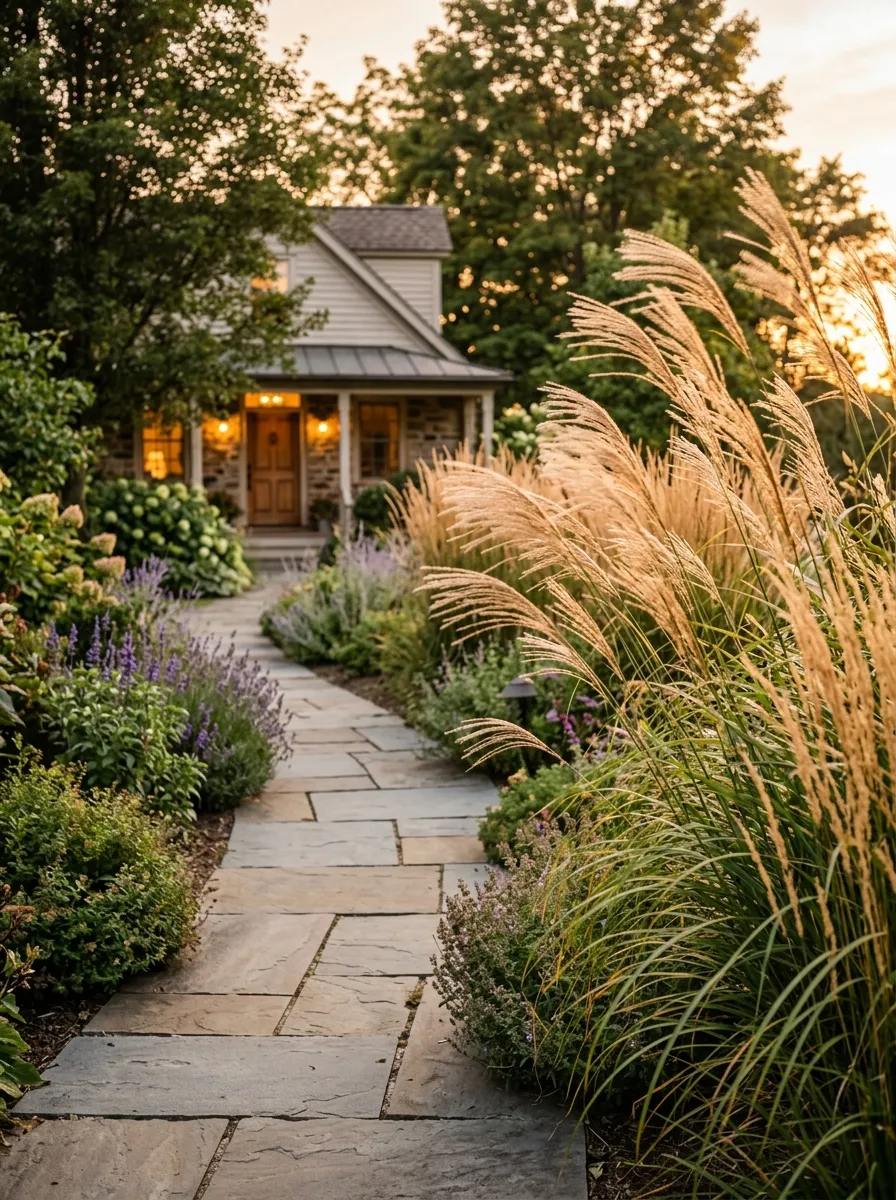
Ornamental grasses add movement and texture that flowers alone can’t provide. Plant them along a fence line, near the foundation, or as a backdrop behind shorter flowering plants. A budget tip: divide an existing clump every few years instead of buying new plants, since most ornamental grasses multiply readily and can be split into several smaller plants for free. Choose varieties suited to your climate, like fountain grass or feather reed grass, for reliable performance. Grasses also provide winter interest, holding their shape and color even after flowers have faded. This adds a dynamic, textural layer to a front yard that shifts with the breeze, giving the whole space a sense of life beyond just static plantings.
24. Keep the Lawn Edges Sharp and Mowed
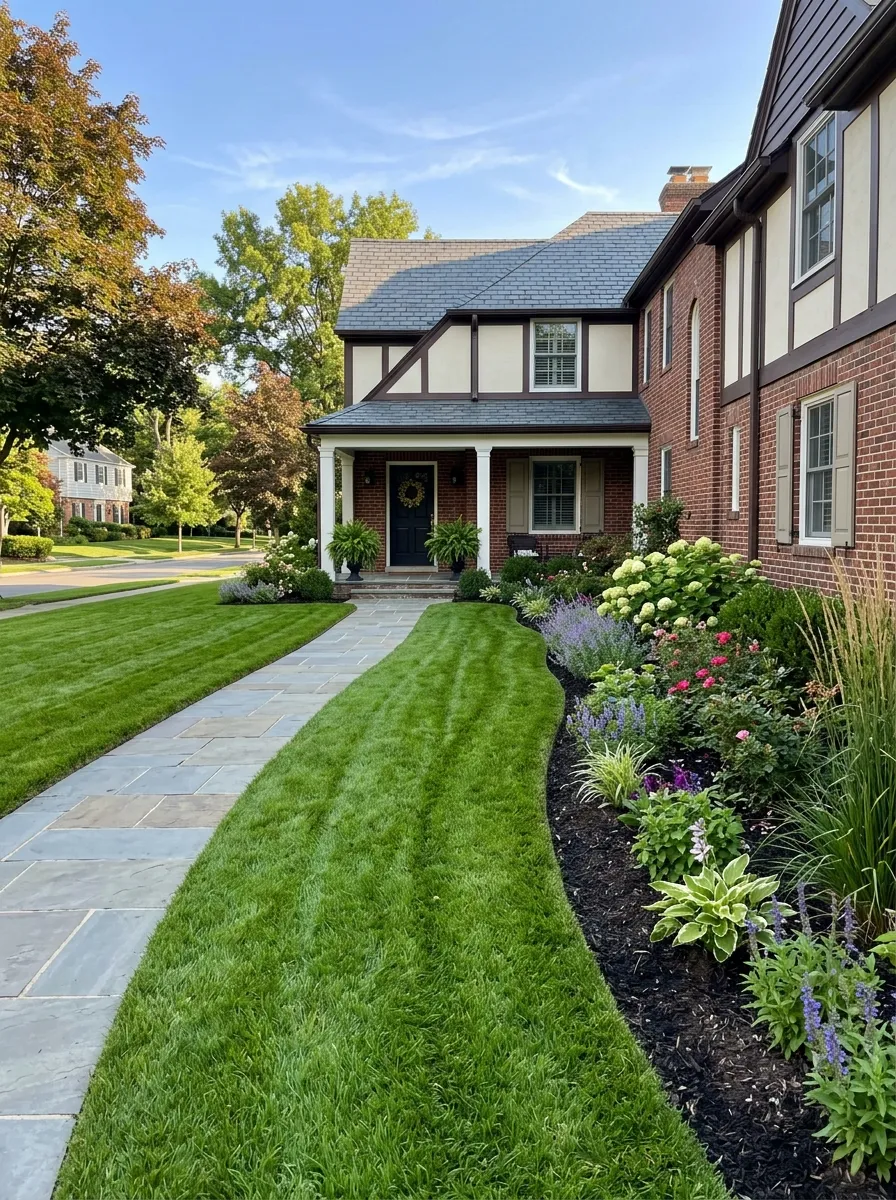
A well-kept lawn is the backdrop for everything else in the yard, and sharp edges make even a simple lawn look intentional. Mow regularly and use an edger along walkways, driveways, and garden beds for crisp, defined lines. A budget tip: a basic manual edging tool costs very little and does the job just as well as a powered version for most small to mid-size yards. Rake up clippings after mowing so they don’t smother the grass or spill onto the walkway. This is a task with no material cost beyond basic tools and time, but its impact on the overall appearance of a front yard is immediate. A tidy lawn makes every other feature, from flower beds to lighting, look more polished by comparison. If you want to perfect those crisp lawn borders, this complete guide to lawn edging offers helpful tips for creating clean, defined edges that give your yard a more finished look.
Conclusion
A front yard doesn’t need a full landscaping crew or a large budget to make a real impression. Small, focused changes, a fresh coat of paint on the door, clean bed edges, layered plantings, and a bit of lighting, add up to a space that feels cared for and welcoming from the moment someone steps onto the walkway. Start with two or three ideas from this list that match your yard’s current condition, then build from there season by season. The result is a front entrance that looks considered, inviting, and worth a second look every time someone passes by.