
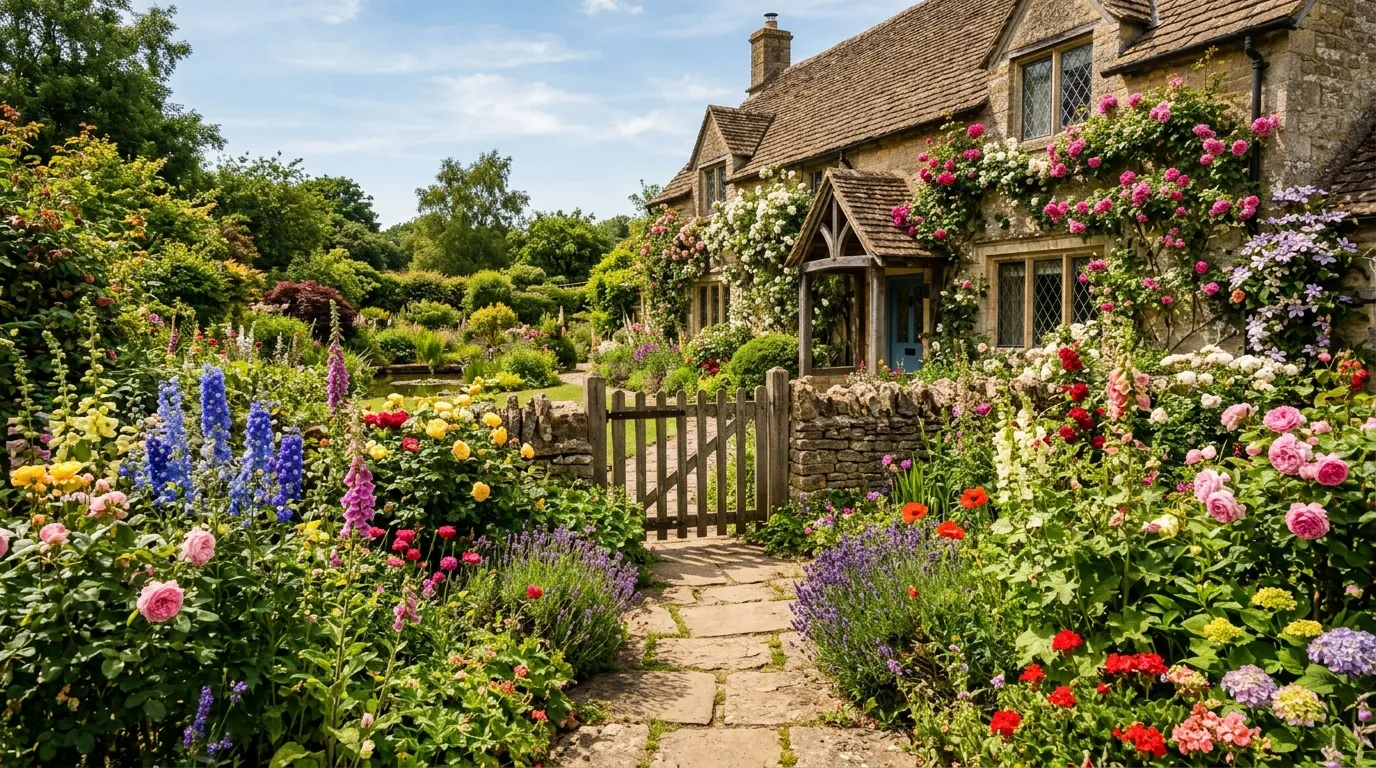
Picture a garden that looks like it tumbled straight out of a storybook — overflowing flower beds, a winding stone path, and blooms spilling over every edge in a joyful riot of color. That’s the irresistible charm of a cottage garden, and the best part? It’s meant to look effortless, even though every “wild” detail is thoughtfully placed.
If you’ve ever wanted your yard to feel like a page from a fairy tale, this guide will walk you through exactly how to get that lush, romantic, slightly untamed look — without letting things actually get out of control.
1. Embrace the “Organized Chaos” Layout
Cottage gardens thrive on a look that feels spontaneous, but there’s actually a method behind the magic. The key is dense planting with no visible soil and no rigid rows.
To get the look:
- Skip straight lines plant in soft, curving drifts instead
- Pack plants closely together so they lean and mingle
- Let taller flowers spill in front of shorter ones here and there
- Avoid mulch-heavy beds — let the greenery do the covering
The goal is a garden that looks like it grew this way naturally, even though you planned every inch.
2. Choose a Color Palette That Feels Joyful
Cottage gardens are known for their happy, romantic color combinations. While anything goes, the most iconic cottage gardens lean into soft pastels mixed with pops of bold color.
Popular color combos to try:
- Pink, lavender, and white for a soft, romantic feel
- Yellow, orange, and red for a warm, sunny cottage vibe
- Blue, purple, and silver foliage for a dreamy, cool palette

Don’t be afraid to mix warm and cool tones together cottage gardens are all about joyful abundance, not strict color theory.
3. Pick the Right Cottage Garden Staples
Certain flowers just are the cottage garden look. Building your beds around these classics instantly gives your yard that old-world charm.
Must-have cottage garden plants:
- Roses (climbing varieties are especially romantic)
- Foxgloves for dramatic height
- Delphiniums for tall spikes of blue and purple
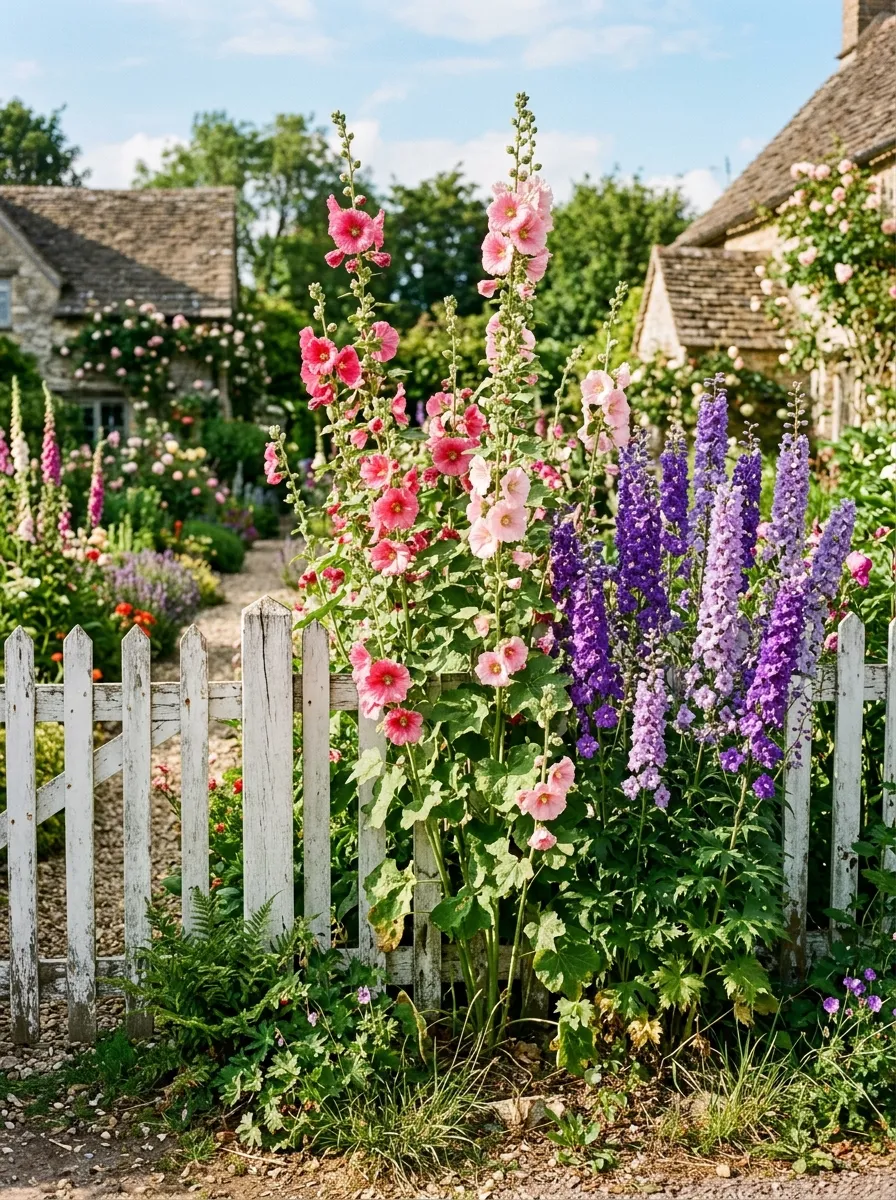
- Hollyhocks growing right up against a fence or wall
- Cottage pinks and sweet peas for fragrance
- Lavender for that classic English-garden scent
Mix tall, medium, and low-growing varieties together so every bed has natural layers of height.
4. Add Structure With Rustic Elements
Even the wildest cottage garden needs a little structure to keep it from looking messy instead of magical. This is where classic hardscaping elements come in.
Charming structural touches:
- A weathered wooden arbor covered in climbing roses
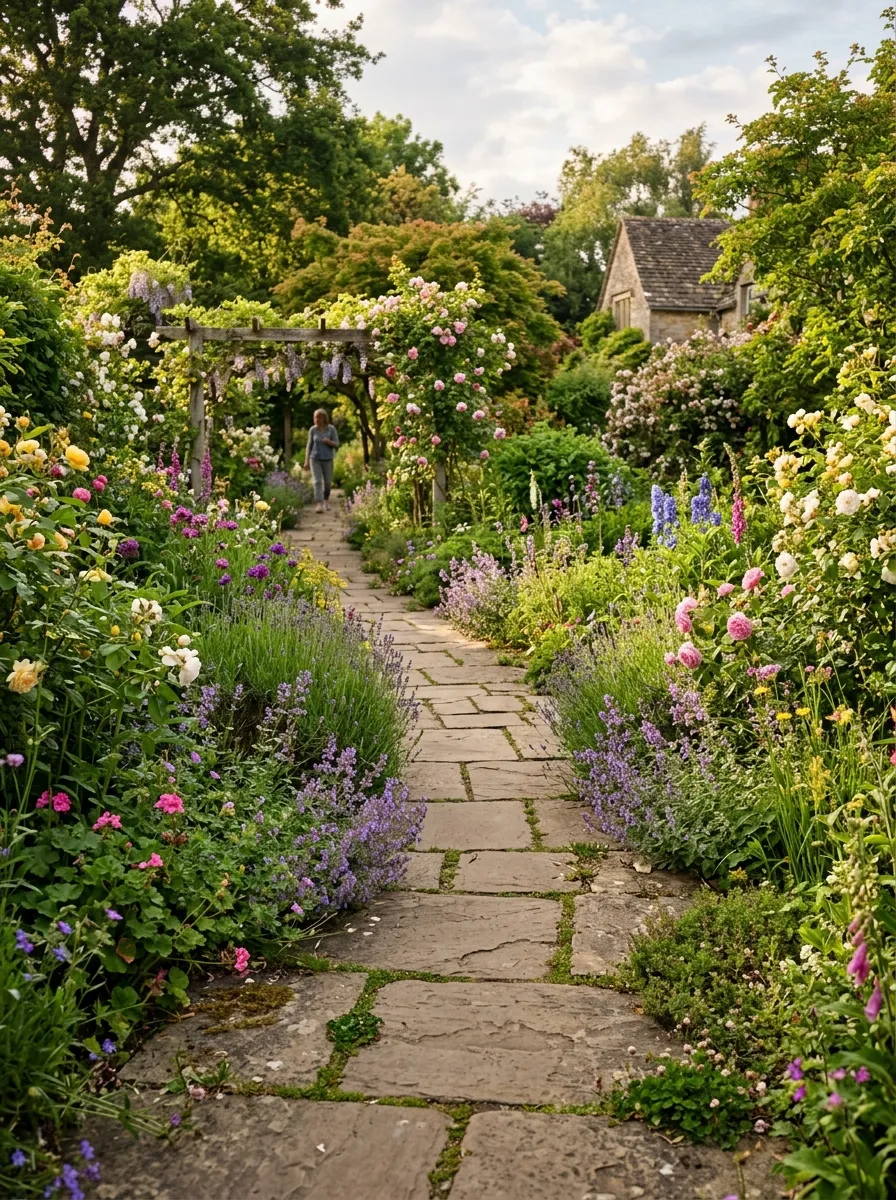
- A winding gravel or stone path through the beds
- A picket fence (painted white or left natural)
- Vintage garden tools or watering cans used as decor
- A small potting bench tucked in a corner
These elements act like the “frame” around your colorful painting of flowers, giving the eye somewhere to rest.
5. Let Plants Spill Over Their Borders
One of the most charming cottage garden signatures is plants that refuse to stay in their lane literally. Let flowers tumble over pathway edges and climb up anything nearby.
Ways to encourage that “overflowing” look:
- Plant low, trailing varieties like lobelia or alyssum along path edges
- Let climbing roses or clematis grow up fences, arbors, and even trees
- Allow self-seeding flowers like poppies or cosmos to pop up wherever they land
- Skip strict pruning a little wildness is the whole point
6. Add Whimsical, Personal Touches
The final ingredient in any great cottage garden is personality. This is what makes your space feel like a story rather than just a planting plan.
Sweet details to include:
- A bird bath or vintage bird feeder
- Mismatched garden furniture with a shabby-chic feel
- A small herb and vegetable patch tucked among the flowers
- Butterfly and bee-friendly plants like coneflower and bee balm
- A hand-painted sign or small statue peeking through the greenery
These little touches invite butterflies, bees, and plenty of compliments from anyone who wanders through.
Your Storybook Garden Awaits
A cottage garden isn’t about perfection it’s about joyful abundance, a little wildness, and lots of personality. Start small with one flower bed, mix in your favorite classic blooms, and let nature do a little of the designing for you.
Before you know it, you’ll have a garden that looks (and feels) like something straight out of a fairy tale.