
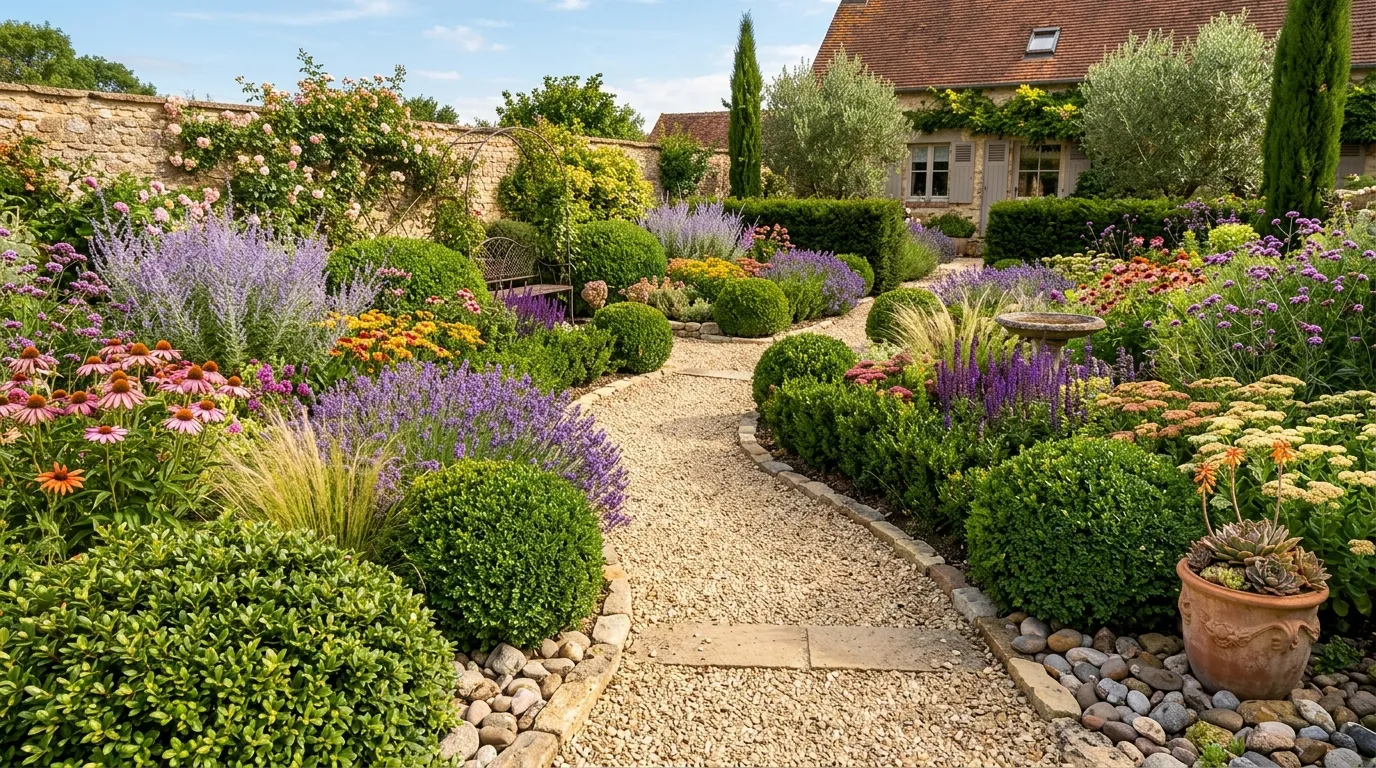
What if you could have a gorgeous, magazine-worthy garden without spending every weekend weeding, watering, and pruning? It’s not a fantasy it’s just smart design. With the right plants and layout, you can create a garden that looks stunning in every season while giving you your weekends back.
If you’re tired of high-maintenance flower beds that demand constant attention, this guide will show you exactly how to design a garden that thrives with minimal effort — and still looks incredible year-round.
1. Start With the Right Soil and Layout
Low-maintenance gardening starts before you even plant a single flower. Getting your foundation right means less work down the road.
Key foundational steps:
- Amend your soil once with compost so plants establish strong roots
- Group plants by water needs so you’re not overwatering some and underwatering others
- Choose a simple, structured layout with defined beds instead of scattered plantings
- Install edging between lawn and beds to cut down on trimming
A little upfront planning saves you hours of maintenance every single month.
2. Choose Perennials Over Annuals
This is the single biggest shift you can make. Annuals need to be replanted every year, while perennials come back on their own, season after season.
Reliable low-maintenance perennials:
- Coneflower (Echinacea) for summer color and pollinators
- Sedum for drought tolerance and fall interest
- Daylilies that practically thrive on neglect
- Ornamental grasses for texture that lasts through winter
- Hostas for lush greenery in shady spots
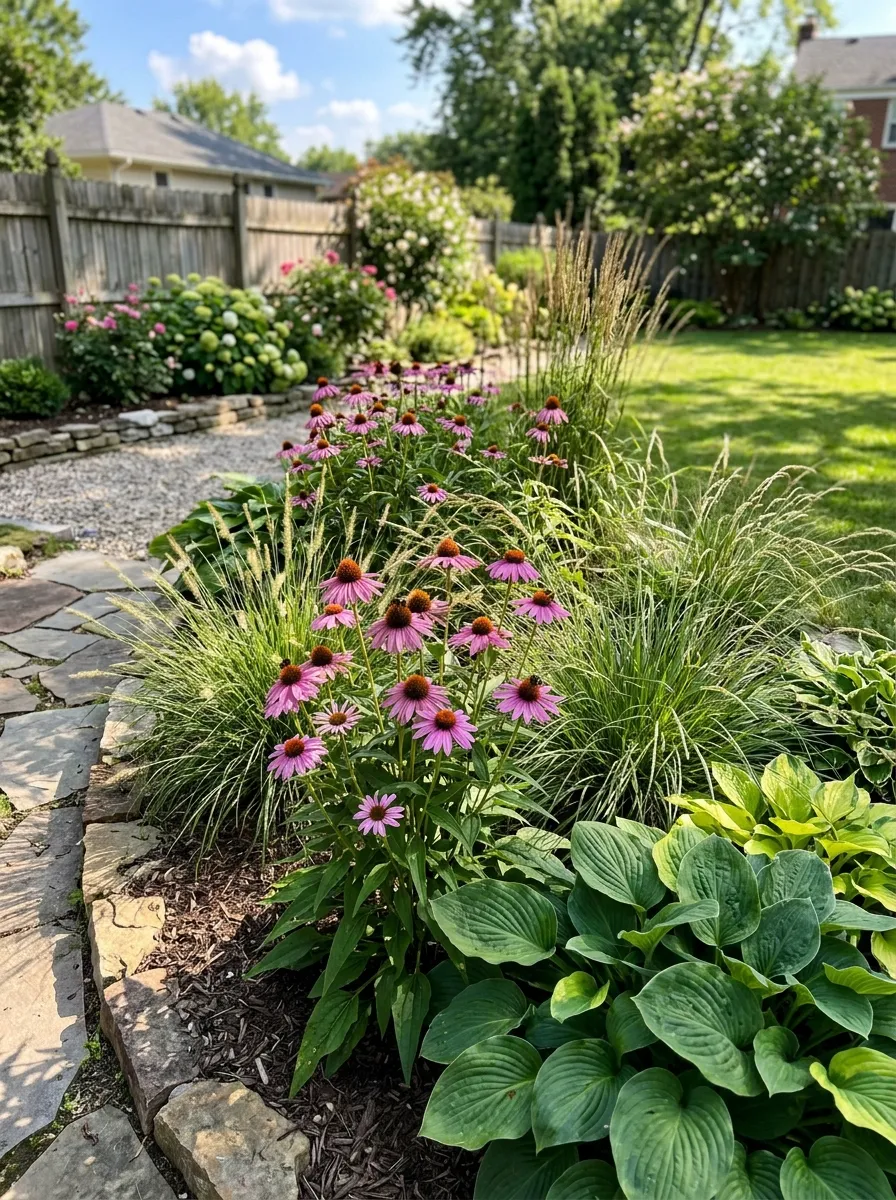
Once established, most perennials need little more than an occasional trim and a yearly cleanup.
3. Mulch Like You Mean It
If there’s one single trick that saves the most time in gardening, it’s mulch. A good layer of mulch does double duty it locks in moisture and blocks weeds before they even start.
Mulching tips:
- Apply a 2–3 inch layer around plants, avoiding direct contact with stems
- Use shredded bark or wood chips for a natural, tidy look
- Refresh mulch once a year instead of constantly weeding
- Consider gravel or rock mulch in dry, sunny areas for an ultra-low-maintenance option
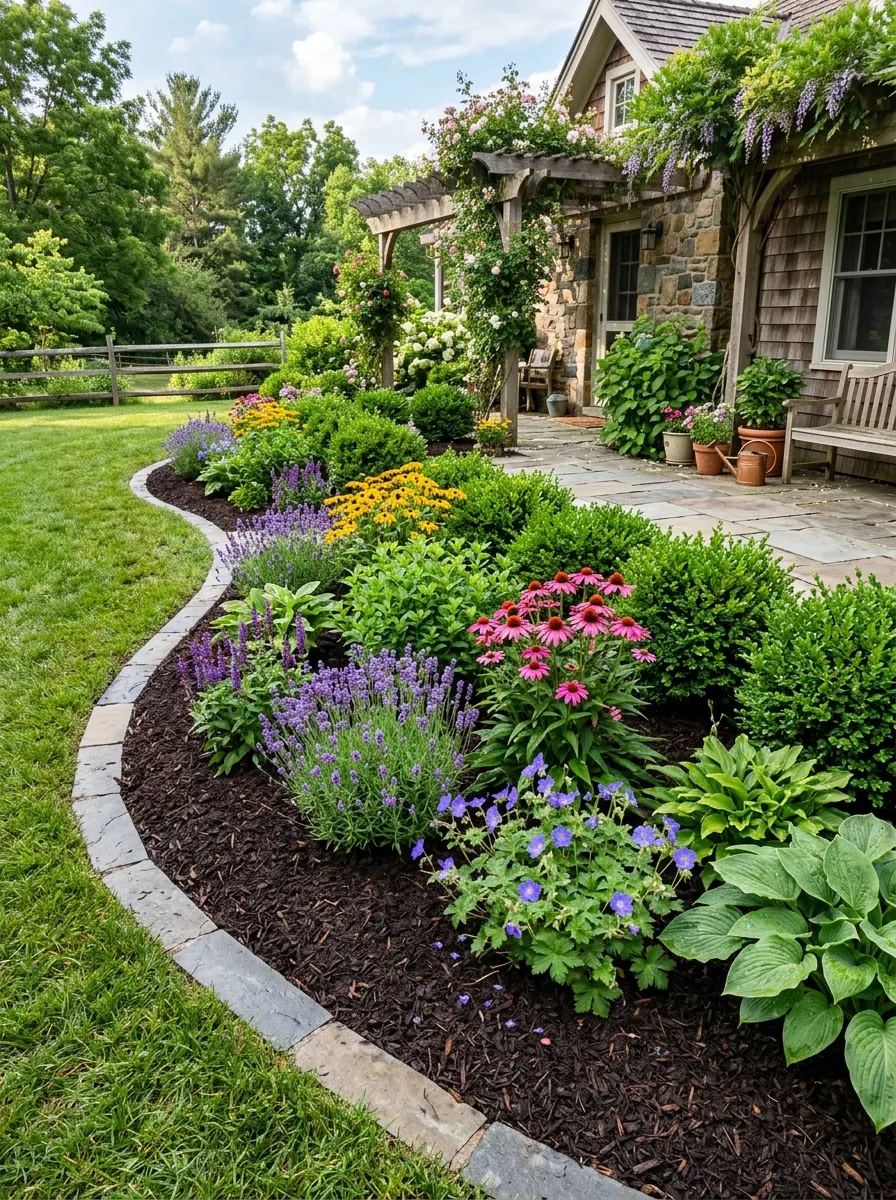
This one step alone can cut your weeding time by more than half.
4. Choose Plants Built for Every Season
The secret to year-round beauty isn’t more work—it’s smarter plant selection. Choose a mix of plants so something is always looking good, no matter the season.
Build a four-season garden with:
Spring: flowering bulbs like daffodils and tulips
Summer: heat-loving perennials like black-eyed Susans
Fall: ornamental grasses and sedum that turn rich colors
Winter: evergreen shrubs and trees with interesting bark or berries
This layered approach means your garden never has a “dead” season—there’s always something worth looking at. If you’re working with limited outdoor space, discover these small garden design ideas that make your garden look bigger and more beautiful.
5. Install Smart Watering Systems
Hand-watering is one of the most time-consuming garden chores. Automating it is one of the easiest ways to reduce your workload dramatically.
Watering upgrades worth making:
- A simple drip irrigation system on a timer
- Soaker hoses tucked under mulch for deep, even watering
- Rain barrels to collect free water for dry spells
- Grouping thirsty plants together so you’re not watering the whole yard equally
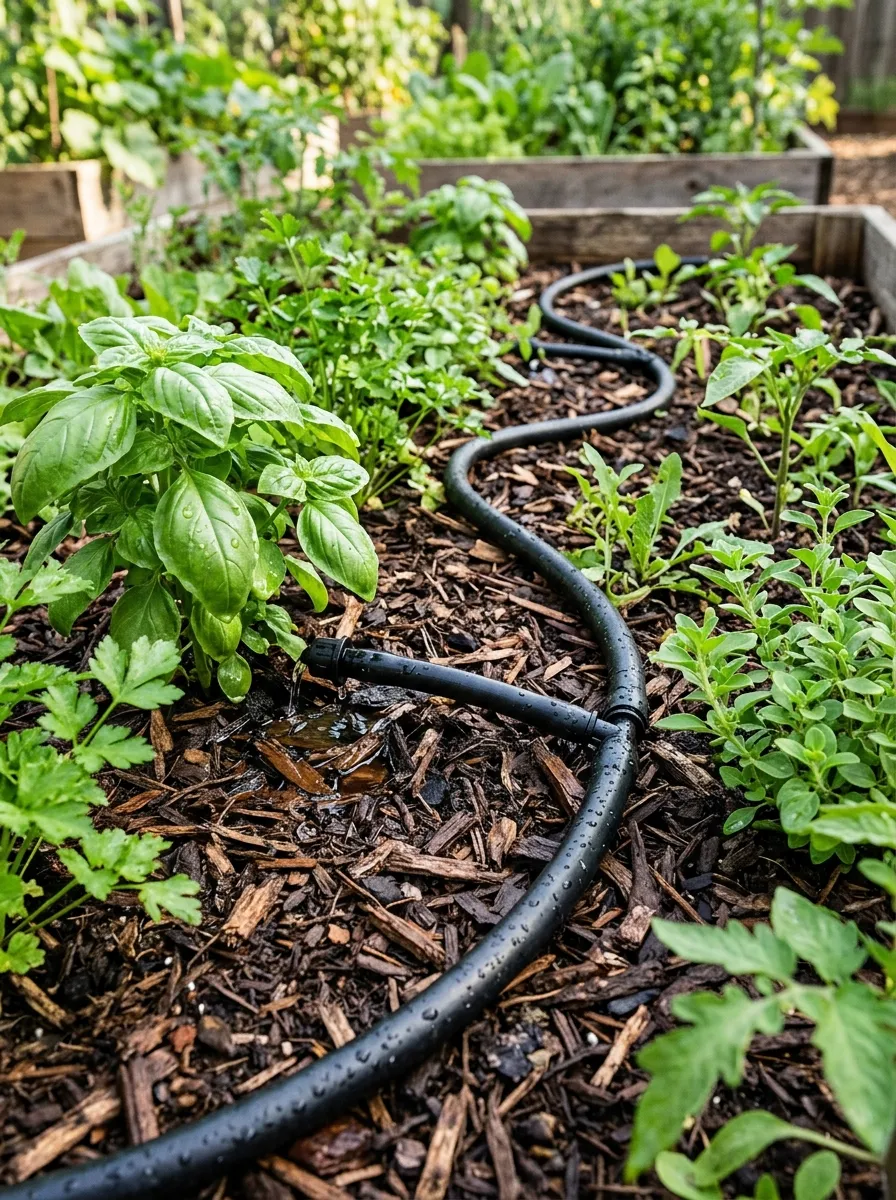
Once installed, these systems practically run themselves.
6. Simplify Your Lawn (or Skip It Entirely)
Grass is often the highest-maintenance part of any yard constant mowing, edging, and watering. Reducing your lawn size is one of the biggest time-savers you can make.
Lawn alternatives to consider:
- Ground cover plants like creeping thyme or clover
- Gravel or paver patios in place of grassy seating areas
- Native grass mixes that need little to no mowing
- Simply shrinking your lawn and expanding low-maintenance beds instead
Even converting a small section can noticeably cut down your weekly chore list.
7. Choose Shrubs for Year-Round Structure
Shrubs are the unsung heroes of a low-maintenance garden. Unlike flowers, most only need an occasional trim, and many stay attractive through every season.
Great low-fuss shrub choices:
- Boxwood for tidy, evergreen structure
- Hydrangeas for big, beautiful summer blooms
- Juniper for texture and winter color
- Spirea for easy spring flowers with minimal care
Planting a few well-placed shrubs gives your garden a polished look even when nothing else is blooming.
Beautiful Doesn’t Have to Mean Busy
A stunning garden and a busy weekend schedule don’t have to go hand in hand. With the right soil prep, smart plant choices, and a little help from mulch and irrigation, you can enjoy a gorgeous garden all year long without it running your life.
Start with just one or two changes this season, and watch how much easier (and more beautiful) your garden becomes.