
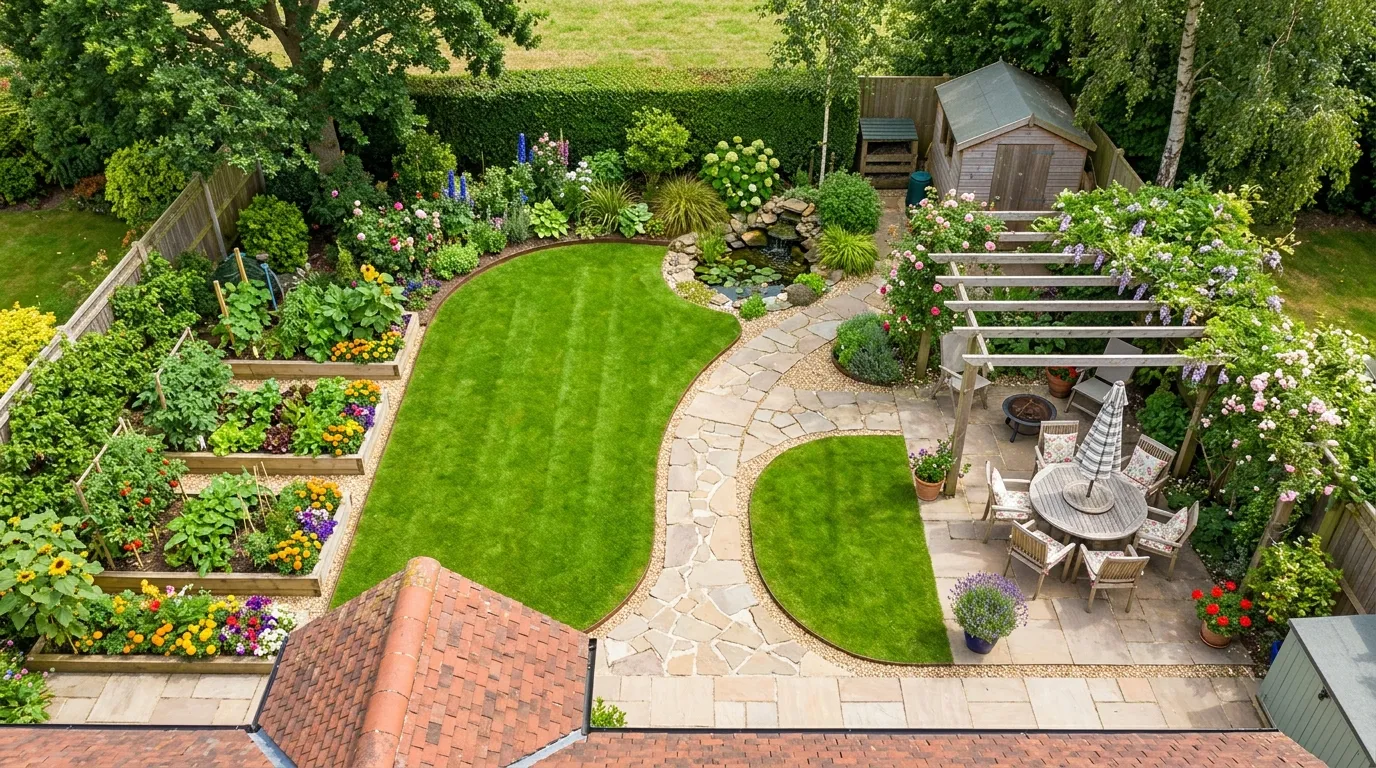
Staring at your blank backyard wondering where to even start? You’re not alone. The difference between a Pinterest-worthy backyard and an awkward, underused space almost always comes down to one thing: layout. Get the bones right, and everything else falls into place.
No matter the size or shape of your yard, here’s how to map out a layout that actually works for how you live.
1. Map Out Your Space Before You Plant Anything
Before buying a single plant, get a real feel for your yard’s dimensions and quirks.
- Sketch a rough outline of your yard’s shape and size
- Note sun and shade patterns throughout the day
- Mark existing features like trees, fences, or utility access points
This 20-minute step saves you from costly redos later – trust the process before the pretty stuff.
2. Divide Your Yard into Functional Zones
The best backyards feel like outdoor rooms, not one big empty rectangle.
- Relaxation zone: seating area, hammock, or lounge chairs
- Dining zone: table and chairs near the kitchen or grill
- Planting zone: flower beds, veggie garden, or raised beds
- Play or pet zone: open lawn space if needed
Even a small yard can hold 2–3 zones if you get intentional with the layout.
3. Create Flow with Pathways
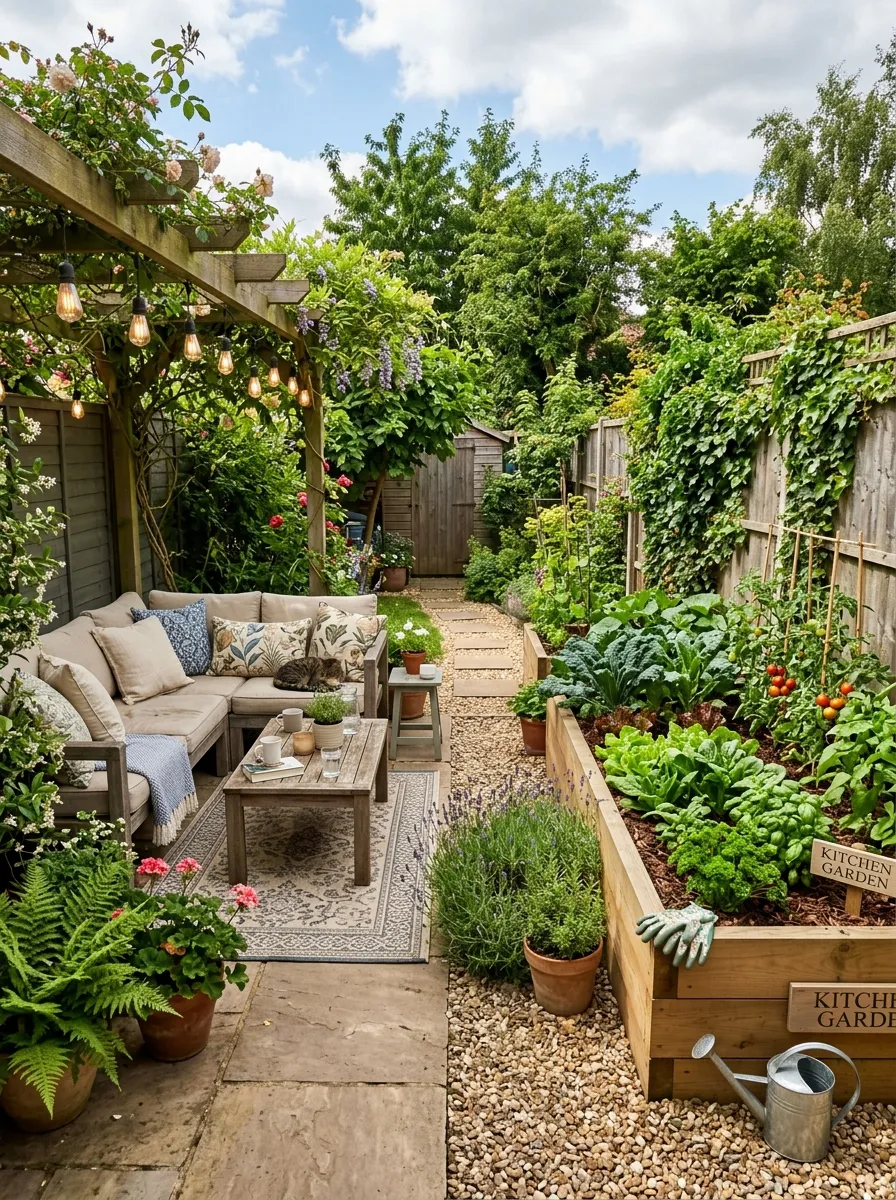
Pathways aren’t just practical – they guide the eye and make a yard feel designed, not random.
- Connect each zone with a clear path (gravel, pavers, or stepping stones)
- Curve paths slightly to make the space feel larger
- Keep paths at least 2–3 feet wide for comfortable walking
Good flow is the difference between a yard that feels chaotic and one that feels effortless.
4. Use the Layering Technique for Garden Beds
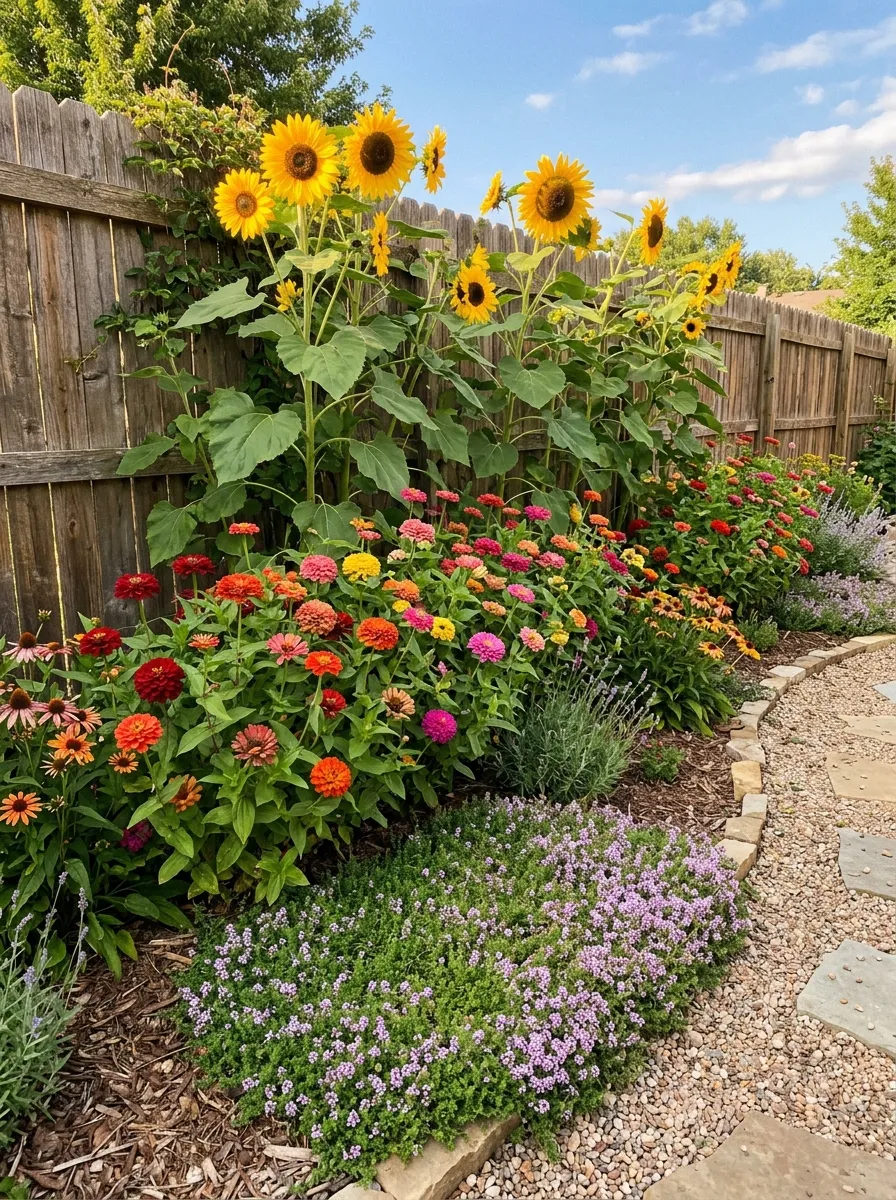
Flat, single-height planting looks unfinished. Layering instantly elevates any garden bed.
- Tall layer: shrubs, small trees, or trellised vines along the back or fence line
- Middle layer: flowering perennials or ornamental grasses
- Front layer: low groundcover or edging plants
This technique works in beds of any size – even a narrow strip along a fence.
5. Anchor the Space with a Focal Point
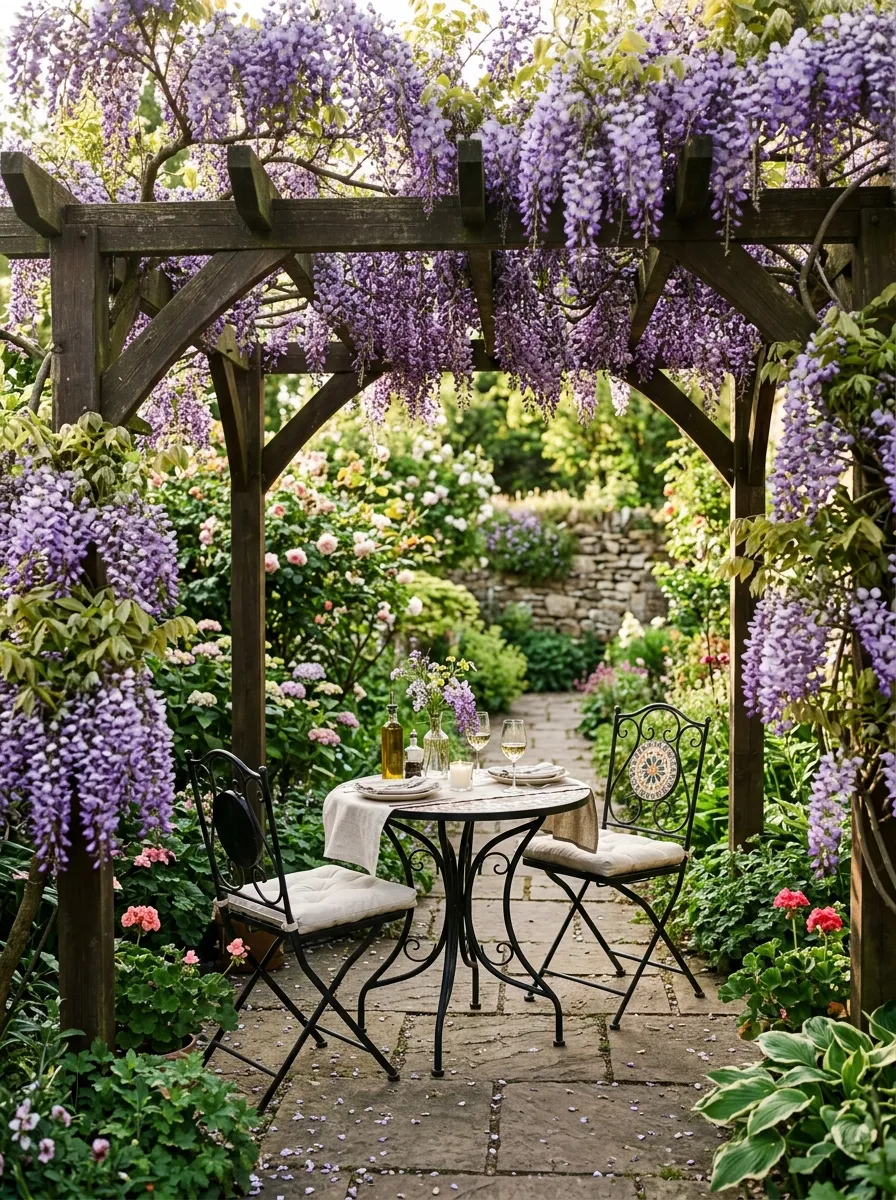
Every well-designed backyard has something that draws the eye and gives the space purpose.
- A fire pit surrounded by seating
- A pergola or arbor covered in climbing vines
- A statement tree planted center-yard or as a backdrop
Your focal point becomes the “why” people gather in that spot – build the layout around it.
6. Don’t Forget Vertical Space
If your yard is small, don’t just think in square footage – think in cubic footage.
- Add trellises or fences for climbing plants like clematis or trumpet vine
- Install hanging planters on a pergola or fence
- Use tiered plant stands to add height without eating up floor space
Vertical elements make a backyard feel fuller and more dynamic without cramping the ground level.
7. Balance Hardscape and Softscape
A great layout mixes hard surfaces (patios, paths) with soft greenery (plants, lawn) for the best visual balance.
- Aim for roughly 60% softscape (plants/lawn) to 40% hardscape (patio/paths) as a starting point
- Use hardscaping for high-traffic or entertaining areas
- Let softscaping soften hard edges and borders
Too much concrete feels cold too much greenery with no structure feels wild. Balance is everything.
8. Leave Room to Grow
One of the biggest layout mistakes? Planning only for how things look on day one.
- Space plants for their mature size, not their current pot size
- Leave a little “breathing room” in beds for future additions
- Choose a layout that can evolve season by season
A backyard that grows with you will always look better than one that was maxed out from the start.
Final Thoughts: Your Yard, Your Rules
There’s no single “perfect” layout – just the one that fits how you actually want to use your space. Start with zones, connect them with intentional pathways, and layer in plants for depth and beauty.