
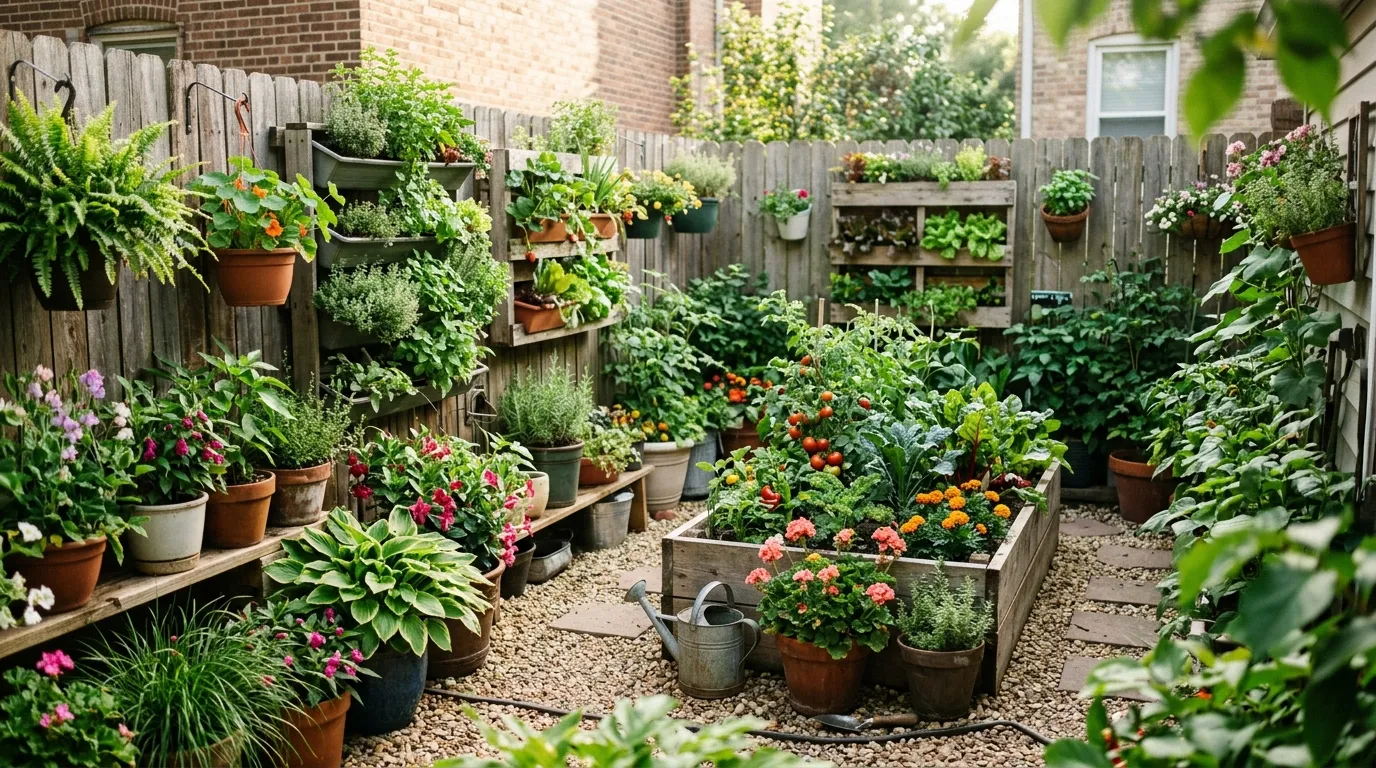
A small backyard forces you to get creative, and that’s not necessarily a bad thing. Limited square footage pushes you toward smarter layouts, vertical growing, and multi-purpose features instead of the sprawling, spread-out gardens bigger yards default to. This list gathers practical ways to squeeze real function and beauty out of a tight space, whether you’re working with a narrow side yard, a fenced-in city lot, or just a small patch behind a townhouse. Every inch counts, and these ideas make sure none of it goes to waste.
1. Grow Vertically Along Every Fence Line
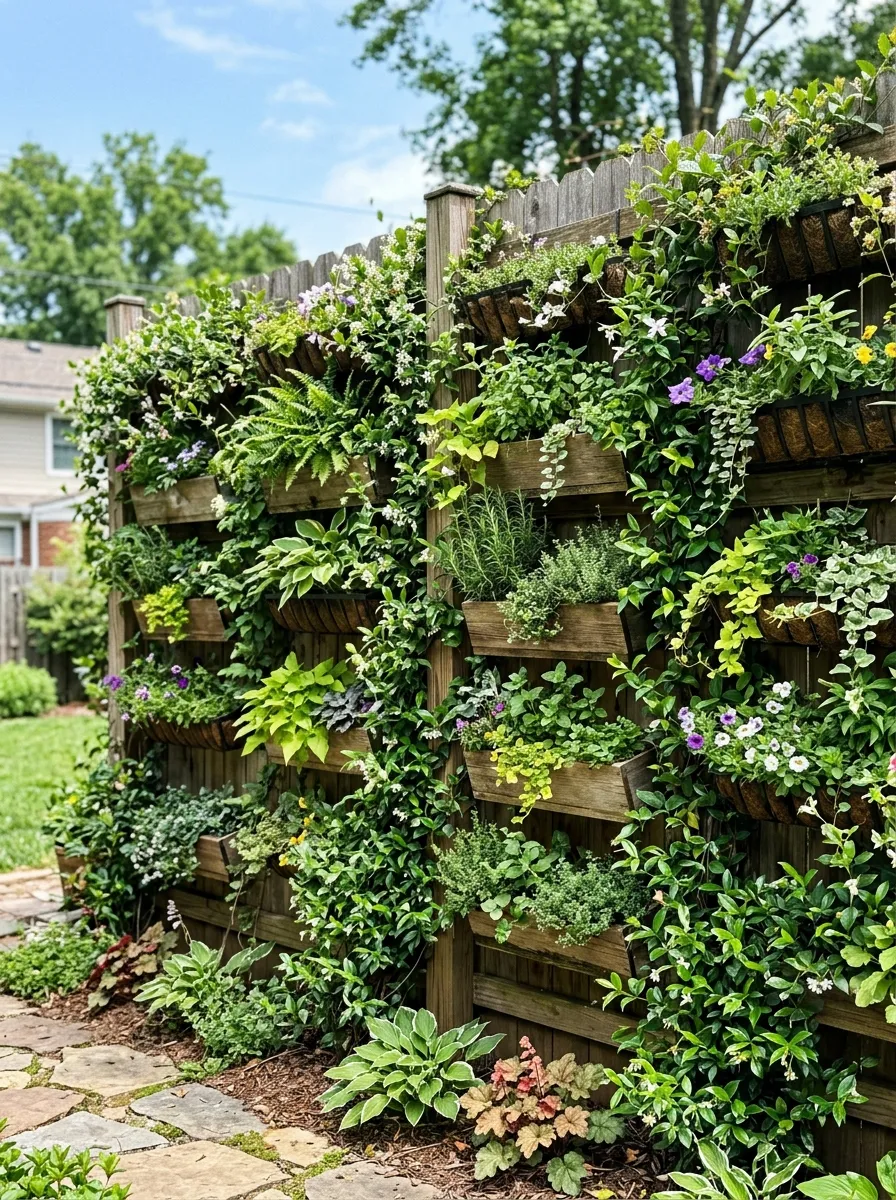
Fence lines in a small yard usually sit empty except for the occasional climbing vine, but they represent real, unused growing space. Mount planter boxes, hanging pots, or a simple trellis system along every available fence stretch instead of treating it as just a boundary.
Mix climbing plants that grow upward with hanging pots that add depth at different heights, so the fence reads as a full planting rather than scattered accents.
This approach works on chain-link, wood, or vinyl fencing alike, with different mounting hardware for each material.
Budget tip: repurposed pallets or leftover trellis material, attached directly to existing fence posts, save you from buying a specialty vertical system.
This project turns a boundary that usually goes to waste into one of the most productive growing surfaces in the whole yard.
2. Use Corner Planters to Fill Dead Space
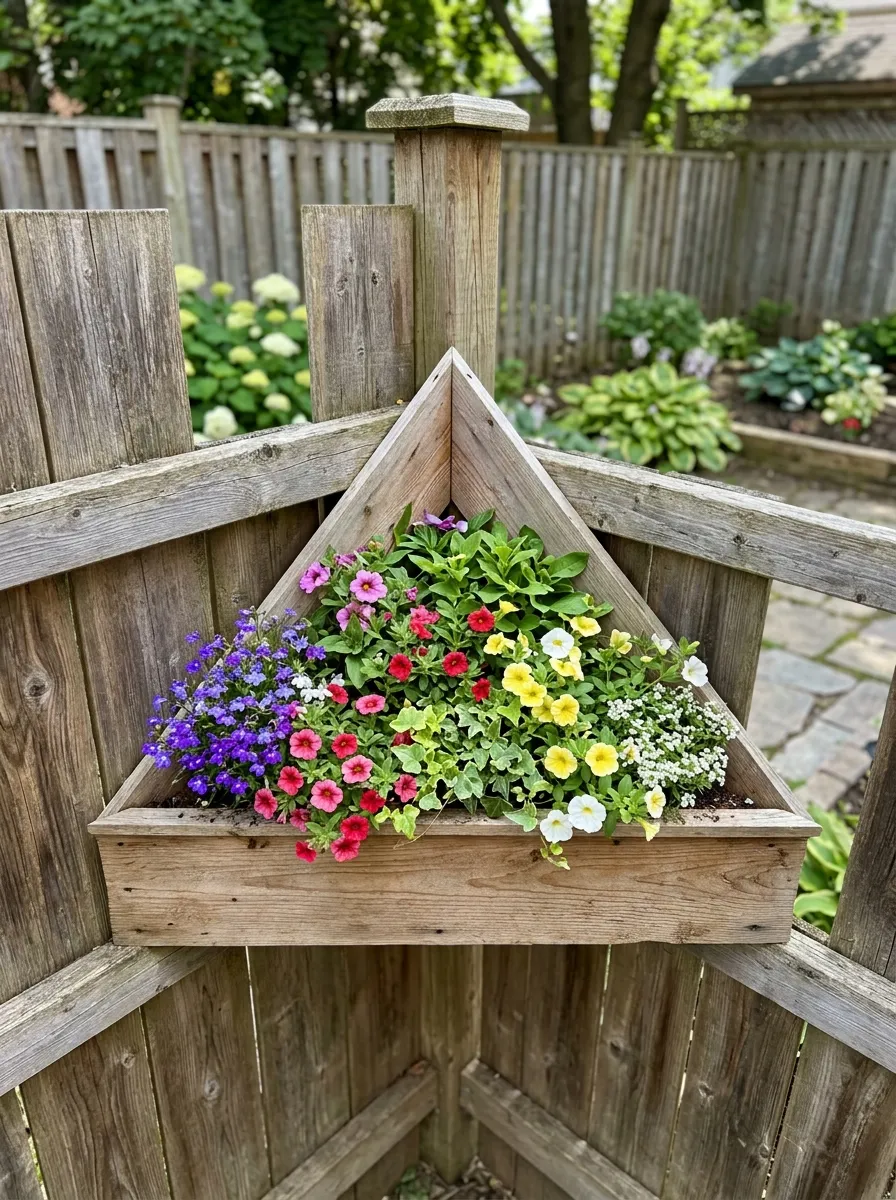
Every yard has at least one awkward corner where two fences meet, too small for furniture and usually left bare. A triangular corner planter fits that exact shape, turning dead space into a genuine planting spot.
Build a simple three-sided box to match the corner’s angle, or use a round pot if a perfect fit isn’t practical. Fill with compact plants that won’t sprawl beyond the tight footprint.
This solves the common problem of corners becoming a dumping ground for stray tools or forgotten pots.
Budget tip: scrap wood cut to match the corner’s angle costs little beyond a few screws and some soil.
This project claims space that most small yards leave completely unused, adding real greenery to a spot that would otherwise sit empty.
3. Build a Foldable Table for Flexible Space
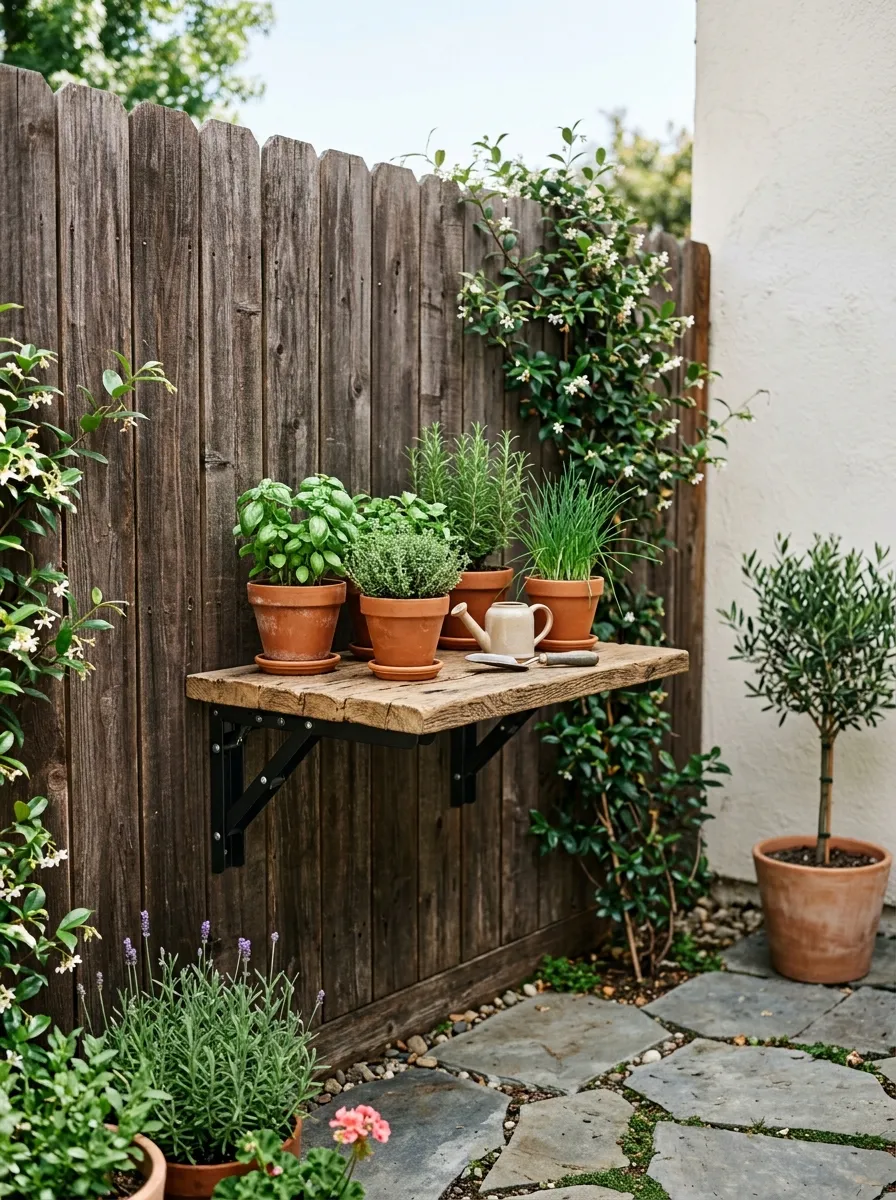
A wall-mounted folding table gives you a workspace or extra plant surface only when you actually need it, then tucks flat against the fence the rest of the time. Mount a simple hinged tabletop to a fence or wall, with a folding leg or bracket support underneath.
Use it for potting plants, holding a tray of seedlings, or as extra surface space during a backyard gathering, then fold it away when it’s not needed.
This solves the common small-yard problem of wanting a work surface without permanently sacrificing floor space to a full-sized table.
Budget tip: a single scrap board and a set of folding shelf brackets cover the entire material cost for this build.
This project adds real function to a small yard without permanently committing any floor space to furniture.
4. Create a Living Wall From Wooden Pallets
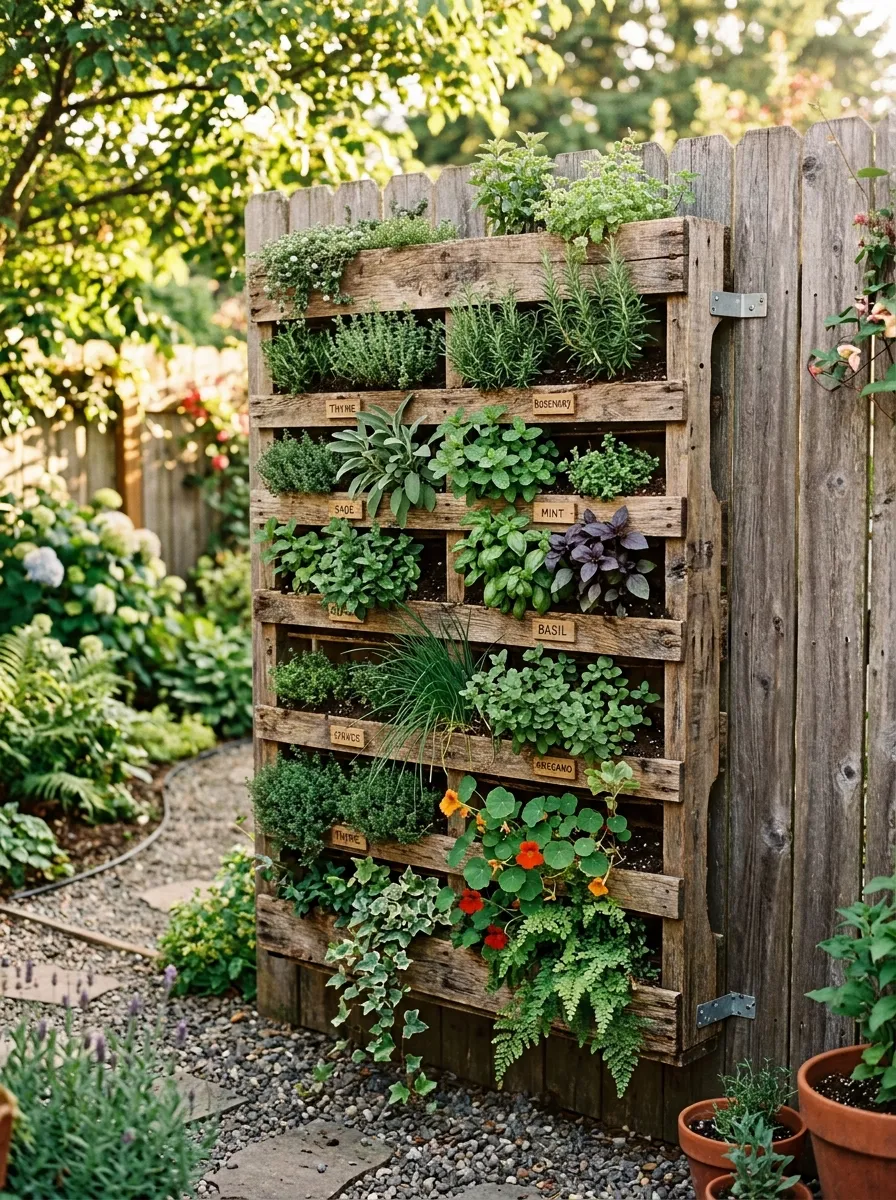
A pallet living wall turns a flat vertical surface into a dense planting without using any ground space at all. Stand a pallet upright against a fence, staple landscape fabric to the back and bottom to hold soil in place, then fill the gaps between slats with plants.
This works especially well for shallow-rooted plants like herbs, lettuce, or strawberries, which don’t need much soil depth to thrive.
Lean the pallet at a slight angle initially so soil settles before standing it fully upright against the fence.
Budget tip: most hardware and grocery stores give pallets away for free rather than pay disposal fees.
This project turns an entire vertical wall into productive growing space, ideal for a yard with more fence footage than ground to work with.
5. Add Stacking Planters for Multi-Level Growing
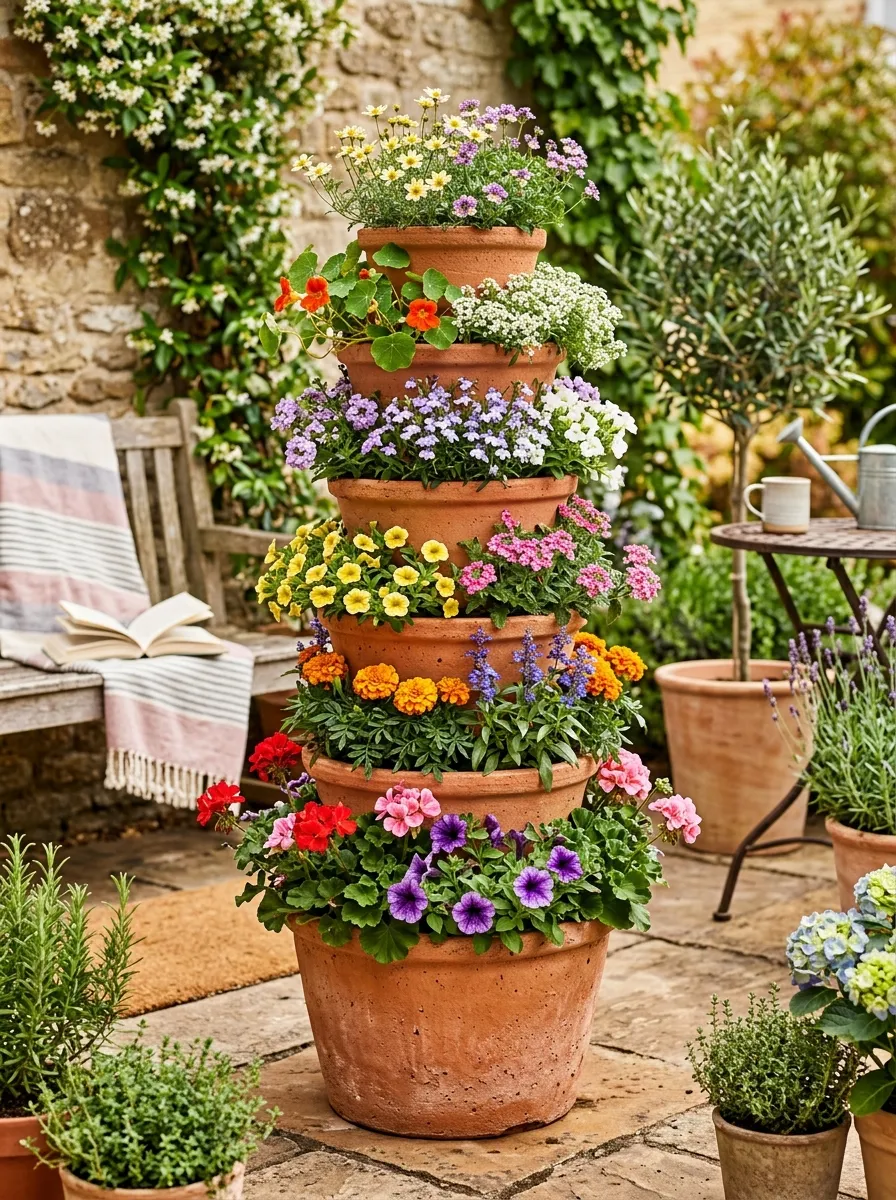
Stacking planters, designed with multiple tiers built into one column, let you grow several plants in the footprint of a single pot. Each tier holds its own soil pocket, positioned to catch light from a slightly different angle than the one below it.
This works particularly well for strawberries, herbs, or small flowering annuals that don’t need much individual root space.
Water from the top, letting moisture work its way down through each level as it drains.
Budget tip: stack a few terracotta pots of decreasing size, bottoms removed, instead of buying a manufactured stacking system.
This project multiplies your growing capacity without expanding your footprint, ideal for a patio or small paved corner.
6. Build a Narrow Raised Bed Along a Side Yard
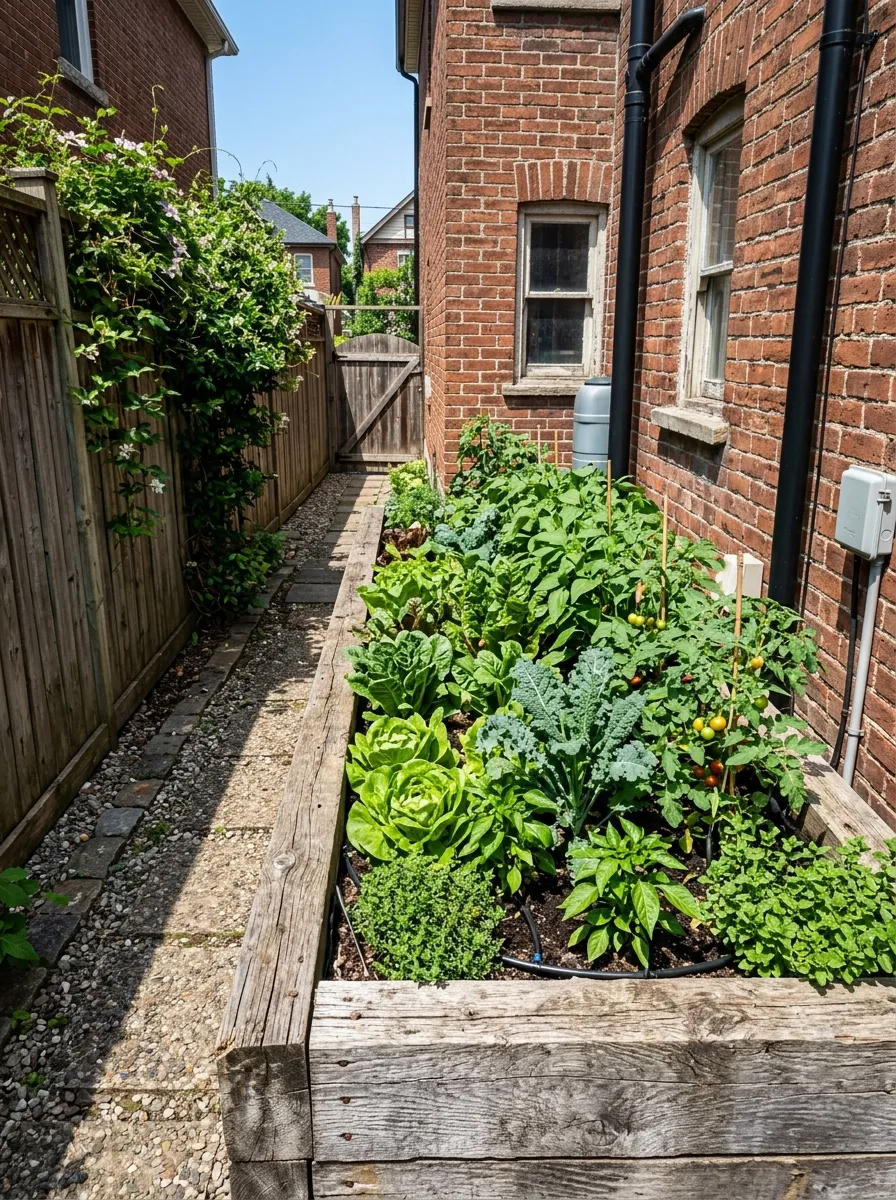
Side yards, the narrow strip between a house and fence, often sit completely unused despite getting decent sun in many layouts. A narrow raised bed, even just a foot or two wide, turns that forgotten strip into real growing space.
Build a simple long, narrow frame from scrap wood, sized to fit the available width without blocking the walking path entirely.
Choose compact vegetables or herbs that don’t need much width to thrive, since depth matters more than sprawl in this kind of layout.
Budget tip: reclaimed fence boards or deck scraps cover most of the material cost for a narrow bed frame.
This project reclaims space that most small yards write off entirely, adding a genuine growing bed where there was previously just a walkway.
7. Use a Multi-Tiered Hanging Basket System
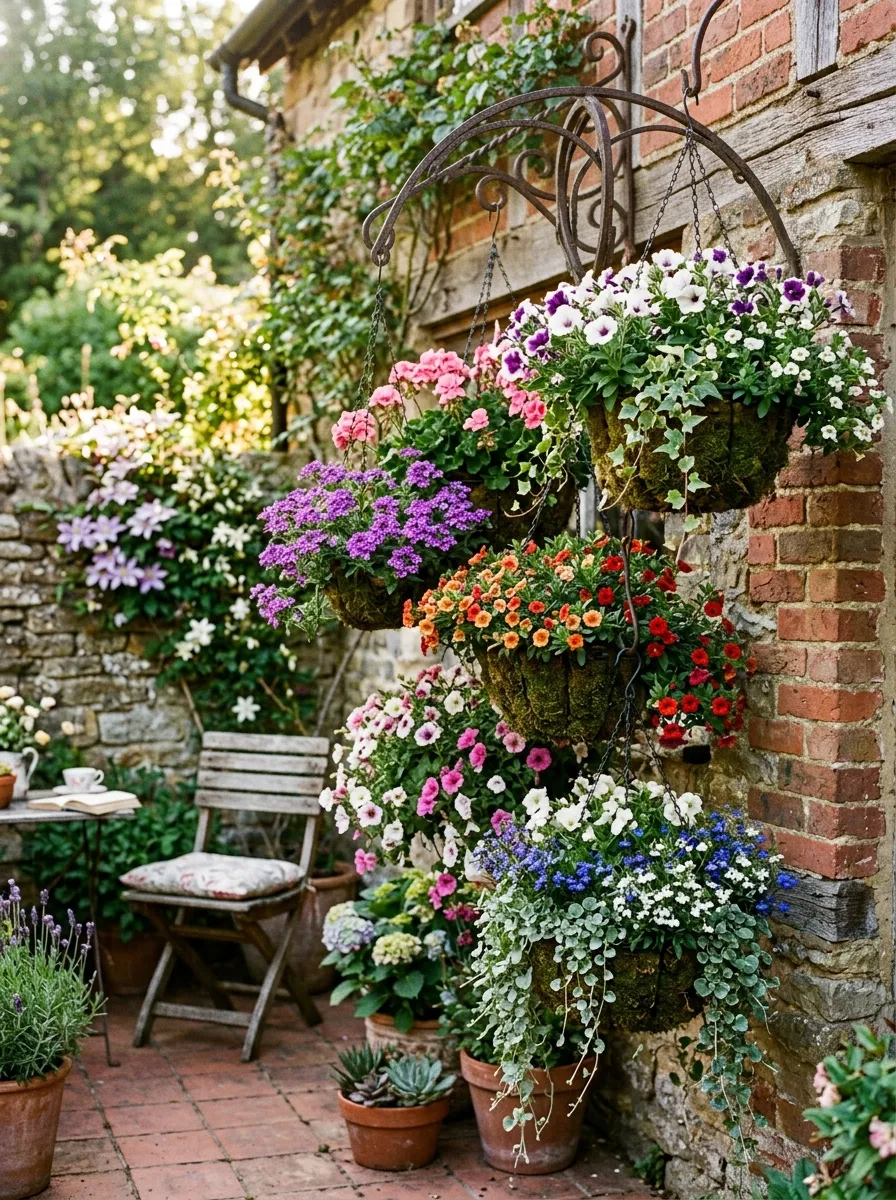
A tiered hanging system suspends multiple baskets from one central mounting point, layering plants vertically instead of spacing them across limited floor or wall space. Mount a sturdy bracket or shepherd’s hook, then hang two or three baskets at staggered heights using adjustable chains.
This adds real plant volume to a single vertical column, ideal for a small patio corner where floor space runs out quickly.
Choose trailing plants for the lower baskets so their growth doesn’t block light from reaching the ones above.
Budget tip: a single sturdy hook and secondhand baskets from a yard sale cover the entire cost of this setup.
This project stacks visual impact into a narrow vertical footprint, making the most of overhead space a small yard often leaves untouched.
8. Build a Fold-Down Bench That Doubles as Storage
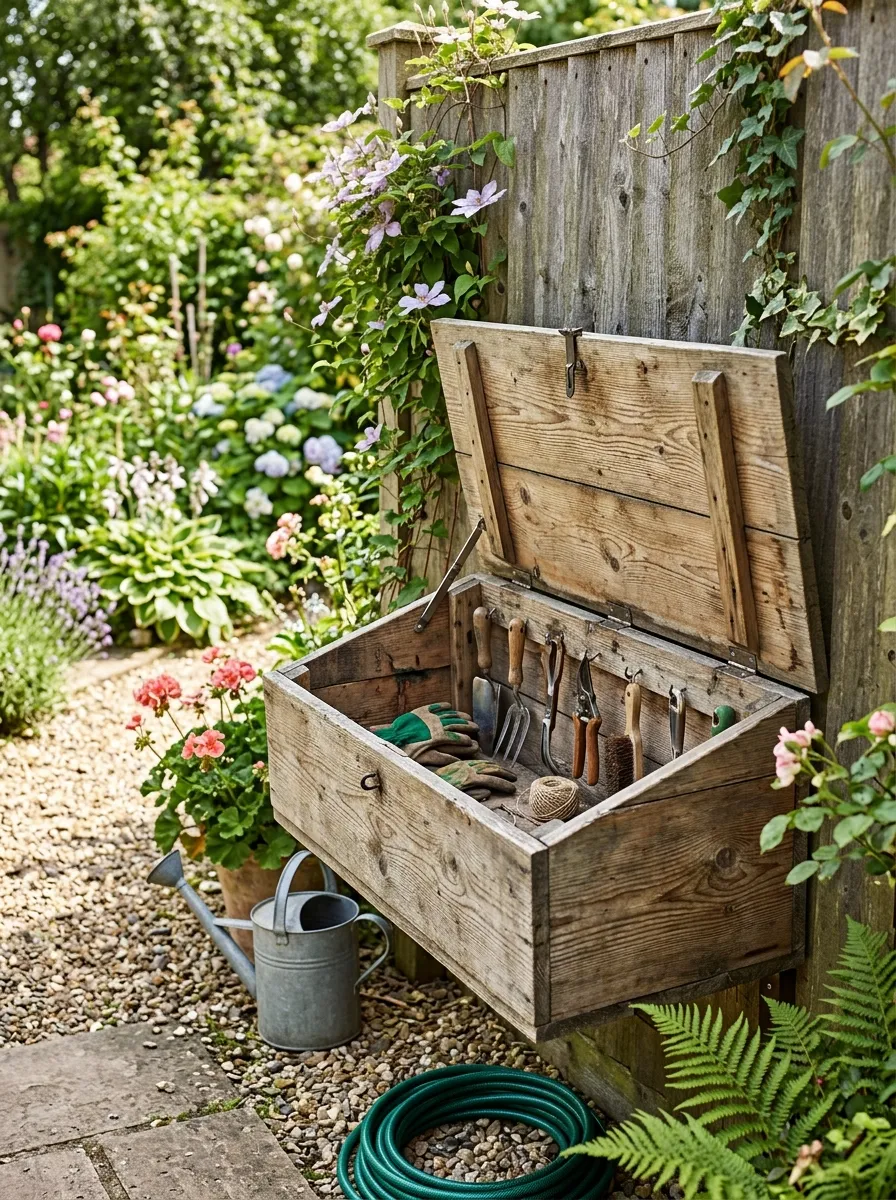
A storage bench solves two small-yard problems at once: seating and somewhere to stash tools, cushions, or pots that would otherwise clutter the ground. Build a simple box frame with a hinged lid, sized to fit against a fence or wall, and finish the top with a comfortable cushion.
This works especially well replacing a single chair, since the bench provides seating for two while also hiding away everything that usually ends up scattered around a small patio.
Seal the wood with an outdoor finish to protect both the structure and whatever gets stored inside.
Budget tip: an old chest or trunk, weatherproofed with a coat of sealant, works as a ready-made storage bench without building from scratch.
This project adds function without adding clutter, since everything it replaces gets tucked out of sight inside.
9. Create a Compact Herb Wall Near the Back Door
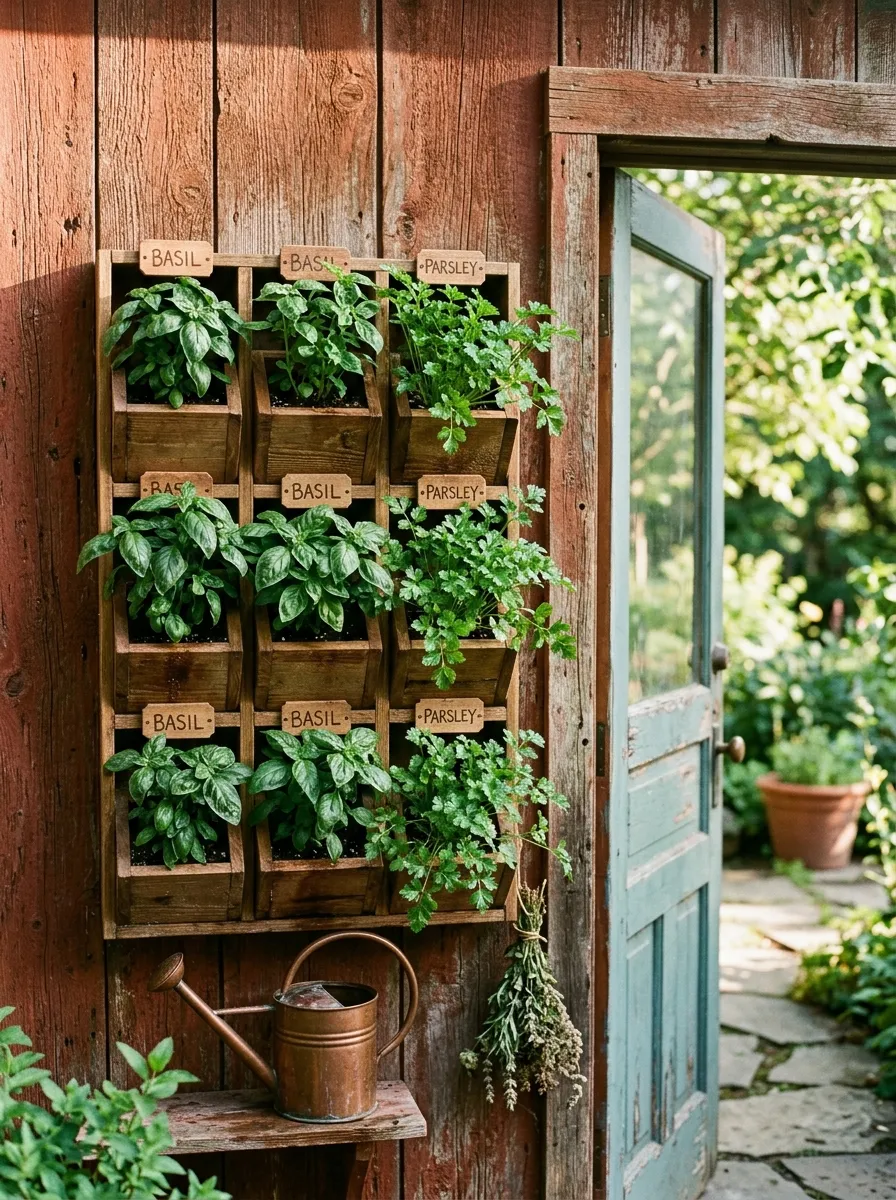
Mounting herbs right beside your back door means you’ll actually use them while cooking, and it claims wall space that usually sits completely bare. A pocket-style wall planter or a few small mounted pots hold enough herbs for regular kitchen use without taking up any patio floor space.
Position the display where it gets a few hours of direct sun daily, adjusting placement if the spot near your door turns out too shaded.
Snip what you need right before a meal rather than harvesting in bulk, keeping the plants productive longer.
Budget tip: small wooden crates mounted flat against the wall work as well as a purpose-built herb wall system.
This project makes use of vertical wall space right where you need it most, saving both floor space and grocery trips.
10. Add a Compact Cafe Table for Two
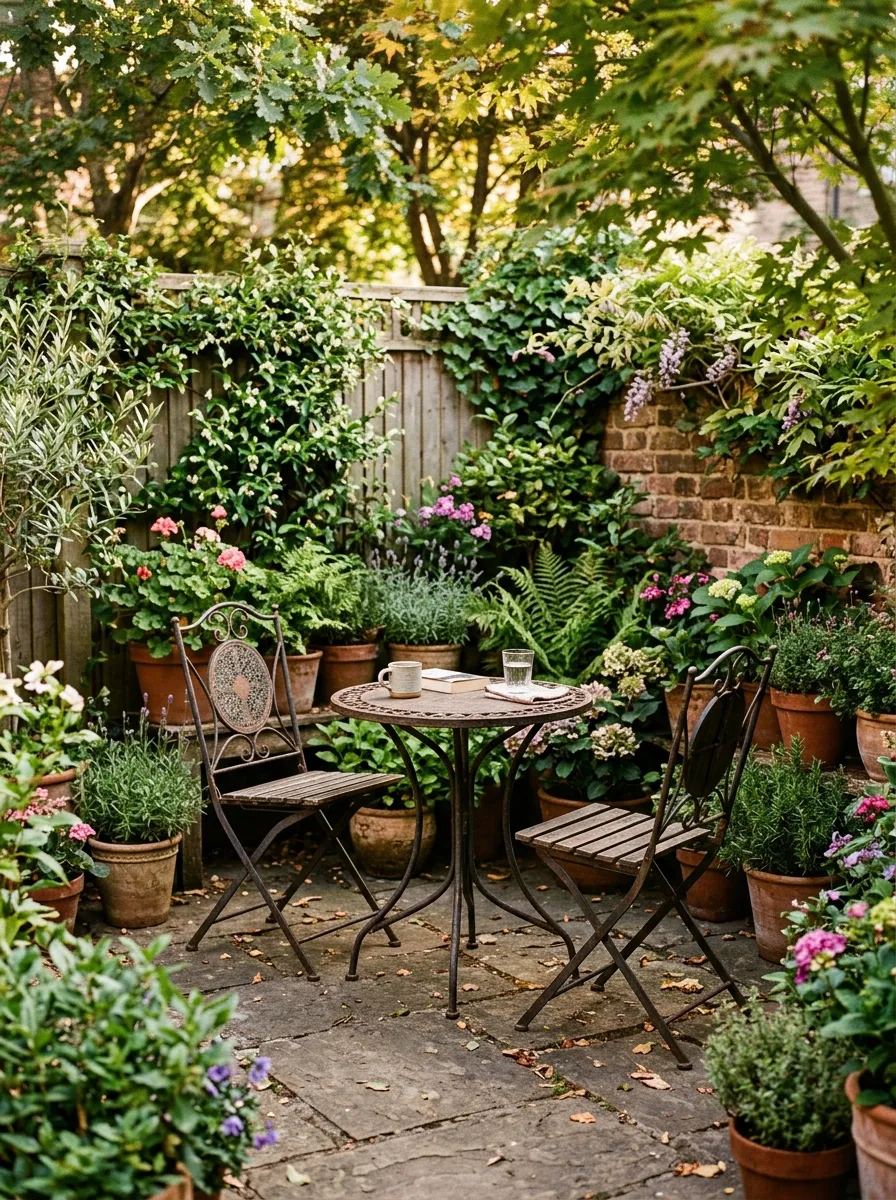
A small cafe-style table scaled for two, rather than a full-sized dining set, fits comfortably into a tight yard without dominating the available space. Choose a round table with a narrow base, since round shapes fit corners and odd angles better than a rectangular set.
Folding chairs work especially well here, since they can lean against a fence or tuck away entirely when not in use, freeing the space for other activities.
Position the table where it catches morning or evening shade, depending on when you’re most likely to use it.
Budget tip: secondhand bistro sets show up often at yard sales for a fraction of new retail prices.
This project gives you real outdoor dining or coffee space without sacrificing the majority of a small yard’s footprint.
11. Use Railing Planters Instead of Ground Beds
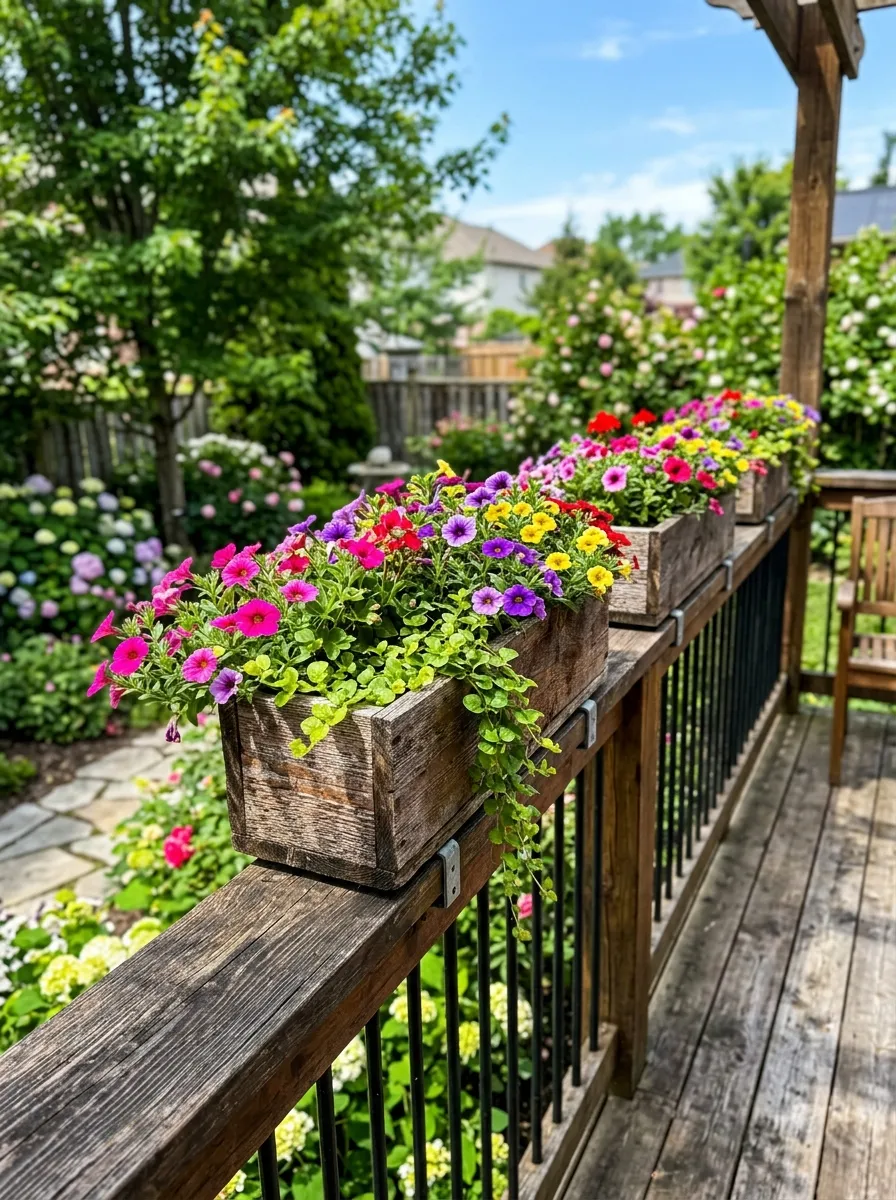
Railing planters claim space that exists above the ground rather than competing with it, which matters a lot in a small yard where every square foot of floor space counts. Mount rectangular boxes directly onto a deck or fence railing using simple brackets rated for the planter’s filled weight.
This works well for trailing flowers, small herbs, or compact greens, giving you a full row of plants without touching the ground at all.
Check the railing’s weight capacity before mounting multiple filled boxes along its length.
Budget tip: an old dresser drawer, cut to size, saves you from building a planter box completely from scratch.
This project adds a full planting row using space most small yards never think to use.
12. Build a Compact Vertical Vegetable Cage
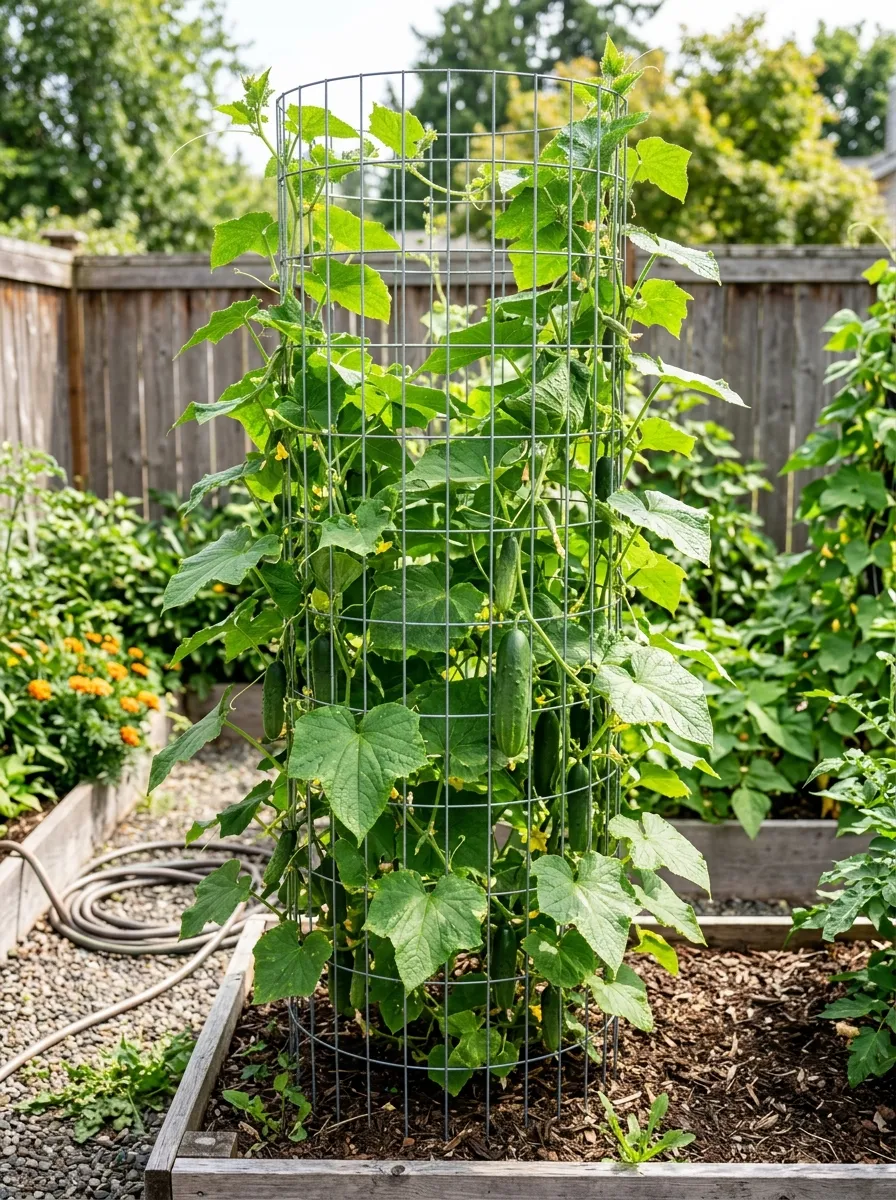
Vining vegetables like cucumbers and pole beans naturally want to climb, and a vertical cage lets you grow them straight up instead of sprawling across ground space you don’t have to spare. Bend a length of wire fencing into a cylinder shape, secure the ends, and set it directly over your planting spot.
Train young vines to climb the cage’s interior as they grow, tucking wayward stems back inward rather than letting them spill outside the structure.
This setup fits into a footprint barely larger than a single pot while still producing a real harvest.
Budget tip: leftover fencing scraps from another project bend easily into a cage shape without needing new materials.
This project turns a plant that would normally sprawl across several feet of ground into a compact, upright column instead.
13. Add a Slim Profile Rain Barrel
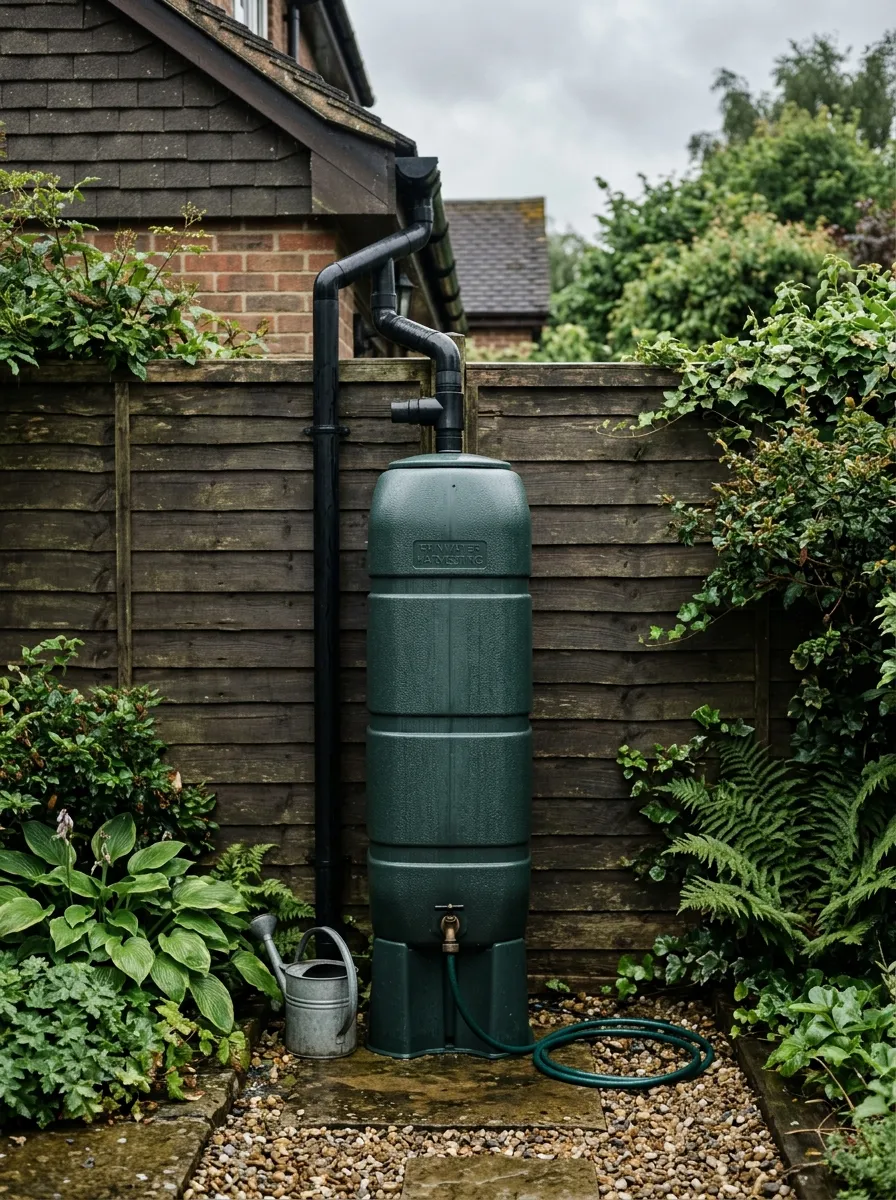
A standard round rain barrel takes up real floor space that a small yard often can’t spare, but a slimline version, built flat and narrow, fits neatly against a fence or wall without eating into your usable area. Position it directly beneath a downspout, and add a spigot near the base for easy filling of a watering can.
This gives you free, chlorine-free water for your container plants without dedicating precious ground space to bulky storage.
Set the barrel on a small stand so gravity helps water flow more easily from the spigot.
Budget tip: check with local bakeries or bottling companies for free food-grade drums, which can sometimes be modified into a slimmer profile with careful cutting.
This project adds water storage capacity without sacrificing the tight floor space a small yard needs for actual living and growing.
14. Use Multi-Functional Furniture With Built-In Planters
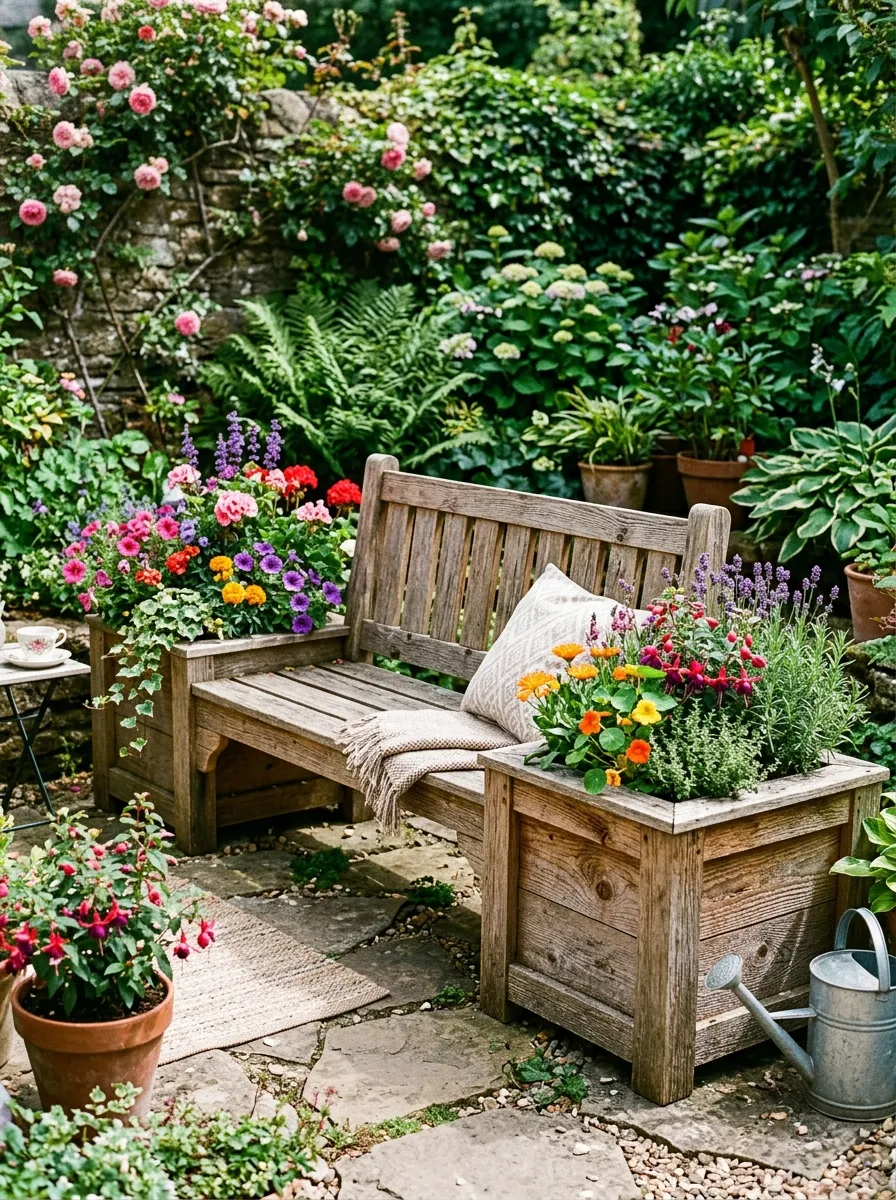
Furniture with a built-in planter combines seating and greenery into a single footprint instead of requiring separate space for each. Build a simple bench with a planter box attached to one or both ends, so the seat itself becomes part of a larger, cohesive garden feature.
This works especially well in a yard tight enough that a separate bench and separate pots would otherwise compete for the same limited space.
Keep planted sections modest in size so they don’t overwhelm the actual seating area.
Budget tip: attach a simple wooden box to the end of an existing bench you already own instead of building an entirely new integrated piece.
This project reduces the total footprint needed for both seating and planting, a genuinely efficient use of space in a small yard.
15.Create a Compact Gravel Seating Circle
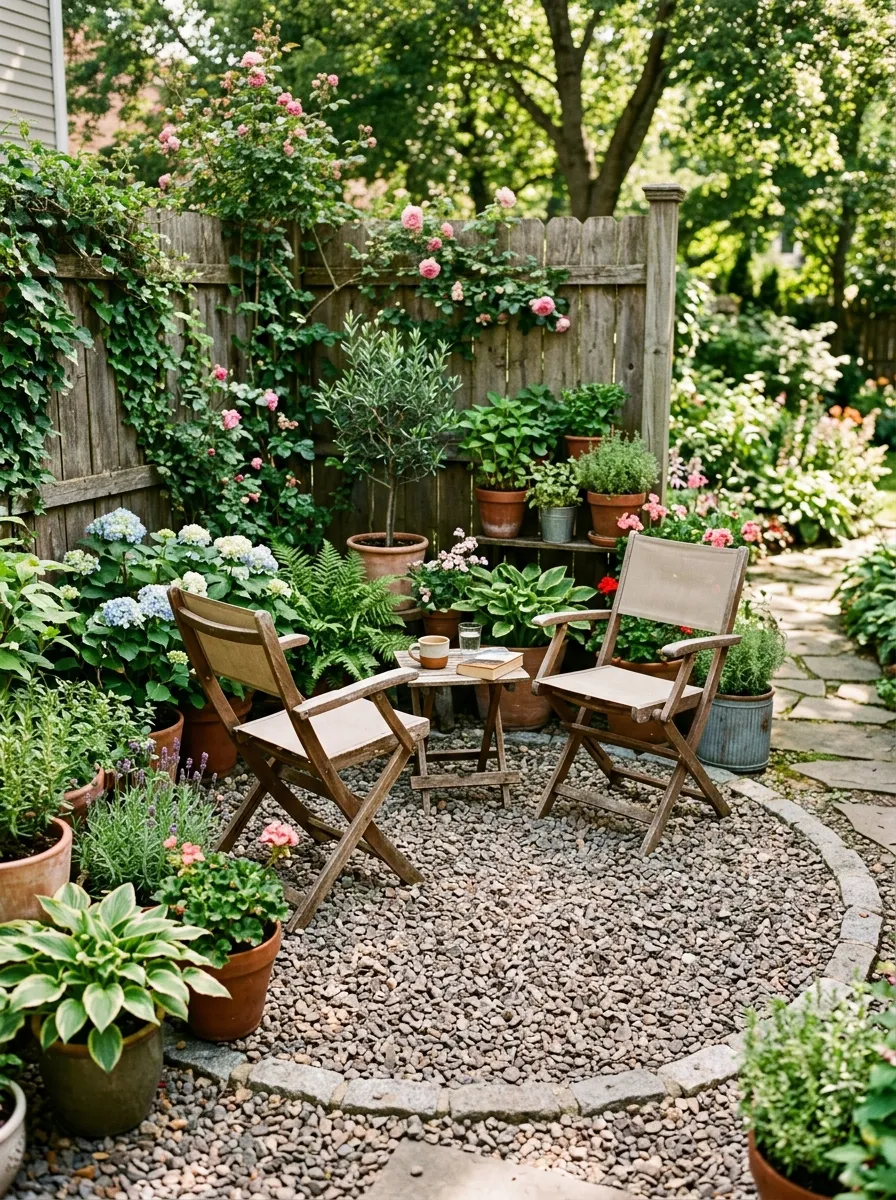
[Image Prompt: A small circular gravel patch just large enough for two folding chairs, tucked into a backyard corner with potted plants nearby. Bright natural daylight, sharp texture on the gravel, cozy compact composition throughout.]
A full-sized patio often doesn’t fit in a small yard, but a compact gravel circle, sized just for a couple of chairs, claims a usable sitting spot without demanding much space at all. Mark out a small area, remove the grass, lay landscape fabric, and spread a few inches of gravel across the marked circle.
This solves the mud and grass-wear problem that comes with regularly setting chairs on bare lawn, while staying far smaller than a full poured patio.
Add a couple of folding chairs that can be moved or stored when the space is needed for something else.
Budget tip: buy gravel in bulk from a landscaping supplier rather than bagged gravel, since bulk pricing runs far cheaper for even a small area.
This project creates genuine sitting space using a fraction of the footprint a standard patio would require.
16. Grow Espaliered Fruit Trees Against a Fence
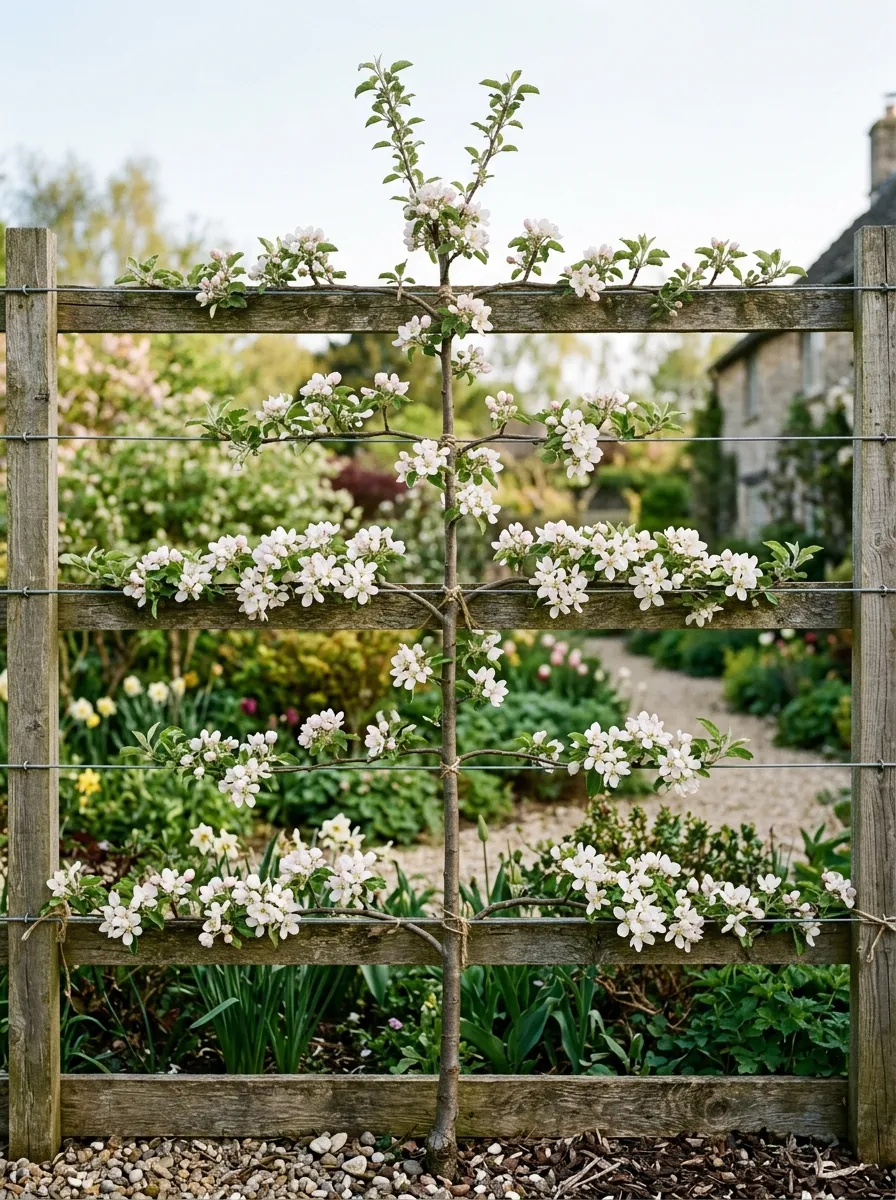
Espaliered fruit trees, trained flat against a support structure instead of growing outward in their natural rounded shape, let you grow real fruit trees in a space that would never accommodate a standard one. Plant a young tree at the base of a fence, then train branches horizontally along wire supports as it grows.
This technique takes a few seasons of regular pruning and tying, but it produces genuine fruit within a footprint just inches deep.
Choose dwarf rootstock varieties, which stay more manageable in size and suit this training method particularly well.
Budget tip: bare-root fruit trees, sold in late winter, cost significantly less than potted trees and train just as effectively.
This project brings real fruit production to a small yard’s fence line, a space most people never think to use for growing food. If you want a beautiful garden that’s also easier to care for over time, explore these low-maintenance garden ideas for practical landscaping tips that save both time and effort.
17. Add a Fold-Flat Trellis for Seasonal Flexibility
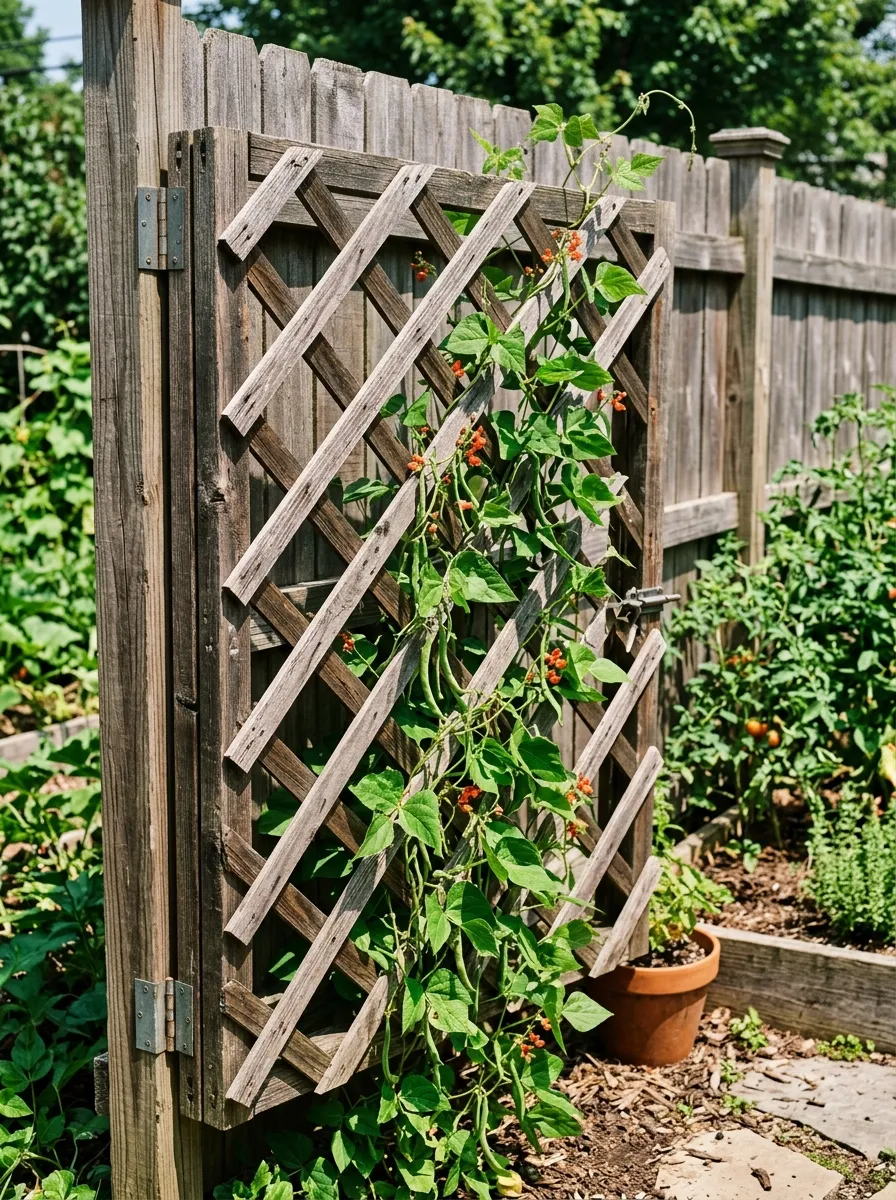
A fold-flat trellis attaches to a fence with hinges, letting you fold it down and out of the way once the growing season ends, rather than leaving a bare structure standing through winter. Build a simple lattice panel, mount it with hinges along the bottom edge, and prop it open with a removable support arm during the growing months.
This works well for annual climbers like beans or peas, which need the structure for only part of the year.
Fold the trellis flat against the fence once harvest ends, freeing up visual and physical space through the off-season.
Budget tip: simple exterior door hinges, repurposed for this project, work fine instead of specialty trellis hardware.
This project keeps a small yard adaptable through the seasons, rather than committing permanent structure to a temporary need.
18. Use Repurposed Ladder Shelves for Container Groupings
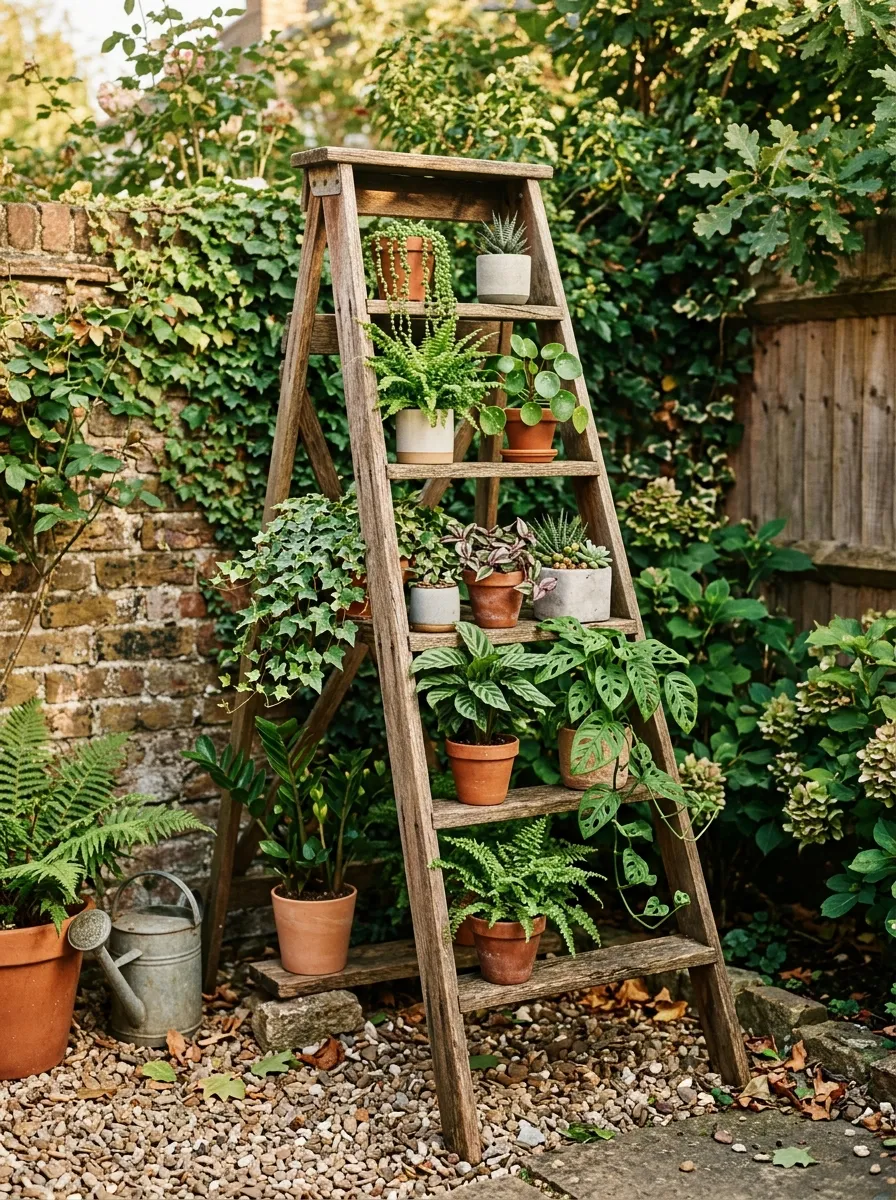
An A-frame ladder shelf holds multiple pots across its rungs, standing freely without needing to lean against a wall or fence, which makes it easy to reposition as your yard’s light and layout needs shift. Each level holds a different container, layering plants vertically in a footprint barely larger than a single pot’s base.
This works well in the middle of an open patio space, giving you height and visual interest without permanently claiming wall or fence real estate.
Choose smaller, lighter pots for upper shelves to keep the whole structure stable.
Budget tip: an old wooden ladder cut down or an A-frame shelf found secondhand covers this project’s entire material cost.
This project adds real vertical growing capacity to open floor space, staying portable enough to move wherever your yard needs it most.
19. Build a Slim Cold Frame for Extended Growing
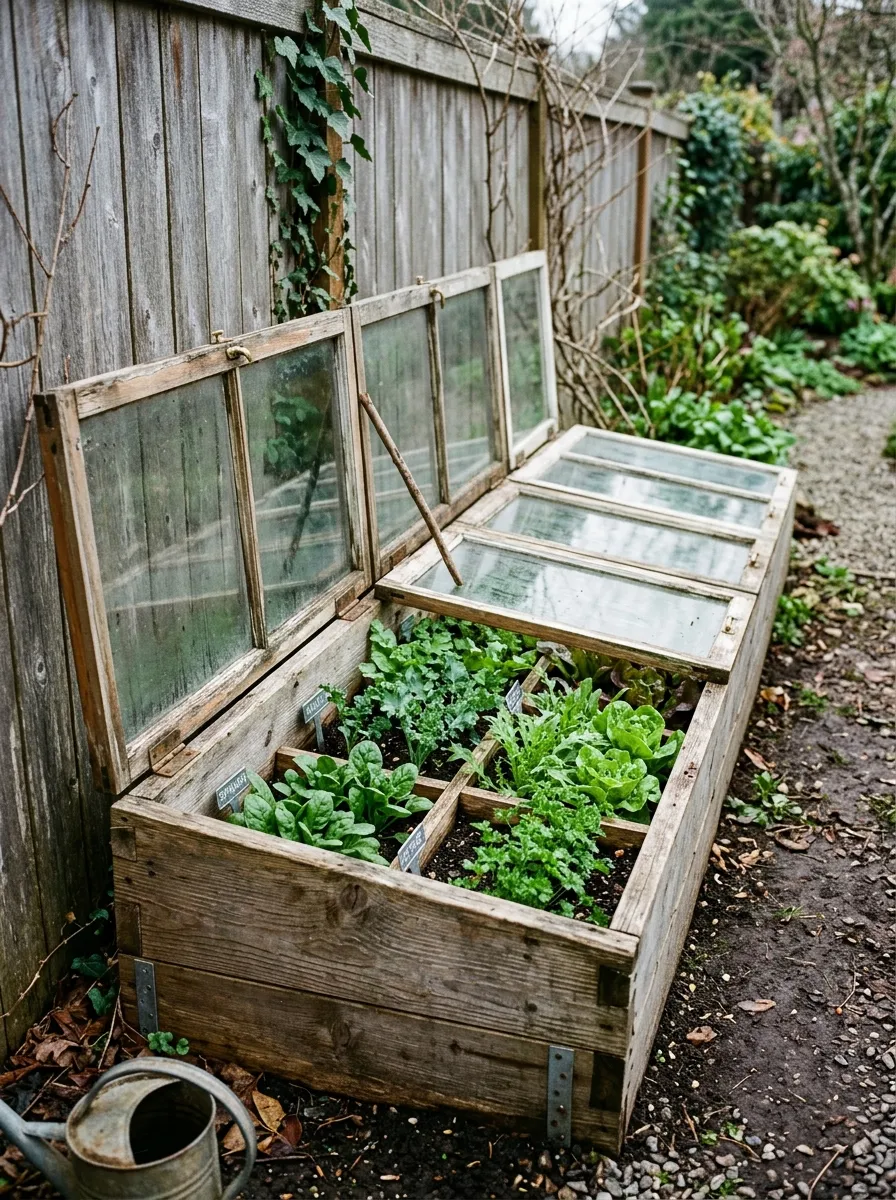
A slim cold frame, built narrow enough to tuck along a fence or wall, extends your small yard’s growing season into cooler months without demanding much floor space. Build a simple box frame from scrap wood, sized to fit the available strip, then top it with an old window or clear plastic sheeting as the lid.
Plant cold-hardy greens like spinach or kale inside, since the glass traps daytime heat and holds it through cooler nights.
Prop the lid open on warm days to prevent plants from overheating inside the enclosed space.
Budget tip: salvaged windows from an architectural resale shop often cost just a few dollars each.
This project stretches your small yard’s productive months further into the year, using a footprint no wider than a typical garden bed edge.
20. Create a Two-Sided Planter That Divides Space
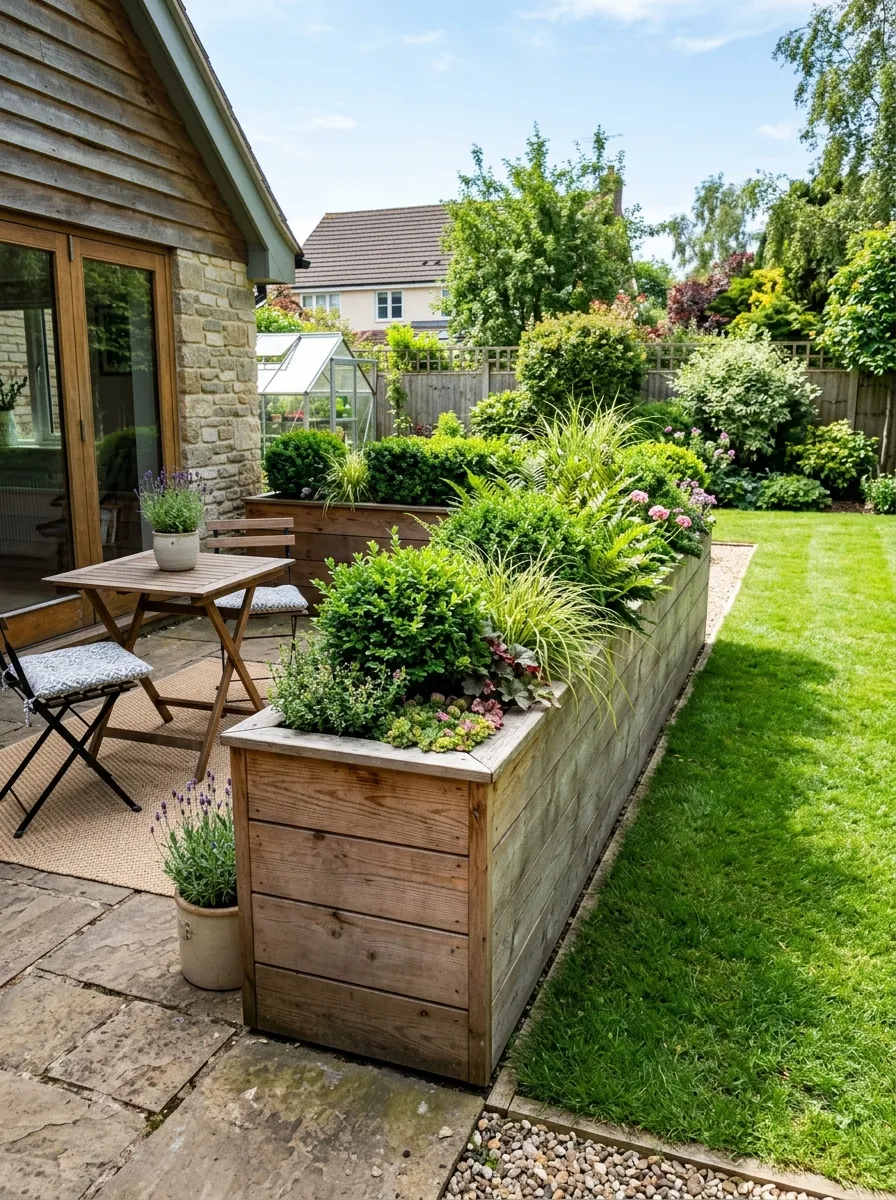
A tall planter, positioned to divide a small yard into distinct zones, does double duty as both greenery and a soft partition. Build a simple rectangular box, tall enough to stand at eye level, and position it where you want to visually separate a seating area from a lawn or garden bed.
Plant something structural, like ornamental grasses or a small shrub, so the divider reads as intentional rather than just another pot sitting in the yard.
This trick makes a small space feel like it has multiple distinct areas instead of one flat, undivided stretch.
Budget tip: build the box from leftover fence boards, matching the material to your existing fence for a cohesive look.
This project adds both greenery and a sense of layout to a small yard, using a single feature to accomplish two things at once.
21. Use a Wall-Mounted Fold-Out Grill Station
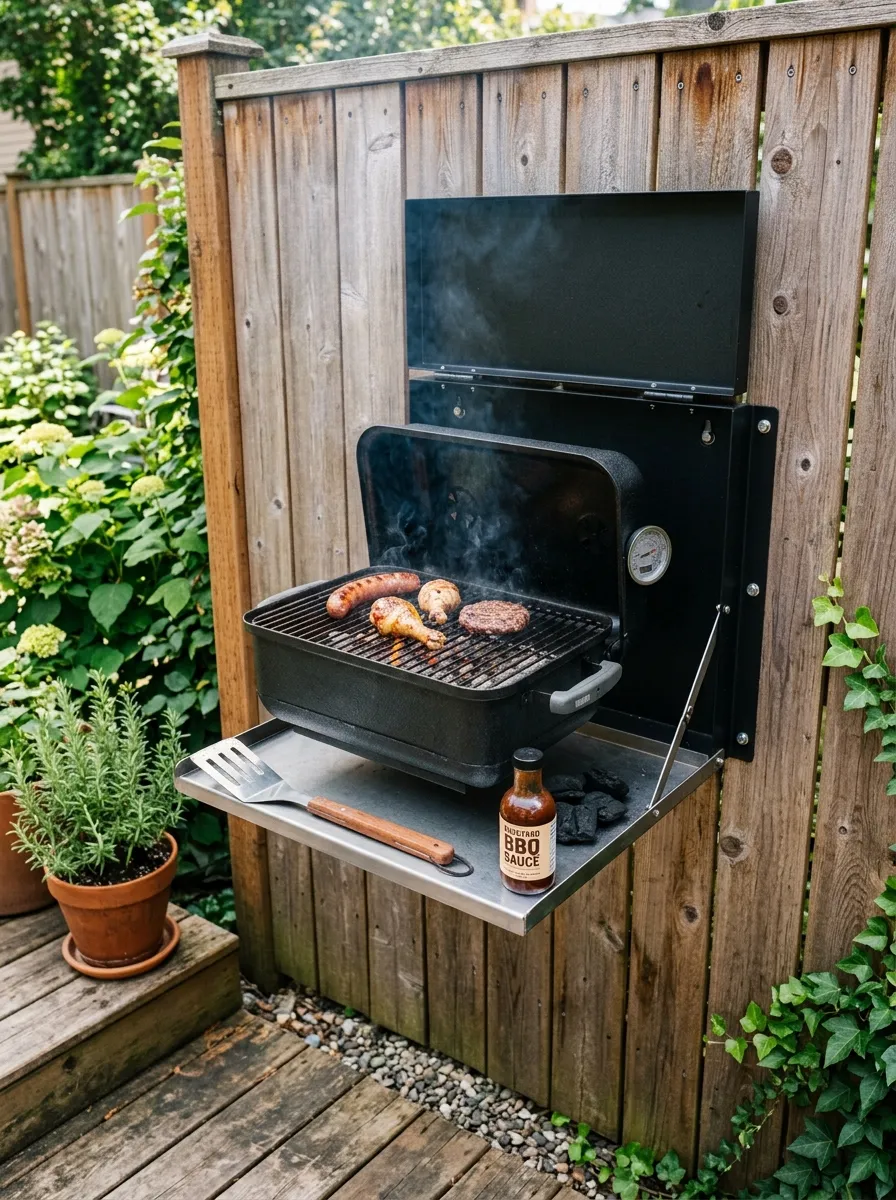
A wall-mounted grill setup, with a fold-out shelf for prep space, saves the floor footprint a standalone grill cart usually demands. Mount a small shelf bracket to a fence or wall, sized to hold a compact grill, and fold it flat against the surface when not in use.
This works particularly well for a small charcoal or portable propane grill, rather than a full-sized built-in unit that requires permanent floor space.
Keep a fire extinguisher nearby regardless of the grill’s size, since safety matters at any scale.
Budget tip: a simple hinged shelf bracket from a hardware store covers most of this project’s material cost.
This project keeps grilling functional in a small yard without permanently sacrificing floor space to a bulky cart or station. If you’re planning a dedicated outdoor cooking area, explore these BBQ station ideas for smart layouts and design inspiration that maximize both style and functionality.
22. Add a Compact Fire Bowl Instead of a Full Pit
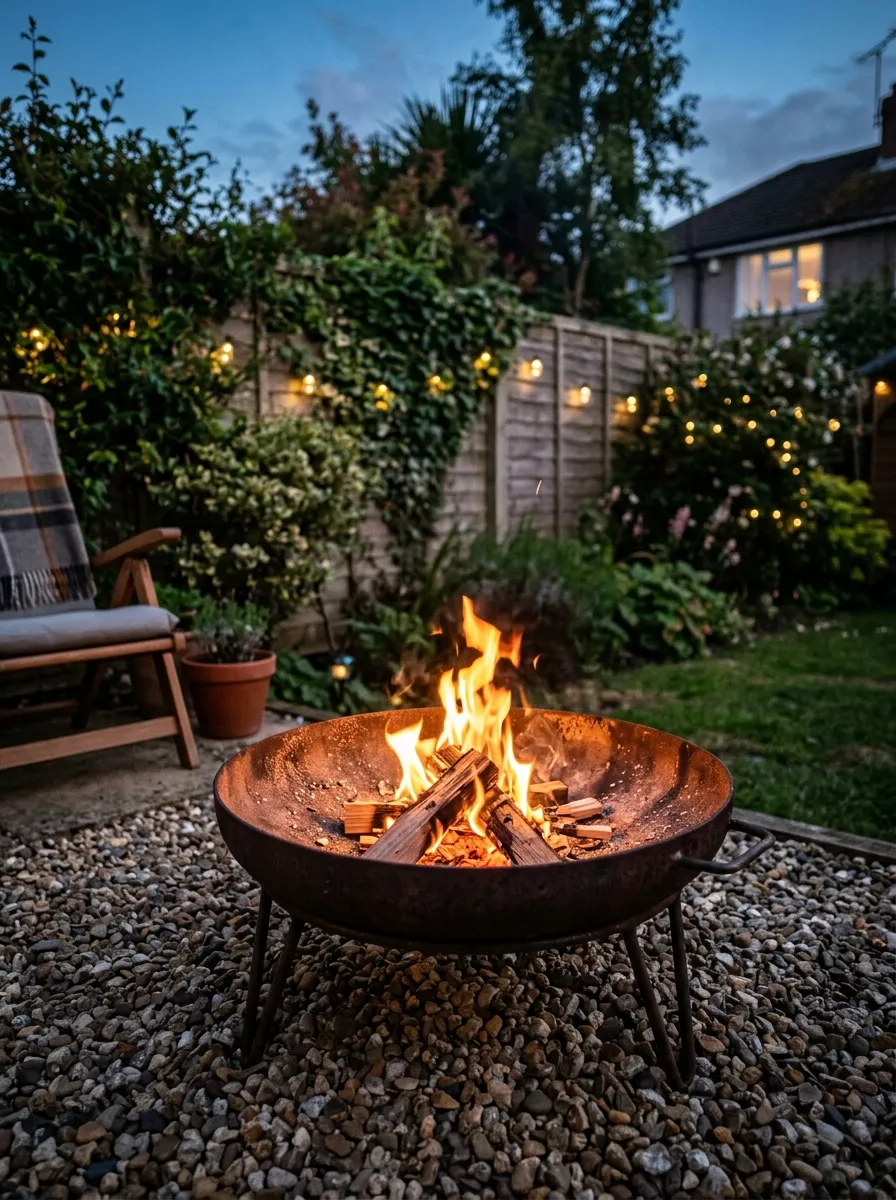
A full-sized fire pit demands real clearance space that a small yard often can’t spare, but a compact, portable fire bowl delivers the same warm gathering feel in a fraction of the footprint. Set it on a patch of gravel or a fireproof mat, positioned somewhere with reasonable clearance from fences and furniture.
Because it’s portable, you can move it out of the way entirely when the space is needed for something else, unlike a permanent built pit.
Keep it small enough that just two or three chairs can comfortably gather around it.
Budget tip: a simple metal fire bowl costs considerably less than an in-ground pit build and requires no digging or construction at all.
This project brings the fire pit experience to a small yard without permanently committing a large section of ground to it.
23. Grow Trailing Plants Off a Roof Overhang
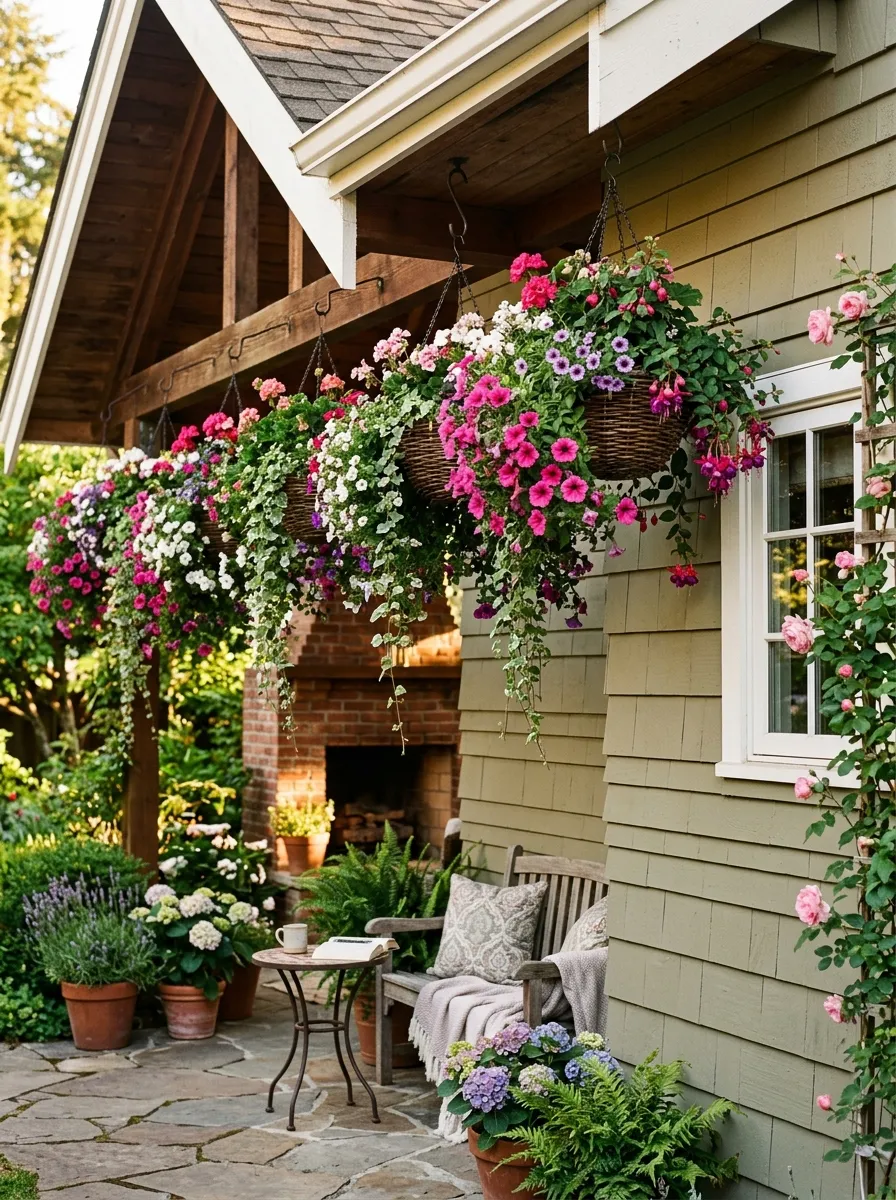
A roof overhang or eave gives you overhead space that a small yard’s ground footprint can’t offer, and hanging plants from it adds greenery without touching the floor at all. Install simple hooks into the overhang’s structure, then hang baskets of trailing flowers or herbs at a height that clears foot traffic below.
This works especially well along a covered patio, where the overhang already provides some rain protection for the hanging plants.
Water more frequently than ground-level pots, since hanging baskets dry out faster with increased air exposure.
Budget tip: secondhand hanging baskets from a yard sale, combined with basic ceiling hooks, cover this project’s full cost.
This project claims overhead space that most small yards never think to use, adding a full layer of greenery above eye level.
24. Build a Slide-Out Potting Station Under a Deck
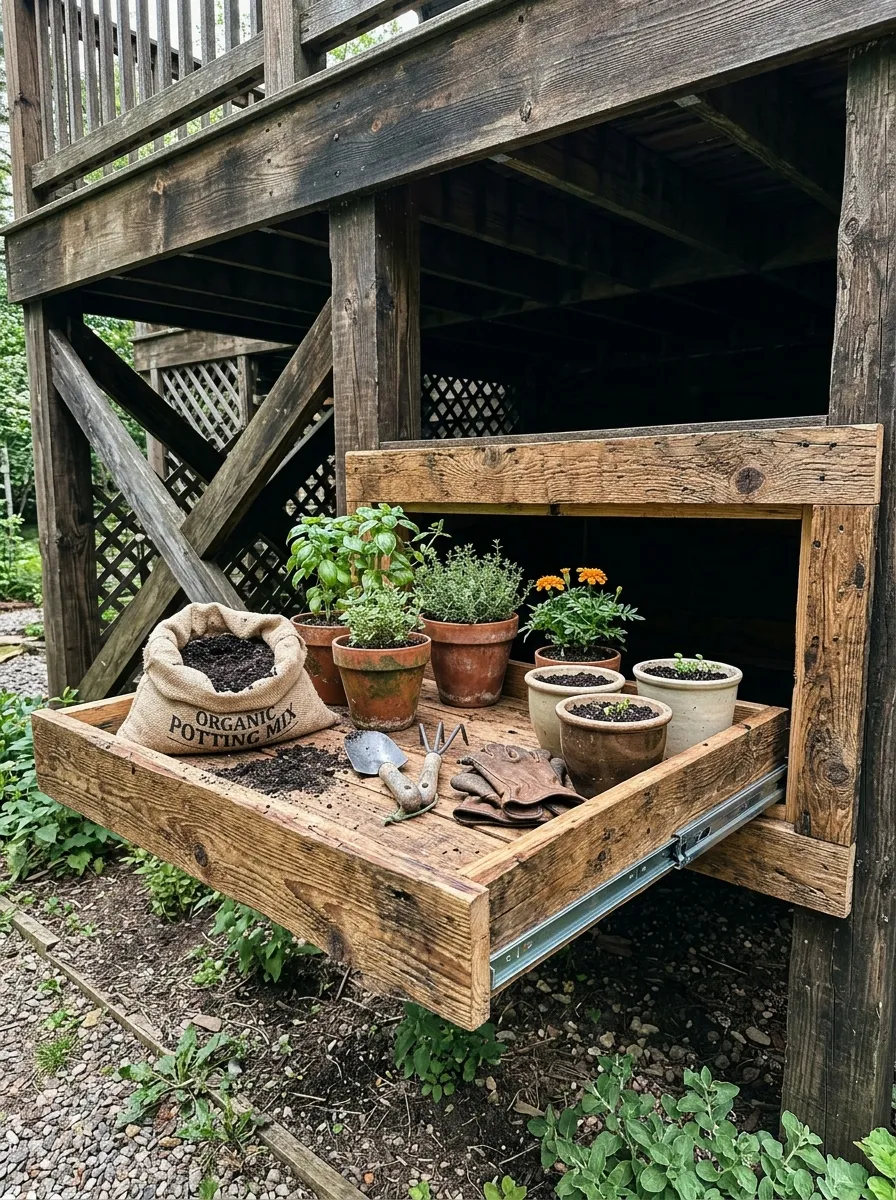
The space beneath a raised deck often sits completely wasted in a small yard, but a slide-out shelf built into that gap gives you a genuine potting station that disappears when not in use. Build a simple shelf on drawer slides or casters, sized to fit the available height beneath the deck boards.
Pull it out when you need to pot plants or mix soil, then push it back underneath to reclaim the space immediately afterward.
This solves the common small-yard problem of needing a work surface without permanently sacrificing any visible floor space to it.
Budget tip: scrap wood and a set of secondhand drawer slides cover most of this project’s material cost.
This project uses genuinely dead space beneath an existing structure, turning wasted square footage into real, functional utility.
Conclusion
A small backyard rewards creativity more than square footage, since every fence line, railing, and overhang becomes an opportunity once you stop thinking only in terms of ground space. Pick two or three ideas from this list that fit your yard’s actual layout, whether that’s a vertical pallet wall or a fold-down potting bench, and start reclaiming the space you didn’t realize you had. The garden you thought your yard was too small for is closer than it looks.